• The move to the new server is done. There are some software and database maintenance updates in process. This has us passing the hat around to help out. We appreciate any donations. Seriously, even a dollar helps. The payment page may be found here - https://www.audiokarma.org/support.html

AR3a midrange distorting after restoration

Here is the section of the Restoring AR3a manual that I used:

I decided to jump in to clear up some apparent confusion regarding the repair of AR-3 and 3a midrange drivers. AR-3 mids frequently have output issues, and can often be refurbished. The AR-3a mid (ie David's mid) does not typically exhibit problems, and there is no way to restore it if it does. The voice coil of the 3a mid is covered by the cloth roll of the dome, and nothing can get into it.The mid drivers I refurbished for Glenn are AR-3 mids, which have a troublesome, coated, exposed voice coil gap...so apples and oranges.

I'm not sure what may have cleared up David's midrange distortion issue, but I'm sure it had nothing to do with anything under the mid's screen. It sounds to me like a possible unsatisfactory wire connection. If the problem is occurring with both mids, it is almost always the connection between the enameled wire of the small inductor and the wire of the midrange's #1 pot terminal. A common oversight is to fail to sufficiently clean the enamel coating off the wire before making the connection. This is easily the most common 3a midrange issue for novice 3a restorers.

Speaking of mids...After looking at David's photo, I'm wondering why there is a resistor connected to the mid's 50uf capacitor. If it is the small-value series resistor mentioned as a tweak for use with film capacitors in the 3a restoration guide, it shouldn't be there. That capacitor is not a film capacitor. (Frankly, given the nature of the variable level controls, I lobbied against the mention of these resistors with any type capacitor when we were putting the guide together.)

Roy

Hi Roy,

Thank you for your help. I have heard great things about your work!

Going back through the guide, it looks like I have indeed made a mistake. I thought I had purchased polypropylene capacitors but looks like I purchased non-polar electrolytic (NPE). Hopefully this post will help other novice members in their AR3a restoration attempts.

Here is the section that I used in the AR3a Guide:

Should you replace, you have two options: Non-polar electrolytic (NPE) or polymer dielectric, of which polypropylene (PP) is the best available. NPE are considerably cheaper and later AR used them in the AR-3a. Polypropylene capacitors are more expensive than NPE, but have a significantly longer lifetime. Mylar dielectric is also excellent for the hi-range capacitor. One valid reason for switching to PP or Mylar is long-term reliability.
​
Here is what I ordered from Parts-Express:

So as Roy said, with the non-polar electrolytic (NPE) capacitors for the 50uF and the 150uF I should NOT have installed the resistors.

Looking at Parts-Express.com, they have the 50uF Polypropylene Capacitor from Dayton Audio:


But it does not look like they have the 150uF capacitor. Does Dayton Audio make one? What else would you recommend?

Thank you so much for your help.

David
 
Here is the section of the Restoring AR3a manual that I used:

But it does not look like they have the 150uF capacitor. Does Dayton Audio make one? What else would you recommend?

Thank you so much for your help.

David

Hey David,

Frankly, I would just leave the NPE caps in place, and by-pass the resistors. I've used those caps many times, and they are of good quality and work well. There's even a trend back in the NPE direction these days. Many AR enthusiasts actually prefer them in models of this era. Regardless of what you do, the 150 is not worth the cost or trouble to replace with a film cap, in my opinion. It would also be massive in size compared to the caps you already have installed. Btw, when using film caps, most people "build" the 150uf cap from smaller values connected in parallel (ie. a 100 and a 50).

I would be much more concerned with the cause of the distortion you heard, which I can assure you, had nothing to do with the discussion we're having about resistors or capacitors. Such things seldom simply disappear forever.

Feel free to send me a personal message if you have any private questions regarding your 3a project. I'm actually the person who repaired your woofers, as I do much of Vintage_AR's technical speaker work.

Roy
 
So guess what I found just before I was going to seal up my AR3a's? As I was moving the fiberglass stuffing around, I saw something move in the cabinet of my right speaker:

IMG_7986.jpg

Could this be the cause of my rumbling? I took the speaker outside and let the little critter go...

Then I took both speakers through all the frequencies using a frequency generator. Roy cautioned me to not turn the volume up too high when doing this as to not blow out the speakers.

I then sealed up the cabinets. I'm not getting the great bass that I did before. The mid replacement pot was leaking as I could not fit the nut on it with the gasket/washer. I sealed this up. There may be more leaks. I have a stethoscope coming tomorrow as discussed in the AR3a restoration guide. I'll run an 18Hz tone through the woofers and see if I can find any other leaks.

I also have a Crown XLS1502 Two-channel, 525-Watt at 4Ω Power Amplifier coming. Roy suggested using this amp to protect the speakers (as the amp has to have enough power to drive the 4 ohm speakers) and sometimes vintage amps can go out and destroy the speakers. So the idea is that driving the speakers with a modern amp will further protect the speakers. Then I was thinking to try a variety of vintage amps as pre-amps: tube amps, solid state amps, etc. until I find the best sound. Any suggestions would be welcome, I have read the other posts on this.

Also, do any of you add fuses to the speakers as described in the AR3a manual. Is this worth ti?

Bottom line, the distortion in the midrange has cleared up. The sound from the speakers are very realistic, it sounds as if you are right there. I just need to improve the bass and figure out where the leaks are.

Huge thanks to Roy and everyone in the forum for your help...

David B.
 
So guess what I found just before I was going to seal up my AR3a's? As I was moving the fiberglass stuffing around, I saw something move in the cabinet of my right speaker:

View attachment 1924579

Could this be the cause of my rumbling? I took the speaker outside and let the little critter go...

Then I took both speakers through all the frequencies using a frequency generator. Roy cautioned me to not turn the volume up too high when doing this as to not blow out the speakers.

I then sealed up the cabinets. I'm not getting the great bass that I did before. The mid replacement pot was leaking as I could not fit the nut on it with the gasket/washer. I sealed this up. There may be more leaks. I have a stethoscope coming tomorrow as discussed in the AR3a restoration guide. I'll run an 18Hz tone through the woofers and see if I can find any other leaks.

I also have a Crown XLS1502 Two-channel, 525-Watt at 4Ω Power Amplifier coming. Roy suggested using this amp to protect the speakers (as the amp has to have enough power to drive the 4 ohm speakers) and sometimes vintage amps can go out and destroy the speakers. So the idea is that driving the speakers with a modern amp will further protect the speakers. Then I was thinking to try a variety of vintage amps as pre-amps: tube amps, solid state amps, etc. until I find the best sound. Any suggestions would be welcome, I have read the other posts on this.

Also, do any of you add fuses to the speakers as described in the AR3a manual. Is this worth ti?

Bottom line, the distortion in the midrange has cleared up. The sound from the speakers are very realistic, it sounds as if you are right there. I just need to improve the bass and figure out where the leaks are.

Huge thanks to Roy and everyone in the forum for your help...

David B.
The lack of bass indicates a leak to me, since it was good prior to opening them up. When you gently push the woofer cones in, do they return slowly, or immediately? You want slowly.

Regarding amps, look for a high current amp, with a high damping factor. Crazy WPC isn’t always necessary with a high current amp. I’ve driven my 3’s with a small McIntosh 50 wpc amp-preamp and it sounded very good. I’m currently driving them with my JVC A-X9 integrated, 100wpc, which is excellent, and my other set of 3s with my JVC M-7050 210wpc, also outstanding.
 
So a question. I am using a modern Crown XLS1502 amp to power the AR3as because it has enough power and I don't have to worry about some 50 year old resistor going bad and sending DC current to the speakers I just restored and ruining them. Basically, I am using the Crown for the additional power and to protect the speakers.

However, I noticed that when I use another receiver as a pre-amp such as a Marantz 2235B (streaming from a digital source into the Marantz AUX input and then out using the Marantz Tape Record RCA jack to to the Crown Amp -- is the Marantz receiver really doing anything to color the sound? It is not passing through the main amp circuitry on the Marantz and I can even have the power switched off on the Marantz and the music still plays, the signal still goes through. So if this is the case, I'm not really getting the "Marantz" sound, it is being shaped only by the Crown XLS1502.

Would other pre-amps shape the color of the sound? I have only used integrated systems in the past so this is all new to me. Any insight on this would be appreciated!
 
I looked at the schematics for the receiver. On the AUX side it is a pass-through electrical connection so it continues to work if the power to the Marantz is off. My takeaway, therefore, is the Marantz is not influencing the sound for streaming music through the AUX port.

Next step is to connect the turntable. This does go through some Marantz circuitry so the pre-amp for the phono should color the sound. I’ll have to see if the Marantz phono pre-amp is better than than the Technics.

I don’t listen to FM or AM so is there a better phono pre-amp I should use? I generally like the warmer sound of the Marantz and solid state amps in general. I have a small tube amp I’ll try as well.
 
I just hooked up my turntable and it sounds amazing.

How would I test for bad coupling caps? I know you can hook a multimeter to the speaker connections to see if any DC voltage is passing to the speakers but I am not using the speaker output. I know the main amp may have issues due to a loud popping sound from the amp occasionally. So I am intentionally bypassing the main amp for now.

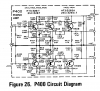
I am just using the Phono IN and REC Out jacks on the Marantz. Would I test the REC Out jack to see if any DC voltage is being passed? I found the following schematic.

upload_2020-7-20_10-40-6.png


Thank you for the help.

David Brehmn
 
Back
Top Bottom