• The move to the new server is done. There are some software and database maintenance updates in process. This has us passing the hat around to help out. We appreciate any donations. Seriously, even a dollar helps. The payment page may be found here - https://www.audiokarma.org/support.html

Are receivers considered audiophile grade?

If the receiver sounds really super fine and great...congradulations!! You win. What more do you want out of it????????????

If it sounds really great...it is really great.

If your equipment sounds really fine, then your in there, your lucky! You've found excellence. Count your blessings.

That's it really. That's all there is to it.

Audiophile this, Audiophile that. Who cares??? That's a 'rich cats game' that is hard to compete in. And a game 95% of us can't really join without extreme sacrifice. Too extreem. $4000+ for just an amp. Nice, if you got it. $6000+ for speakers. Yeah, right.

If your receiver, or equipment, sounds really great...perfect! Your lucky. Your in audio heaven. You win. Just don't blow it up or melt it down. Be easy with it, expecially if it's vintage gear. One mistake and it's over, ya messed it up.

If it sounds really fine...it is really fine! That's it.

If you want a super fine radio tuner, get a seperate. That goes for amps too. But receivers can sound outstanding, especially the late 70s vintage ones!!! When they built those they knew what they were doing and cared about the end product and not just about profits.
 
Last edited:
In the high end arena, McIntosh made receivers for many years. And the US made Marantz Model 18 and 19 are also legitmate high end as was the rare Harman-Kardon Citation receiver. There was such a thing as high end music lovers in a space challenged environment who wanted better back then.
 
I think the Sansui G-22000/33000 is as good a design with not a lot of compromises, apart from them having to split it in two because it is too heavy as one unit for a human to possibly even think about lifting......

The power-amp, has two completely independent supplies with their own toroidal transformers, the 33K packs a whopping rail voltage and has as enough output devices to deliver fairly high current.....and an extensive supply design, and some great protection......

Sound quality wise, I have no doubt the Sansui would please the vast majority of owners/listeners, but as I stated in post 57, high current is where even the mightiest receivers stumble.
The Sansui G22000 for example is rated at 330 wpc into 8 ohms and also 330wpc into 4 ohms. It could be an exception, but this normally means it is not going to handle the high loads some speakers are going to throw at it .
So if I happen to be using say a Apogee speaker that goes down to 1 ohm plus has some really nasty phase angles around 120hz (around -47 at 3.3 ohms off the top of my head) - you had better hope the protection circuit is working well in the Sansui or you have a really good chance of frying the output resistors on it.
Here is why I personally like separates - a Sansui G22000 in good condition, not restored is going to set me back $2k plus if I am not mistaken - yet I am limited in my speaker selection. Yes I still have hundreds of speakers I can use, but it seems most of the speakers I am drawn to are very inefficient and either like or demand high current. So unless i wish to risk frying my $2k plus receiver, I would either have to forget about using those type of speakers or get another amp to drive them.
On the other hand, for less then $1k, one for even less then $400(GFA-555), I can get an amp that is high current and I now do not have to limit my speaker selection in any way.
Move up to the same price as the G22000 and I could get a really nice amp and pre that will sound excellent plus drive just about anything I can throw at it (some speakers pretty much require you biamp them no matter what you bring to the table).

If I walked into someone's home and they had a totl receiver hooked up to some nice speakers, I have no doubt I would enjoy the sound and think it was a nice system - but for me and the speakers I am drawn to, while a nice system and better then the vast majority, I would also be thinking it was just not my thing as i couldn't see spending the money and still not being able to have the speakers I want.

Plus while you can do it, I also ended up going thru quite a few preamps finding that perfect synergy that satisfied me. While a case can be made for a preamp in a receiver being matched well to the amp, I had a Pioneer Spec 1 which you would think is perfect for the Spec 2 amp, but it just never satisfied me and gave me what i was looking for.

Receivers can be and are some excellent pieces of gear.
Is just my opinion that separates done right do it better and gives me more options and I could never get by the high current end of the deal.
But, that is just my opinion and what is right for me, and as we all should know by now, what is right for me may not be right for you.
IN a way it is kind of silly to "debate" if it is considered audiophile grade gear as i would guess the vast majority of people using them are extremely satisfied with them and many probably have no desire to go with separates or even think about owning a pair of say Apogee speakers.
I have my own definition of audiophile, different from many, and the vast majority of us don;t have that type of gear whether it is a receiver or separates - so all we can do is put together something we enjoy and is within our financial means and forget what Billy Bob down the street or across the internet thinks of my system.
Not necessarily this one, but it does seem I see posts where basically they are pretty much just fishing for others to tell them how great their system is and how it is probably better then others. I would guess I have done that myself in the past.
Our egos can often be the very thing which keeps us from being perfectly happy with what we do have. It's hard to try and leave it behind, but if we are capable of checking the ego at the door - it turns out we can be a whole lot happier with what we do have - whether it is a receiver, separates of even a Bose lifestyle system.
Point being - all we are doing is trying to enjoy the music no matter which path we take to get there. Said too often and often misunderstood - but it really is only our ears that matter.

 
Last edited:
I think that I don't listen to music that loud where dipping down to 2 ohms would be a problem.If I had extra money to spend it would be on better speakers they make the biggest difference in sound quality anyway.
 
The amp busting impedance drop to 2 Ohms or lower has nothing to do with how loud you play music. I'm sure there are some Infinity owners with Watkins woofers that would agree. A pair of Apogee Scintilla's (1 Ohm load) can bring "magic smoke" from most receivers and many amps at any volume.
BTW, Scintilla's can be strapped for 1 or 4 Ohms. They sound a lot better strapped for 1.

I go along with donberry about the ego thing and how some posts seem to be fishing for compliments as justification for a particular path the poster has chosen. Remember, it's only your ears you should try to please.
 
Last edited:
But then once you upgrade speakers, the more you might notice differences in the amplification that's driving them, so differences that sounded similar before- might not anymore. And thus the hobby becomes a money pit.
I agree with your premise. Troublemaker! :D
 
If the receiver sounds really super fine and great...congradulations!! You win. What more do you want out of it????????????

If it sounds really great...it is really great.

If your equipment sounds really fine, then your in there, your lucky! You've found excellence. Count your blessings.

That's it really. That's all there is to it.

Audiophile this, Audiophile that. Who cares??? That's a 'rich cats game' that is hard to compete in. And a game 95% of us can't really join without extreme sacrifice. Too extreem. $4000+ for just an amp. Nice, if you got it. $6000+ for speakers. Yeah, right.

If your receiver, or equipment, sounds really great...perfect! Your lucky. Your in audio heaven. You win. Just don't blow it up or melt it down. Be easy with it, expecially if it's vintage gear. One mistake and it's over, ya messed it up.

If it sounds really fine...it is really fine! That's it.

If you want a super fine radio tuner, get a seperate. That goes for amps too. But receivers can sound outstanding, especially the late 70s vintage ones!!! When they built those they knew what they were doing and cared about the end product and not just about profits.

It's not all about the money. I'm on the separates side of this argument. I put a frugal, humble system together for less than $500. Only the preamp was new. The turntable and speakers both required some repairs. I have spent less on the entire system than some vintage Sansui (or Marantz, Pioneer) receivers alone, with comparable power cost on auction sites and the 'Gon.

You can be in the separates club with some humble money. You can also be in the receiver club after spending tons of money.

Wow! It goes both ways? Who knew?
 
Receivers have gotten a bad rap because many junky ones were produced over the years. For someone looking to get into audio, it's the cheapest way (assuming a new purchase). Thus, some audio purists will be quick to look down at a receiver. But as many here have already pointed out, there have been some terrific receivers produced.

Assuming you have a very good quality receiver, the biggest drawback is that if one function suffers a problem, the whole unit is out of commission while being repaired. If you don't listen to the tuner, then it's basically an integrated amplifier. You can easily attach a separate tuner if the built-in one ever develops a problem. If the receiver has pre-out/main-in jumpers, then it can serve as either a preamp or amp. Such a unit has very good flexibility. Of course, in many cases you're still faced with a large unit relative to the power output. On the other hand, a receiver gives a significant convenience advantage. You have one unit that is easy to deal with. One remote that does it all. And, if you're anti-clutter, it's preferable to all the extra wiring that separates bring.

A mid to lower quality receiver may suffer from distortion or noise exposure by combined circuitry, something that wouldn't exist with separates. If you have sensitive speakers, you may actually pick up on it. But a very well designed receiver will employ discrete circuitry to help mitigate such a problem.

Two modern receivers I think many here would vouch for competing easily with separates in a similar price range are the Luxman R-117 and Nakamichi TA-4A. Then there is the big iron of the 70's, with the likes of Harman Kardon, Marantz, Sansui, and Pioneer (to name a few notable ones). Those brands had a number of models that most here on AK would be proud to own. And as Kent pointed out, McIntosh has made them, a brand reputed to create audiophile grade components.
 
Last edited:
Sound quality wise, I have no doubt the Sansui would please the vast majority of owners/listeners, but as I stated in post 57, high current is where even the mightiest receivers stumble.
The Sansui G22000 for example is rated at 330 wpc into 8 ohms and also 330wpc into 4 ohms. It could be an exception, but this normally means it is not going to handle the high loads some speakers are going to throw at it .
So if I happen to be using say a Apogee speaker that goes down to 1 ohm plus has some really nasty phase angles around 120hz (around -47 at 3.3 ohms off the top of my head) - you had better hope the protection circuit is working well in the Sansui or you have a really good chance of frying the output resistors on it.
Here is why I personally like separates - a Sansui G22000 in good condition, not restored is going to set me back $2k plus if I am not mistaken - yet I am limited in my speaker selection. Yes I still have hundreds of speakers I can use, but it seems most of the speakers I am drawn to are very inefficient and either like or demand high current. So unless i wish to risk frying my $2k plus receiver, I would either have to forget about using those type of speakers or get another amp to drive them.
On the other hand, for less then $1k, one for even less then $400(GFA-555), I can get an amp that is high current and I now do not have to limit my speaker selection in any way.
Move up to the same price as the G22000 and I could get a really nice amp and pre that will sound excellent plus drive just about anything I can throw at it (some speakers pretty much require you biamp them no matter what you bring to the table).

If I walked into someone's home and they had a totl receiver hooked up to some nice speakers, I have no doubt I would enjoy the sound and think it was a nice system - but for me and the speakers I am drawn to, while a nice system and better then the vast majority, I would also be thinking it was just not my thing as i couldn't see spending the money and still not being able to have the speakers I want.

Plus while you can do it, I also ended up going thru quite a few preamps finding that perfect synergy that satisfied me. While a case can be made for a preamp in a receiver being matched well to the amp, I had a Pioneer Spec 1 which you would think is perfect for the Spec 2 amp, but it just never satisfied me and gave me what i was looking for.

Receivers can be and are some excellent pieces of gear.
Is just my opinion that separates done right do it better and gives me more options and I could never get by the high current end of the deal.
But, that is just my opinion and what is right for me, and as we all should know by now, what is right for me may not be right for you.
IN a way it is kind of silly to "debate" if it is considered audiophile grade gear as i would guess the vast majority of people using them are extremely satisfied with them and many probably have no desire to go with separates or even think about owning a pair of say Apogee speakers.
I have my own definition of audiophile, different from many, and the vast majority of us don;t have that type of gear whether it is a receiver or separates - so all we can do is put together something we enjoy and is within our financial means and forget what Billy Bob down the street or across the internet thinks of my system.
Not necessarily this one, but it does seem I see posts where basically they are pretty much just fishing for others to tell them how great their system is and how it is probably better then others. I would guess I have done that myself in the past.
Our egos can often be the very thing which keeps us from being perfectly happy with what we do have. It's hard to try and leave it behind, but if we are capable of checking the ego at the door - it turns out we can be a whole lot happier with what we do have - whether it is a receiver, separates of even a Bose lifestyle system.
Point being - all we are doing is trying to enjoy the music no matter which path we take to get there. Said too often and often misunderstood - but it really is only our ears that matter.

Perhaps my take on this subject is a bit different than others, but here it goes.

The speaker determines the type of amplifier that is required, and there are optimum matchings of speakers and amplifiers. Not every speaker requires a high current amplifier, and not every speaker & high current amp pairing is going to result in the best sound.

True high current amplifiers with robust power supplies are big, expensive, require good ventilation, and are not at their best when idling. So this means it needs a speaker that is somewhat inefficient at best, or has a nasty impedance curve. In the 80's and 90's these were Martin Logan, Apogee, Acoustat big Infinity, Thiel and a few others. Many of these were great speaker with what seemed reasonable price tags for their technology. But they had a hidden price tag, for the required stout amplifiers to drive them---and hey cost real money. Take speakers like the Martin Logan CLS or Apogee Duettas, never mind the 1 ohm Scintillia, and hook up a "affordable high current" amp like an Adcom 555, NAD, B&K ST202, or even a PSE, what you find is that in 14 or 24 months you have a dead amplifier. The combination of low efficiency and low impedance means you have to buy the elite SS amplifiers. Krell, Rowland, Threshold, Levinson, Classe, ARC.....those are the kind of amps needed to run this type of speaker. On a side note though, these affordable high current amps can run a planar magnetic type speaker very well, such as a Magnepan or Eminent Technology.

But theidea that these amps are inherently superior is not right either. When paired with a medium efficiency speaker with benign impedance load, many of those advantages are minimized. Throw a pair of Epos, ProAc, or Vandersteen into the equation, and a well designed amplifier that is not a beast can still perform very well, and may approach the sound quality that the other well regarded amps are capable of. So in this application a Meitner amp may perform far better than one would expect it to, given its more affordable price tag. Not that Meitner amps were cheap, but they make a good example.

Now toss a high efficiency speaker into the mix, and then the high current SS monster amps are at a disadvantage. They pretty much idle, and never really get asked to show their strengths. Actually a high efficiency speaker may highlight their inaccuracies as they can be just as detailed and transparent as a panel speaker, but also have a greater dynamic range. These kinds of speakers can show issues with a complex amp design with a high part count. Which is why these speakers are often run with low powered Single Ended amp designs, whether they be tube or solid state Chips amps are also known to work well in this situation. I have experienced this pairing first hand when I ran a pair of 98db efficient full range drivers on a Jeff Rowland Model 5 amplifier. It sounded good, but not quite right. These speakers sounded excellent on a 8 wpc SET amp. But as another side note, high quality high efficiency speakers...such as horns are often brutally expensive...which counter balances the lower cost of amplification. So in some ways its a different balance in terms of overall cost for sound quality.

So the appropriate amp/speaker pairing is not a simple solution. From my perspective, the speaker drives the choice of amplifier. But that does not mean one amp type is inherently superior.

This is just the thoughts of a simple barnyard animal. We like warm sun, soft hay, and good food. If you want another opinion go ask the cows. Don't talk to the chickens, as they are liars and cheat at cards.

Regards
Mister Pig
 
Last edited:
One of the points I saw raised a few times is the power supply. In a typical receiver, all of the components essentially work off the same power delivery system. With separates, each components has it's on discrete power source. As such, this may present a problem with driving power hungry speakers.

So... if you're someone who listens to music at moderate and low levels, rarely "cranking it", wouldn't a great quality receiver work just as well as separates? This is of course assuming similar brand and sonic characteristics and that the speakers mated are well matched based on power requirements.
 
Last edited:
Mister Pig and donberry, you two are saying exactly the same thing, that it's your choices in speakers that make the difference. Mister Pig, single driver HE speakers float your boat. donberry and I are somewhat alike. Medium to low efficiency esl's and other panel types float our boats.

Speakers have determined what kind and how powerful my amplifiers need to be since 1976 when I bought a pair of MG-1's. With them and the MG-2's and 3's I moved on to I used high current SS amps. When I moved to esl's in 1983 I switched to tubes. I'm still using tubes to drive my esl's.
 
The Apogee Scintillas aren't receiver suitable to drive. But I don't see these practical in space challenged installations where receivers tend to be used either. But the Quad ESL speakers are within many better integrateds and even high end receivers. But for me, some high dollar high end brands I don't want to own, even if I am a billionaire. If you can't supply me with service literature and parts, I don't want your gear out of warranty. If Bryston, McIntosh, and even in the old days many others can do that, why can't the others at least provide me with full manuals so who ever has to support it can. High end companies come and go often.
 
It's not all about the money. I'm on the separates side of this argument. I put a frugal, humble system together for less than $500. Only the preamp was new. The turntable and speakers both required some repairs. I have spent less on the entire system than some vintage Sansui (or Marantz, Pioneer) receivers alone, with comparable power cost on auction sites and the 'Gon.

You can be in the separates club with some humble money. You can also be in the receiver club after spending tons of money.

Wow! It goes both ways? Who knew?

With respect, I think it is about money (which is what donberry was referring to with the high current amps)....on the part of the manufactures and the customers......
High Current amplifiers are easy to design but expensive to produce, and unfortunately this is passed on to the customer who wants one.....however, not everyone needs a high current amplifier, in fact most people dont....
So for those that do, they make "audiophile" high current amplifiers, which are already expensive to produce, and are not big sellers because they dont really apply to the mass market I believe......
Unless you are smart like a lot of people and pick up a pro amp like a Crown QSC or other reputable brand for way less than an "audiophile" high current amplifier....:scratch2:

Basically, you could produce the all time award winning receiver, but I think you would have trouble fitting into one chassis, and then if you did it wouldnt reach its target market because generally high end audiophile types would almost always choose separates, maybe because they want the flexibility to choose what components they want or whatever, but Im sure that these companies would have done market research to find out who wants to buy what gear, and I would think this is why things are the way they are.....trends tend to determine these sorts of things IMO.....

However, there are exceptions, and I think a few have touched on it....
Sansui with the G22000 G33000.....even they struggled to get that thing all in one chassis, its really almost a separate because its in two parts....you can only bolt it together once you have put it where its going, the thing weighs almost 100lbs.......

Like my Dad said, its horses for courses and apples for apples .........
 
The amp busting impedance drop to 2 Ohms or lower has nothing to do with how loud you play music.
yes, volume really has very little to do with some of the speakers I am thinking about. Yes you can get away with say a monster receiver on an easier load low efficiency speaker if you do not crank it, but no matter the volume, some speakers will just eat them for lunch. That receiver (or amp for that matter) will be basically looking at a dead short so it had better be built to take it.

Mr Pig - yes, I believe we are talking about pretty much the same thing. I believe I said a receiver can handle the vast majority of speakers just fine and there are hundreds of speakers which do not require a high current amp.
But, turns out the speakers I am drawn to happen to be the ones which do require those high current amps. By purchasing a receiver, unless i wish later to get another amp, I have just eliminated some speakers which, for me and just my opinion, are some fo the best speakers around, especially for the money. Although as we all know, anyone else could think those same speakers are not that great and would never need the high current.
As for a high power high current amp not sounding as good when just "idling" by - I dunno, I have read some reviews of amps that did not open up until they had some decent voltage going thru them, but in my limited experience, the high power amps sound as good or better even when on high efficiency speakers.
What i would be thinking tho is that if I knew I was using high efficiency speakers with little chance of getting some of the hard to drive ones, when I bought my amp I am paying quite a bit of money for the capability to dip down into that 1 ohm range and also for the ability to crank out that 200+ wpc. Could be wrong, as I often am, but my thought process there would be do I buy amp a which is 200+ and high current for xxxx amount of money or do I buy a lesser power amp that maybe costs as much but can't drive those speakers.
I would then probably go with option B thinking and hoping that I may actually be getting a better amp for the money. They didn;t have to worry about it driving 1 ohm loads or the heat involved with all of that power, so maybe (and I would check of course), the overall build quality may be better, such as better caps etc. Basically i would be checking into why it costs as much thinking it may be a better amp.
Key there of course is research, plus it would allow me to go with a tube amp if I did not need that ss power.

Just so many different paths and all we can do is choose the one we think is best for ourselves.
Me, man would I like a pair of Infinity reference speakers. Don't know why as I have never even heard them, just one of those things i always wanted - same with a pair of Apogee, a pair of Quad and being a MartinLogan guy, while I love my SL3, oh how I wouldn't mind stumbling into a pair of CLX - hey, I can dream can't I
 
With respect, I think it is about money (which is what donberry was referring to with the high current amps)....on the part of the manufactures and the customers......
High Current amplifiers are easy to design but expensive to produce, and unfortunately this is passed on to the customer who wants one.....however, not everyone needs a high current amplifier, in fact most people dont....
So for those that do, they make "audiophile" high current amplifiers, which are already expensive to produce, and are not big sellers because they dont really apply to the mass market I believe......
Unless you are smart like a lot of people and pick up a pro amp like a Crown QSC or other reputable brand for way less than an "audiophile" high current amplifier....:scratch2:

Basically, you could produce the all time award winning receiver, but I think you would have trouble fitting into one chassis, and then if you did it wouldnt reach its target market because generally high end audiophile types would almost always choose separates, maybe because they want the flexibility to choose what components they want or whatever, but Im sure that these companies would have done market research to find out who wants to buy what gear, and I would think this is why things are the way they are.....trends tend to determine these sorts of things IMO.....

However, there are exceptions, and I think a few have touched on it....
Sansui with the G22000 G33000.....even they struggled to get that thing all in one chassis, its really almost a separate because its in two parts....you can only bolt it together once you have put it where its going, the thing weighs almost 100lbs.......

Like my Dad said, its horses for courses and apples for apples .........

I see what you're saying and I kind of agree with you and Donberry. However you guys are thinking in terms of Martin Logans, Apogee's, big Infinity's etc. To get yourself into just speakers like that costs a lot of money. I like the way Mr. Pig describes it. Are separates the monetary issue or is speaker choice the monetary issue? I'm sure my amp can't run any of those speakers (see sig). I just wish to fight the notion that being into separates means you've got a ton of dough. Separates aren't just for the wealthier and receivers are just for the budget conscious, it really is a matter of personal preference. I like separates because I'm in college and I'm not locked into any one piece of gear. The possibilities for upgrading, tuning, adjusting, tweaking, etc are endless. I'm not locked into just one box (receiver or integrated amplifier). I almost even want to argue that as my system and I evolve it will cost me a little less money to make slightly bigger improvements because everything is separated.
 
I see what you're saying and I kind of agree with you and Donberry. However you guys are thinking in terms of Martin Logans, Apogee's, big Infinity's etc. To get yourself into just speakers like that costs a lot of money. I like the way Mr. Pig describes it. Are separates the monetary issue or is speaker choice the monetary issue? I'm sure my amp can't run any of those speakers (see sig). I just wish to fight the notion that being into separates means you've got a ton of dough. Separates aren't just for the wealthier and receivers are just for the budget conscious, it really is a matter of personal preference. I like separates because I'm in college and I'm not locked into any one piece of gear. The possibilities for upgrading, tuning, adjusting, tweaking, etc are endless. I'm not locked into just one box (receiver or integrated amplifier). I almost even want to argue that as my system and I evolve it will cost me a little less money to make slightly bigger improvements because everything is separated.

Absolutely, and you know maybe its the manufactures hitting a certain market of people who wish to spend more money than the average person, i say this because you can get amazing performance with a tight budget if you grab a Crown K2 for a power-amp for example, which could probably rival some high end high current amp..........pro amps can be expensive, but at the same time I think you get pretty good bang for buck if you know what to look for......
 
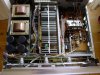
plenty of power supply in this old girl too..:D
 

Attachments

  • akai-1175-15.jpg
    akai-1175-15.jpg
    106.8 KB · Views: 46
  • akai aa-1175-02.jpg
    akai aa-1175-02.jpg
    115.4 KB · Views: 44
I see what you're saying and I kind of agree with you and Donberry. However you guys are thinking in terms of Martin Logans, Apogee's, big Infinity's etc. To get yourself into just speakers like that costs a lot of money
actually, I would sort of disagree with that. I just saw a pair of Infinity Reference II in Bartertown for a VERY reasonable price - how about $450.00. I have seen HPM-100 and JBL-100 go for that much. Took all of my will power not to drive to TDSUN to get them (TDSUN = That damn state up north - I am a Buckeye after all)
I bought my MartinLogan SL-3 with pretty much new panels for $1k - not really an outrageous amount of money. instead of buying a few $150-$200 pieces of gear that end up looking nice but sitting unused, you could buy a pretty nice pair of speakers.
I used to think that was more money than I really wanted to spend on a pair of speakers, yet I kept going out and buying every marantz 2250, kenwood KR-7600, Pioneer SX-780 etc that I found that was a good buy. Dawned on me that instead of owning a bunch of that stuff, I could get less gear, but for me and what I wanted, nicer gear.
What used to seem out of my price range is now something that I would have to save for, but I could get it (tho I really don't feel the need to upgrade anything at the moment).
That is actually why i always recommend a high current amp to begin with. Finances are always a concern with me, so my thoughts are why should I spend $350-$600 on a nice receiver (I personally feel any vintage piece of gear needs restored, so that adds to the price) if I am not 100% sure what speakers I may be using.
Good example are those Infinity speakers for sale in bartertown.
If I bought a receiver then ran across those - the 1st thing I am going to have to do is replace the receiver with a better amp. So my suggestion is to skip that step to begin with. If it takes a couple of months to save the cash for a receiver you want, why not wait a couple of extra months and get something that will work if you happen to walk into a garage sale and see those Infinity Reference for $450.00.
Many of the speakers i talk about are really not that far out of reach - trick is just having the right gear to drive them if you do get a pair and that can get expensive if you have to start replacing everything you already have.
 
Back
Top Bottom