
• The move to the new server is done. There are some software and database maintenance updates in process. This has us passing the hat around to help out. We appreciate any donations. Seriously, even a dollar helps. The payment page may be found here - https://www.audiokarma.org/support.html

AU-717 Deadly Glue

I was thinking about using a solvent like brakecleen or if I feel particularly wreckless berrymans ..the latter comes in a bottle or spray can..so I took a board from a 8080/90 & tried to basically damage it with carb cleaner(Berryman's) which melts baked on crap off of carburetors almost instantly..did not cause any damage on the green side and I scrubbed it good..neither did acetone..only difference I saw was the green coating was not sticky wet like after ISP..not sticky at all..so thats actually a + for the super harsh solvents..
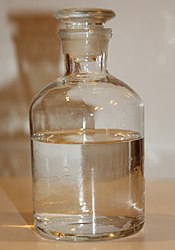
 
Too weak. I’ve tried 99% pure ethanol too. No effect.

I have some very glue polluted boards from a knackered 907.
Since acetone certainly works I will try, as an experiment, alcohol in one spot and hot air in another.

Which less toxic than acetone method will prevail?

I shall post results tomorrow. (Probably)
I personally use Toluene. It's quite effective and not as aggressive as Acetone. Just keep it away from styrene plastics, such as styrene capacitors, and the gray plastic shaft couplers etc.
 
175px-Sample_of_Acetone.jpg
:biggrin:
 
I was told to use a hair dryer to heat it ..scraping or acetone will remove printing on the boards..havent tried it yet

I made a little plastic scraper out of a piece of 3/8" plexiglass. Just cut out a chunk and gave it a chisel edge. Works awesome! Rips up the glue and doesnt harm the PCB.
 
I use lacquer Thinner on cotton balls add some set it on the glue wait about 15 minutes scrapes off most of the time if it needs to be redone just add a little more works fine make sure your well ventilated and use gloves.
 
I use lacquer Thinner on cotton balls add some set it on the glue wait about 15 minutes scrapes off most of the time if it needs to be redone just add a little more works fine make sure your well ventilated and use gloves.
Lacquer thinner is nice too. And as with any solvent, ventilation is a must. I don't wear gloves, but without them the solvent will dry your skin out quickly. I wash immediately then rub in some O'Keeffe's Working Hands cream.
 
acetone will also work, but be careful around other parts, since it will also dissolve the plastic housings on some transistors.

IPA does not work as fast, but is safer for the other board components. with either solvent the wood dowel stick is key since it really helps break the bond between the glue and the board. keep a paper towel close by to continually wipe the end of the wood dowel clean.

I rebuilt an Au-317 two years ago. There was so much glue under and around the main filter caps, the glue was the only thing holding the caps in place. The leads on one cap were completely gone; so was not in the circuit. if you find the glue on diode, resistor and transistor leads, clean that off as well, since the glue will eventually attack those leads.

I have a little AU-217 I use to drive my computer speakers. That amp was rebuilt 7 years ago and has seen continuous use 24/7 since then without an issue. very reliable amps.
 
Is there a consensus on the best method for glue removal? Looks like acetone and bamboo tools are the most common.
 
I am currently re-capping an AU-9900, so I've ran into the glue issue....
I used a common household product, called Goo Gone. Buy it at any decent hardware or Grocery store (or Amazon)
Put some on a Q-tip, and soak the glue around the capacitor to be removed. Keep it wet for about 10 minutes. The glue will soften.
Take a fine knife blade (I used an X-acto), and carefully work it around the bottom of the cap, and you're ready to remove it.
The softened glue then can be scraped off the board easily with a wooden pick.
 
I always use my hot air station to soften the glue and a piece of bamboo for scraping, I avoid metal blades. Hot air is also very effective for removing the plastic rivets on the phono input board etc.
I actually don't mind removing the glue. If I did it every day i'm sure it wouldn't be much fun.
 
I always use my hot air station to soften the glue and a piece of bamboo for scraping, I avoid metal blades. Hot air is also very effective for removing the plastic rivets on the phono input board etc.
I actually don't mind removing the glue. If I did it every day i'm sure it wouldn't be much fun.
I use my hot air station, too, for glue removal, with one of those wood fingernail sticks. Works great, no damage.
 
still mystery to me, why vintage caps need to be glued ?
The original reason was to hold these heavier components still and stop them from wrenching themselves free of their circuit boards In Transit. Back in the day, so the story goes one HiFi unit manufacturer got into a bit of bother with some of its customers reporting faulty gear - 'dead on arrival'. So when they investigated the cause of these failures they found some components had worked loose in transit from the factory and some were completely detached. So, it was never a requirement to use glue while in normal service because is simply isn't needed.

I don't bother re-applying glue when I replace components that had it originally, for the above reason. Although on some occasions I do take measures to prevent such heavier components from moving by the use of self adhesive 'dense foam' placed strategically in the unit. Used by me in just a few percent of cases where the component had glue originally, partly due to today's components (electrolytic capacitors in particular), being significantly smaller and lighter than the originals.
 
Last edited:
still mystery to me, why vintage caps need to be glued ?
They don't, unless you plan on shipping a unit that might take a rough ride. As @Hyperion stated, heavy components had experienced "problems".
Also, in some assembly lines, components were glued in, then by the time they got to the soldering stations they were ready to be soldered in. The soldering station didn't have to deal with holding them in place which saved time.
The "installers" didn't have to deal with soldering which also saved money on training, time, and increased production numbers, as well as profit margins.

There are very few places I apply glue. And when I do, it is high temp glue used for clothes dryers. One place is heat sinks that are glued to the board instead of pinned or screwed in place. Or on the rare occasion, very large filter caps without clamps to support them. Most modern filter cap replacements are small enough not to be of concern.

Subwoofer filter caps, and larger speaker crossover caps get just enough hot glue (not excessive) because of excessive vibrations.
 
Back
Top Bottom