

You are using an out of date browser. It may not display this or other websites correctly.
You should upgrade or use an alternative browser.
You should upgrade or use an alternative browser.
AU-D907 LIMITED vs 919
- Thread starter ghamilton
- Start date
Register to hide this ad

GrisPato
Super Member
As the model says, the AU-D907 Limited is based on the AU-D907 (JDM model of the AU-919).
Most obvious differences are the copperplated chassis and the woodpanel cover.
Inside there are more differences, bronze baseplate for the power supply (transformers and main filter capacitors). Further there are some "upgrades" in components, outputs and driver transistors are the same as in the AU-X1!
Then the output coupling capacitors (polar back to back config) from the head-amp and flat-amp are special Nichicon Gold low noise instead of the Nippon.
According to @Bumpalump there are also some small differences in the pre- amp boards.
From the four I have two don't have the "black flag" styrene capacitors but the noble styrene what for sure is nice.
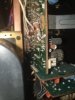
I don't know if they used them more often in the Limited but for me it's 50 %.
(In the picture you can see the styrene capacitors in the back of the flat-amp, the Nichicon LN coupling capacitor, the bronze baseplate and copperplated chassis)
Most obvious differences are the copperplated chassis and the woodpanel cover.
Inside there are more differences, bronze baseplate for the power supply (transformers and main filter capacitors). Further there are some "upgrades" in components, outputs and driver transistors are the same as in the AU-X1!
Then the output coupling capacitors (polar back to back config) from the head-amp and flat-amp are special Nichicon Gold low noise instead of the Nippon.
According to @Bumpalump there are also some small differences in the pre- amp boards.
From the four I have two don't have the "black flag" styrene capacitors but the noble styrene what for sure is nice.
I don't know if they used them more often in the Limited but for me it's 50 %.
(In the picture you can see the styrene capacitors in the back of the flat-amp, the Nichicon LN coupling capacitor, the bronze baseplate and copperplated chassis)

From the four I have
 Well, no wonder you have all this extra information! - as for me, I have never seen one.
GrisPato
Super Member
Yes, once watched the thread of bumpalump on a repair of the AU-D907 Limited. Didn't even know it existed but for sure wanted one.
That's how I started my JDM adventure, still knowing really little about this D 07 series. I reckoned because they are a Limited edition (according to Ishinolab they made and sold around 3000 pc) I'll get some more to save them .
.
I had to pause my restoration work for the time being because of personal issues but hope to be back at it at the end of the summer. Will have to finish my AU-D907 (almost done) and the AU-D907G Extra ( still some work pending on the repair being good) but after that the Limited.
That's how I started my JDM adventure, still knowing really little about this D 07 series. I reckoned because they are a Limited edition (according to Ishinolab they made and sold around 3000 pc) I'll get some more to save them
.I had to pause my restoration work for the time being because of personal issues but hope to be back at it at the end of the summer. Will have to finish my AU-D907 (almost done) and the AU-D907G Extra ( still some work pending on the repair being good) but after that the Limited.
GrisPato
Super Member
AU-D707 (AU-819) uses NMA/NMC1216, AU-D907 (AU-919) uses NMA/NMC1012, AU-D907 Limited and AU-X1 use 2SC2493N/2SA1068N.
I do think the NMC/NMA are probably the same transistors, just different current and/or voltage specification.
The 2SC2493/2SA1068 could be just the next iteration of the then new multi- (ring-emitter) power transistors with high fT ( 30+MHz).
The NM refers to the non magnetic casing.
I do think the NMC/NMA are probably the same transistors, just different current and/or voltage specification.
The 2SC2493/2SA1068 could be just the next iteration of the then new multi- (ring-emitter) power transistors with high fT ( 30+MHz).
The NM refers to the non magnetic casing.
Last edited:


ghamilton
Super Member
So they are interchangeable with equal performance?AU-D707 (AU-819) uses NMA/NMC1216, AU-D907 (AU-919) uses NMA/NMC1012, AU-D907 Limited and AU-X1 use 2SC2393N/2SA1068N.
I do think the NMC/NMA are probably the same transistors, just different current and/or voltage specification.
The 2SC2393/2SA1068 could be just the next iteration of the then new multi- (ring-emitter) power transistors with high fT ( 30+MHz).
The NM refers to the non magnetic casing.
GrisPato
Super Member
That nobody knows for sure because there are no data sheets for the NMA/NMC transistors that I know of.So they are interchangeable with equal performance?
ghamilton
Super Member
I am using the ST brand that echowars suggested. They are great!That nobody knows for sure because there are no data sheets for the NMA/NMC transistors that I know of.
Providing the Output Transistors are the correct specification the amplifier will sound great. The output transistors contribute but are far from being the only thing that makes this happen - the overall design leveraging the advantages of such transistors is key.
As far as I know the NMA/NMC transistors were specially made for Sansui, several HiFi manufacturers did this, maybe as a way of protecting the 'intellectual property' of their designs. But it does mean the exact specifications of such transistors was never generally released, and only some inkling of their spec's was gained from how they were used. And maybe also from electronic testing of undamaged examples removed from amplifiers, and possibly microscopic physical examination of the transistor chips themselves.
As far as I know the NMA/NMC transistors were specially made for Sansui, several HiFi manufacturers did this, maybe as a way of protecting the 'intellectual property' of their designs. But it does mean the exact specifications of such transistors was never generally released, and only some inkling of their spec's was gained from how they were used. And maybe also from electronic testing of undamaged examples removed from amplifiers, and possibly microscopic physical examination of the transistor chips themselves.
ghamilton
Super Member
Hyperion, You told me to use this also and I replaced them at the same time that I replaced the outputs too.
The sound improved!
https://www.digikey.com/en/products...mAaEA9lANogCsIAugL7X4KSkCyAUgKJhkAMAzGAOJVqQA
The sound improved!
https://www.digikey.com/en/products...mAaEA9lANogCsIAugL7X4KSkCyAUgKJhkAMAzGAOJVqQA
ghamilton
Super Member
This is when I replaced all those transistors....
https://audiokarma.org/forums/index...-in-919-any-ideas.764423/page-2#post-10451076
https://audiokarma.org/forums/index...-in-919-any-ideas.764423/page-2#post-10451076
The link you give here is for MJ15031G, which is physically similar to the original (driver) transistors, but is not actually a good substitute for use in an AU-919. Consequently I didn't recommend this one, I mentioned its physical similarity, but instead pointed you at KSA1220 and KSC2690.Hyperion, You told me to use this also and I replaced them at the same time that I replaced the outputs too. The sound improved!
https://www.digikey.com/en/products...mAaEA9lANogCsIAugL7X4KSkCyAUgKJhkAMAzGAOJVqQA
Here is a quote of my post from the thread link in your post #16 above.
You really don't have a lot of choice unless you can find NOS originals, the substitutes suggested, although overkill in respect of their basic specs, have the important metal tabs, (TO220 case) which is the same arrangement as the originals. There are other replacements with similar spec's like KSA1220A (PNP) & KSC2690A (NPN) - but they don't have the metal tab (TO126 case) - so your installation of these types needs to take account of this.
And why? because the Ft of the MJE's isn't good enough in the same way that influences the choice of Output Transistors.
Since that time the readily available and very suitable TTA004B and TTC004B have appeared on the scene, but these still don't have the metal tab.
Last edited:
GrisPato
Super Member
And that's why I got me the Sanyo 2SA1105/2SC2580 transistors that have the same fT and the metal collector tab.because the Ft of the MJE's isn't good enough in the same way that influences the choice of Output Transistors
But ...
I have to say, reading about the impressions of people that use the onsemi MJE's the difference is may be not that big at least not on the overall sound.
GrisPato
Super Member
More on this topic.
The NEC 2SB537/2SD382 do not have an extremely high fT, the Toshiba 2SC2238/2SA968 (used in the AU-X1, D907 Limited ) are higher in fT.
Some data sheets.
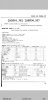
NEC: 40-45 MHz fT
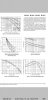
MJE15028/29/30/31:
Low is specified at 30 MHz fT but in the graphic you can see that at 500 mA ( I would guess around the max a driver transistor in an AU-919 will have to deliver) it's around 60-80 MHz fT.
Of course I do not have this graphic of the NEC 2SB537/2SD382 but feels like comparable.
Now for final comparison the Toshiba
Typical 100 MHz but in the graphic you can see that it starts dropping after 500-600 mA. And at 1 A the fT is lower then the Onsemi!
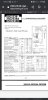
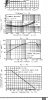
Make your own conclusions!
The NEC 2SB537/2SD382 do not have an extremely high fT, the Toshiba 2SC2238/2SA968 (used in the AU-X1, D907 Limited ) are higher in fT.
Some data sheets.
NEC: 40-45 MHz fT
MJE15028/29/30/31:
Low is specified at 30 MHz fT but in the graphic you can see that at 500 mA ( I would guess around the max a driver transistor in an AU-919 will have to deliver) it's around 60-80 MHz fT.
Of course I do not have this graphic of the NEC 2SB537/2SD382 but feels like comparable.
Now for final comparison the Toshiba
Typical 100 MHz but in the graphic you can see that it starts dropping after 500-600 mA. And at 1 A the fT is lower then the Onsemi!
Make your own conclusions!
Last edited:
Similar threads
- Replies
- 14
- Views
- 1K


