• The move to the new server is done. There are some software and database maintenance updates in process. This has us passing the hat around to help out. We appreciate any donations. Seriously, even a dollar helps. The payment page may be found here - https://www.audiokarma.org/support.html

Audio Technica VM540 ML and Pro-Ject Ultra 500 Phono Pre Amp

I seem to have disturbed a hornets nest here.

Not at all. I think it's just the nature of topic that there can be a lot of nuance to consider, and context is important. As example, what is a "preamp load" in context of the cartridge load? How many manufacturers spec actual Ci rather than the value of the C they paralleled with the inputs? Rhetorical questions, of course, but I believe you get the point.

Interestingly I have measured a 440MLa and it was pretty much identical to the 740ML at the same loading (47k, 150pF). The 440 peaked about 0.25dB higher, which I can easily chock up to different tracks on the test record, or even different ambient conditions.

If I can find some time I'll look at hacking in a bit more C in to my setup. Averaging aside, I still think the behavior around 20kHz on your plots is indicative of enough C to move LPF in to the audible band.
 
Not at all. I think it's just the nature of topic that there can be a lot of nuance to consider, and context is important. As example, what is a "preamp load" in context of the cartridge load? How many manufacturers spec actual Ci rather than the value of the C they paralleled with the inputs? Rhetorical questions, of course, but I believe you get the point.

Interestingly I have measured a 440MLa and it was pretty much identical to the 740ML at the same loading (47k, 150pF). The 440 peaked about 0.25dB higher, which I can easily chock up to different tracks on the test record, or even different ambient conditions.

If I can find some time I'll look at hacking in a bit more C in to my setup. Averaging aside, I still think the behavior around 20kHz on your plots is indicative of enough C to move LPF in to the audible band.

LPF = Low Pass Filter?

If yes, then absolutely. On the higher C, not the lower. The lower C value graph is out of whack because it was averaged with the higher C graph. I'll redo them when I get a chance.
 
LPF = Low Pass Filter?

If yes, then absolutely. On the higher C, not the lower. The lower C value graph is out of whack because it was averaged with the higher C graph. I'll redo them when I get a chance.

Yes; I think you blasted right past exacerbating the resonance to moving the corner f down far enough that it mitigated the issue but also nuked the HF. A bit lower C would likely have worse peaking.
 
Yes; I think you blasted right past exacerbating the resonance to moving the corner f down far enough that it mitigated the issue but also nuked the HF. A bit lower C would likely have worse peaking.

Well just to be clear, I didn't do anything but use a preamp that was specified as having 50pf but had closer to 485pf, due to a change implemented during production.

It was a fairly popular preamp, though, and few object to the sound.
 
You give the impression the cartridge won't work into a preamp set to 220pF. It's perfectly safe for the OP to try both settings for capacitance and hear the difference for himself. The high frequency response will change, but not so much as to render one unlistenable.

Well, of course you can use a 220pF input capacitor in a preamp, but you won’t be getting the best frequency response from the cartridge. There is a reason why AT suggested it, based on what they themselves have measured of their cartridges – they know what is best.

With a 220pF capacitor:
  • Preamp input capacitance 220pF
  • Turntable cable capacitance typically between 70pF and 200pF
  • Minimum cartridge capacitance load (preamp plus leads) calculated is (220 + 70) = 290pF (90pF more than maximum recommended):eek:
  • Maximum cartridge capacitance load calculated is (220 + 200) = 420pF (220pF more than maximum recommended):yikes: :whip::)
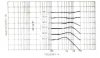
See below for the actual frequency responses of another cartridge, identical resistance to the AT-VM540ML, and with a similar inductance (15% higher, so relatively close, and according to Ortofon, within typical production variations for most MM/MI cartridges), for the probable changes as capacitance varies. You can see in the response below, the capacitances they show are for only the preamp, and the total cartridge loads were (with their 145pF turntable leads):

NOR: total load = 145pF (just the turntable leads, no extra preamp input capacitance)
100pF: total load = (145 + 100) = 245pF (145pF leads plus 100pF preamp)
160pF: total load = (145 + 160) = 305pF
250pF: total load = (145 + 250) = 395pF
360pF: total load = (145 + 360) = 505pF
650pF: total load = (145 + 650) = 795pF

Capacitance Load versus FR.jpg

That cartridge performed best (flattest response) with a load of 245pF, which isn’t that much different from the supposed best load for many Audio-Technica cartridges (based on review measurements), of about 200pF. You can see that with a load of 305pF (the plus 160pF curve, third from the top), it was starting to show signs of a roll-off – that would be similar to 85pF turntable leads with a 220pF input capacitor. While the AT will be marginally less affected by capacitance changes due to its 15% lower inductance, it will still be affected.

So the frequency response won’t be ideal with a 220pF capacitor, particularly with a bit of lead capacitance (say 170pF, which a respected European turntable's leads were measured at in the 90's), and not as flat as the ±2dB response that a German hi-fi publication measured for the VM540ML several years ago (capacitance load not mentioned, but presumably within the recommended 100-200pF).

 
Well, of course you can use a 220pF input capacitor in a preamp, but you won’t be getting the best frequency response from the cartridge. There is a reason why AT suggested it, based on what they themselves have measured of their cartridges – they know what is best.

With a 220pF capacitor:
  • Preamp input capacitance 220pF
  • Turntable cable capacitance typically between 70pF and 200pF
  • Minimum cartridge capacitance load (preamp plus leads) calculated is (220 + 70) = 290pF (90pF more than maximum recommended):eek:
  • Maximum cartridge capacitance load calculated is (220 + 200) = 420pF (220pF more than maximum recommended):yikes: :whip::)
See below for the actual frequency responses of another cartridge, identical resistance to the AT-VM540ML, and with a similar inductance (15% higher, so relatively close, and according to Ortofon, within typical production variations for most MM/MI cartridges), for the probable changes as capacitance varies. You can see in the response below, the capacitances they show are for only the preamp, and the total cartridge loads were (with their 145pF turntable leads):

NOR: total load = 145pF (just the turntable leads, no extra preamp input capacitance)
100pF: total load = (145 + 100) = 245pF (145pF leads plus 100pF preamp)
160pF: total load = (145 + 160) = 305pF
250pF: total load = (145 + 250) = 395pF
360pF: total load = (145 + 360) = 505pF
650pF: total load = (145 + 650) = 795pF

View attachment 2525885

That cartridge performed best (flattest response) with a load of 245pF, which isn’t that much different from the supposed best load for many Audio-Technica cartridges (based on review measurements), of about 200pF. You can see that with a load of 305pF (the plus 160pF curve, third from the top), it was starting to show signs of a roll-off – that would be similar to 85pF turntable leads with a 220pF input capacitor. While the AT will be marginally less affected by capacitance changes due to its 15% lower inductance, it will still be affected.

So the frequency response won’t be ideal with a 220pF capacitor, particularly with a bit of lead capacitance (say 170pF, which a respected European turntable's leads were measured at in the 90's), and not as flat as the ±2dB response that a German hi-fi publication measured for the VM540ML several years ago (capacitance load not mentioned, but presumably within the recommended 100-200pF).
Thank you for the explanation, but I'm well aware how load capacitance interacts with cartridge inductance to form a resonant peak. Yes, one particular value of capacitance gives the flattest response, we know that. We can also see from the graph that being 100pF too high isn't the end of the world.
 
Back
Top Bottom