
• The move to the new server is done. There are some software and database maintenance updates in process. This has us passing the hat around to help out. We appreciate any donations. Seriously, even a dollar helps. The payment page may be found here - https://www.audiokarma.org/support.html

Baby's First Capacitor Repair / Replacement

SadTrombone

New Member
Purchased a hobby homemade set of monoblock amp a few months ago in Japan. Unfortunately one of the amps stopped working. Tried to swap tubes, cables, speakers - nothing. When I moved the amp from the shelf, I noticed an oily residue below it. I took a look at the inside amp and found what looks to be a busted / leaking capacitor with some now dried out material leaking out.
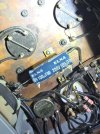
elna_posting_copy.jpg

I reached out to the person who made the amp, and they informed me that the original capacitor (a vintage Elna) is no longer available. However, they recommended the following replacements in pairs:

  • 200V / 100µF
  • 300V / 100µF or 47µF
It looks like there are plenty of places to purchase capacitors, but after some research, the general advice seems to be to avoid eBay and Chinese marketplaces like Alibaba. Is there a trusted North American source recommended for audio applications?

I’ve found capacitors priced between $4 and $8, but I also see listings geared toward audio repair where capacitors cost $40 to $100. Are those the typical dark arts / snake oil or could there be a noticeable difference in audio quality? The amp maker originally used a vintage capacitor, which makes me wonder it's ability to impacts the sound.

Lastly, I have very little soldering experience, but this looks like a straightforward job with just two connection points. Would this be a relatively easy DIY replacement?

They offered to repair the amps themselves BUT that would involve shipping a huge heavy am to/from Japan. Likely around ~$400 in shipping

I appreciate any insight or advice. Thx!
 
Last edited:
Register to hide this ad
Sources: Mouser, Digi-Key and Arrow Electronics are amongst the most-often-cited and trusted sources on AK. I've used all three and marginally prefer Mouser over the others (easier filtering of parts and parameters on their website.
 
I’ve found capacitors priced between $4 and $8, but I also see listings geared toward audio repair where capacitors cost $40 to $100. Typical / usuanl snake oil or could there be a noticeable difference in audio quality? The amp maker originally used a vintage capacitor, which makes me wonder it's ability to impacts the sound.

Many people here on AK, myself included, will tell you "there is no measurable difference between so-called audiophile or audio-grade electrolytic caps and regular caps". The other side of opinions will tell you " only the best (snake-oil-sounding) caps will sound great". Only your ears and experience can really settle this argument.

There are roughly two categories of non-audio-grade electrolytic caps: regular and low leakage. The low leakage ones have lower DC leakage, by design, than the regular caps. Lower leakage produces less distortion in the audio frequency ranges, so many of us choose series like Nichicon KL for caps that are in the audio signal path. Most other regular caps are better at delivering power and they are usually slightly cheaper.

I can't tell you much about "audio grade" or "audiophile" caps. Other AK'ers will have to chime in here. They are always much more expensive than the above non-audio-grade caps.

You will also find one more factor plays a part in availability and price of the replacement caps you look for: axial leads versus radial leads. Your cap has axial leads, that was common back in the day, it is more common in point-to-point design (like yours), it is harder to find (at Mouser and Dig-Key), and it is more expensive. There is no performance difference between an axial-leaded cap and the same cap with radial leads. So, if you want a good or great replacement cap, you may want to look for radial leaded caps instead of axial leaded caps as they will be easier to find and cheaper... while doing the exact same job for you.

There is also the difference between polarized caps (one negative lead and one positive lead) and non-polarized caps (both leads are the same). There is plenty of debate about one of these being better, for audio, than the other, but, in general, you'll find recommendations along the lines "replace polarized caps with polarized caps" and that may be best for you in this case.
 
That cap probably worked when he put it in.
I'd order new caps from mouser, digi key, arrow, allied, or any major electronics wholesaler.
I'd avoid high priced audiophile market capacitors because I don't have the time or inclination to sort out which ones actually work and which don't.
Mouser supplies the US military and their contractors, they have a very sophisticated counterfeit detection program so that I Don't have to.
 
You will also find one more factor plays a part in availability and price of the replacement caps you look for: axial leads versus radial leads. Your cap has axial leads, that was common back in the day, it is more common in point-to-point design (like yours), it is harder to find (at Mouser and Dig-Key), and it is more expensive. There is no performance difference between an axial-leaded cap and the same cap with radial leads. So, if you want a good or great replacement cap, you may want to look for radial leaded caps instead of axial leaded caps as they will be easier to find and cheaper... while doing the exact same job for you.

There is also the difference between polarized caps (one negative lead and one positive lead) and non-polarized caps (both leads are the same). There is plenty of debate about one of these being better, for audio, than the other, but, in general, you'll find recommendations along the lines "replace polarized caps with polarized caps" and that may be best for you in this case.

This was an INCREDIBLY helpful reply. This morning I noticed that many of the axial caps has 24+ week lead times across Mouser and was quite curious if this was an "old style" and if there would be a "close enough" replacement

Thanks again for taking the time to really explain this all out! Got to start digging in again ...
 
Also, a rating of 200V tells me the cap you have is for carrying power and not audio signal. So, you don't need to look for a "low leakage" replacement cap. A regular electroytic cap will do just fine.

Reasonable axial-leaded replacements:

I can not thank you enough. Really, really appreciate it
 
Back
Top Bottom