• The move to the new server is done. There are some software and database maintenance updates in process. This has us passing the hat around to help out. We appreciate any donations. Seriously, even a dollar helps. The payment page may be found here - https://www.audiokarma.org/support.html

...Before I start smashing these with a hammer!

The crossover network in your KLH 6's and in other Kloss speakers (like the Advents) is drek. There are threads about on the WWW that entertain new ideas about these networks, where components and switches are either changed or bypassed. If you want them to remain as original, have at it but there are better solutions out there. When I had a pair of OLA's, I was thinking of a network substitution. That would leave the original intact for later resale and still offer up a better voiced network.
Any links or drawings for OLA's?
 
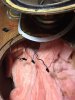
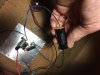
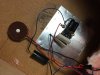
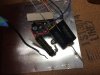
IMG_3257.jpg IMG_3260.jpg IMG_3291.jpg IMG_3295.jpg IMG_3262.jpg Here's a couple pics of a pair I recently re-capped.
Note the first pic shows the wires with the wire nuts prior to disassembly.
Hope this helps.
 
This thread was very helpful. I am working on a pair of 5's now and have a set of 6's to restore next. I was searching for a schematic for the 6's so I could order caps and resisters for the 6's with my order for the 5's. I didn't want to have to open up the 6's to get the list of parts I will need.
These are my first speaker restorations, including crossovers. I want to keep the design original wherever practical. I don't know enough to make improvements.
I was planning to use Dayton brand parts. Is it worth it to get smaller tolerances 5,10, 20%, and can someone please explain (oil) in the description of the caps as described on the schematic above from KLH?
I took a few photos of the model 5 wiring, sketched and marked everything, before removing the crossover. I was surprised to find the crossovers looked different, one from a serial number in the 7000's built in 1968 and the other with a serial number in the 34,000's with no date marked. The woofers were marked "5" on the cones. I did seal them using the sealant sold by vintage-AR on eBay. I just ordered a second bottle of sealant for the model 6 woofers and some AR2ax's.
Again, great information in this thread. You all have experience doing what I am doing for the first time. So any other advice would be welcome.
Thanks

 
Ideally you want parts for the crossovers to match value wise as closely as possible. The closer they are matched the closer each speaker will sound to the other.
 
I got new caps but the sizes look way smaller than what's in my speakers. They are the right values, I copied part numbers from that model 17 thread and triple checked all of the values. But holding them in my hand, I can't believe they are the real replacements. I also have plenty of high frequency coming out of these speakers, that I don't feel it necessary to try that just yet. I am not experienced in soldering or wiring, clearly.

To the member who said to view the model 17 thread... Well, I said I saw all of those, which I did. That speaker is missing the coil inside the cabinet, and also kind of goes from here's the new caps to screwing the woofer in. The nitty gritty details are what I needed. Not the jargon and assumed knowledge of electricity. I needed someone to hold my hand. The diagrams drawn for me on this thread do NOT exist anywhere else on the internet! MANY MANY thanks for those, from all of us dunces out there in dumbland.
 
an "oil" capacitor is simply one that uses oil (inside) to augment the dialectric (which is probably a plastic film of some sort). The oil sort of serves to 'seal the edges' of of the foil/film inside the capacitor, so that corona discharge (at high voltages), e.g., doesn't occur. For whatever reason, the oil-filled capacitors -- are often found to be the best sounding capacitors in many audio applications. Good ones ain't cheap; phenomenal ones are expensive.

Don't worry about the size of your replacement capacitors; modern ones (especially electrolytics) tend to be smaller than old ones.
This being said, some of the "boutique" modern capacitors are huge-mongous ;)
 
Back
Top Bottom