• The move to the new server is done. There are some software and database maintenance updates in process. This has us passing the hat around to help out. We appreciate any donations. Seriously, even a dollar helps. The payment page may be found here - https://www.audiokarma.org/support.html

Beveridge Model 5 - Restore

Still thinking about this a bit. Does anyone with technical knowledge know anything about this circuit board type stat? Any other manufacturers develop something similar? Off hand, I don't think I have ever seen another "circuit board" type of stat from another manufacturer.
 
Good question. I've seen a pic of the "circuit board" on the net, but don't understand the nature of the stators.
 
I haven’t read all of this thread, so I may be miss understanding what you mean by a circuit board esl, but Quad ESL63s, and their offshoots use printed circuits boards as stators.
 
Had a VERY interesting conversation this evening. The Beveridge history is just falling into my lap, it seems. A local audio buddy, ironically, met a very nice fellow named Kavi that lives on the westcoast recently. They get to talking and he mentions he worked for Harold Beveridge in the early '80's, so my friend gets me in touch with him and we spoke for two hours! :yes:

Kavi is an extremely interesting person without a doubt. He started working with Harold not long after he formed his second company which is of note.

First company was called Harold Beveridge Inc. which produced the Models 2 and 3 (and other iterations like 2SW). This company went bankrupt, so a second company was formed, Harold Beveridge International and this company ONLY made Model 5's. Kavi also confirmed that the new company opened it's doors in the same building as the prior and, somehow, managed to keep a lot of the prior company's inventory of parts which explains why some of the early Model 5's have the original transducer. Eventually, this company would also go belly up and Harold opened a third company, but could no longer use the Beveridge name, so it was called California Audio Labs and built the Model 6 and Kavi thinks there may have been some Model 7's either made or in the works (no idea what happened to a Model 4).

Although Kavi was only there a short while, he was able to convince Harold to improve the transformers and, if you look at my crossover and 335's, you can see that the new Model 5 have a MUCH bigger transformer. A funny story, on one day, the usual builder, a young man named Michael Edwards, did not show up for work, so Harold asked Kavi to help him finish one of the speaker pairs that needed to ship. Kavi has long hair and as he was using one of the electric screwdriver/drills to install the outer cabinet, his hair got caught up in the screw and had to be cut to free himself. Later, as they were boxing it up to ship to Singapore, he drew the Eye of Horus on the shipping container as a joke. (and no, he did not know about any Mexico scribblings, lol).

As for case finishes, Kavi told one very interesting story about the white lacquer finish on some Model 2's that has been seen in some photos. Apparently, some very well known actress, which some say was Julie Andrews, that was from Beverly Hills wanted a set to match her white piano. So Harold went through a local auto paint shop and had 3 sets made. Most interesting, one set went to someone in Sweden (this was in the mid-70's) and they eventually found their way into the hands of Kavi. The 2nd pair, was sold to a well-to-do Doctor in California that developed a friendship with Harold. Years later, in the late 80's, this set also found their way to Kavi (he had sold the other set before moving to the States around 1982). No idea what happened to the set that was sold to the actress.

Kavi is on the music creation side of things and was hired by Harold to test each system. He was also responsible for managing the setups at various shows, like CES. Overall, he viewed Harold as a brilliant engineer, but obviously not a good business manager.

One more note, as he recalls, the speakers were initially crossed over at 80 hz, but it became apparent that was too low, so they were changed to be crossed over at 100 hz. Not sure if anyone can confirm where theirs are crossed over. I think 24res, you had some estimates.

I have a few more notes, but will post them later. Our "Audio Archeology" continues! If this thread keeps going, we'll have all the Beveridge history right here. :D
Kavi Alexander (Water Lily Acoustics)?
 
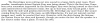
Some addition to encyclopedia about Model 4 from HiFi Stereo Review.
HiFI_Stereo_Review_MAY_1981.png
And small article from BASS magazine.
BASS_09_10_8106.png
 
Last edited:
As for PCB type transducers, USSR 25 ASE 101 Statik has very similar construction with laquer dielectric instead of nylon. The metalyzed aluminium membrane is used inside. The construction is on rivets. The whole panel consists from one HF/MF transducer and three LF transducers.
http://ldsound.ru/25-ase-101-statik/
 
Last edited:
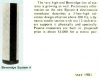
The BAS Speaker (the Boston Audio Society's journal) contains very interesting information on early Beveridge in 1976 and contains some words about Model 1 prototype.
BASS_05_03_7612.png
 
Last edited:
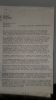
Audio Fan Suggested I add Photos of the Documents I received from the original owner of my Beveridge Speakers
 

Attachments

  • Letter from Prod MGR.jpg
    Letter from Prod MGR.jpg
    35.2 KB · Views: 43
  • Letter Modification.jpg
    Letter Modification.jpg
    77.6 KB · Views: 43
Nice!

We keep adding to the Beveridge history. Thanks for reaching out and please also create a thread or add to the other Model 3 restore thread when you work on your grill covers for your Model 3 set. It may help others down the road.
 
Audio Fan Suggested I add Photos of the Documents I received from the original owner of my Beveridge Speakers
So very cool. There’s a thread about imaging and the sweet spot. I mentioned the astronomically expensive Beolab 90’s that can electronically move the sweet spot and adjust room correction to five positions in the room. I’ve heard them and it’s true. I wanted to mention how the Beveridge speakers’ sweet spot is wherever you are, but there’s no way I could explain how they do it. Just lucky enough to have heard them do it once.
 
So very cool. There’s a thread about imaging and the sweet spot. I mentioned the astronomically expensive Beolab 90’s that can electronically move the sweet spot and adjust room correction to five positions in the room. I’ve heard them and it’s true. I wanted to mention how the Beveridge speakers’ sweet spot is wherever you are, but there’s no way I could explain how they do it. Just lucky enough to have heard them do it once.

They are the most challenging sound to describe. Out of all the 100+ sets I have owned over the years, they certainly stand out as the most unique experience of them all. At best, I have always called it 3D imaging, not sure if I saw that somewhere prior, but interesting to see that Beveridge called it that in the above correspondence. I have always assumed it was a combination of the stat and acoustic lens, but as well, no idea how that creates the airiness of separation.
 
They are the most challenging sound to describe. Out of all the 100+ sets I have owned over the years, they certainly stand out as the most unique experience of them all. At best, I have always called it 3D imaging, not sure if I saw that somewhere prior, but interesting to see that Beveridge called it that in the above correspondence. I have always assumed it was a combination of the stat and acoustic lens, but as well, no idea how that creates the airiness of separation.
Especially so, when they’re pointed the right way they look so wrong :crazy:
 
It answers the question "what if we designed a loudspeaker to have no sweet spot at all?"

Well, that turns out to make it ALL sweet spot. Kind of an inside-out speaker.
 
Back
Top Bottom