
Bruno Primas
Super Member
My 940 had the more "dangerous" platter. My 960, however, has this one.
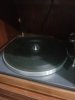



My first system was similar, with a BIC 960, Pioneer SA 6500 II integrated amp, and EPI 100 speakers. I didn't end up keeping the BIC 960, or the Garrard GT55 that replaced it, very long, as neither of them proved reliable in their automatic record changing and arm lift functions. They had some fun features, though, and were not at all bad sounding. The Thorens TD 146 I ended up replacing the Garrard with didn't really sound any better, but it's been spinning records somewhere in my family since 1984 (owned by me for about a year before being replaced by an LP12, then used by my older brother for decades, and currently in my nephew's home). I also bought a BIC 920 without a base, and it eventually made its way into the console system that a friend's grandmother owned, replacing the old record changer in it that no longer worked. The 920 worked great and lasted as long as grandma did.A BIC 960 was part of my first big audio purchase in 1978. Thought I was in audio heaven with a Pioneer SX-750 (still have it), the BIC 960 (sold a few years back), Pioneer CT-F500, and Bose 301 speakers


What was it about the 960 made you think the build quality was cheap? If you compare the build material/quality to a comparable Dual of the day, they are very similar, in my opinion.
Doug
The bic table is built almost entirely out of vacuum formed plastic.
It gives the appearance of a wood plinth but the wood is really just trim around the plastic body.
It would transmit vibrations very easy and feedback.


The bic table is built almost entirely out of vacuum formed plastic.
It gives the appearance of a wood plinth but the wood is really just trim around the plastic body.
It would transmit vibrations very easy and feedback.
Now proper isolation would remedy this but this table requires much more isolation than my pioneer pl540 does.
I don’t mean to say the bic is a bad table, it was engineered very well. The tonearm and head shell were very low mass and the cueing system is great. It also sound really good, no worse than my pioneer. It just was a bit too light-weight and gave an impression of being flimsy, which is not really true but it felt that way.
The duals which have the United audio plinths are much more heavy duty and substantial comparatively.
I grew up listening to my dads dual 1219 and flimsy is not something that you think of when you think of dual.
These are just my opinions.
No intention of bashing bic.
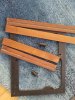
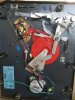
That is simply untrue. As it so happens, I have my 960 plinth apart to reglue. As you can see, it is entirely made of wood, and sits on four cone-shaped feet. There is a clear plastic dustcover underneath to keep the components clean, but that is all it is - a dustcover. Second photo shows mechanism. Deck and moving parts are metal. Platter is aluminum. Has plastic cam, same as all Duals - but no pesky stuerpimpel thank goodness. .
View attachment 1363873 View attachment 1363874


All the BICs had stamped aluminum parts underneath, which aren't as strong as the steel parts of Duals, Miracords, Garrards, BSRs and so on. And the parts above were plastic and aluminum, and the tracking force and antiskating force were applied by long springs anchored to metal posts, rather than coil springs on the better versions of the competition.
Which is not a criticism of the BICs - making a good sounding, durable table using less expensive parts is sensible (to say nothing of being the only way to survive at all if you are manufacturing in the USA). BICs won't stand up to brute force repair techniques like twisting the platter off after the lubricants have dried up, whereas other tables might. But that is really more of an indictment of the technique than it is of the turntable, and it is definitely an indictment of the lubricants BIC used. Most other automatics get sluggish because of lubricants drying over the years, but the BICs completely lock up, making it harder to relube them.
