
JayPare
Active Member
Can I paint over the brown rings? If so that should be fine! Or maybe there is some kind of black ring sticker I can put over it?Fabricating new grilles shouldn't be difficult. A frame can be constructed out of 3/8" plywood.


Can I paint over the brown rings? If so that should be fine! Or maybe there is some kind of black ring sticker I can put over it?Fabricating new grilles shouldn't be difficult. A frame can be constructed out of 3/8" plywood.


Tweeter diffraction rings are for dome tweeters, they'll have zero effect on cone tweeters. Painting the brown rings will not harm the tweeters at all just be sure to use a special formula "audiophile approved" (i.e. snake oil) paint when doing it.Try these diffraction control tweeter rings.
https://www.madisoundspeakerstore.com/acoustic-damping/dampers-felt-defraction-ring-for-tweeters/

I would not replace the inductors, they don't usually go bad. Standing the middle one on edge is a good idea. I would probably try to replace the thermistor, if the cost is minimal.
I don't know that you have to replace the thermistor if it's working OK. I assume it has low impedance at low temps but higher as the temp rises under heavy loads. You might just check the cold resistance and see if the two match.

From what I found on other threads, the thermistor is acting as a variable resistance to dynamically change the crossover value with the temperature (for example if there is more current passing through it, the temperature will go up so the resistance will go down). This is for auto. For manual (off) the thermistor is by-passed and the resistance is controlled with the potentiometer (knob). Someone correct me if I'm wrong.After looking at the schematic, I am not sure what that thermistor is doing there, or what the Auto-Manual switch does. I have not seen either one of these on a crossover before. If anyone can explain this circuit, I'm curious.
The thermistor is a NTC, that means its resistance goes higher at low temperature and lower at high temperature (I tested with putting it in the freezer and applying my fingers on it after). At 25°C it has a resistance of about 16 ohms! However, I'm still missing the current rate! If someone could suggest me a value with explication I would appreciate. In the meantime, I decided to email BIC about it! I know it's a long shot but if I never try they will never give me any answers!

Was getting the same behavior as you before the recap but now I can see the difference. Maybe a little bit of this is in my head but there is a difference for sure.All I remember was putting it on 'auto' had no discernible effect on the sound. In fact, turning the knob all the way up on manual still wasn't enough top end.
After comparing those speakers with the other pairs I've got, I will definately keep them. So I'll replace the capacitors I previously bought with better one.Parts Connexion, is out of Canada. They carry Mundorf NPE's; the E-Caps. Madisound has Bennic NPE's, which are also very good. Plus, Erse and Parts Express carry a wide range of capacitors too.

Can't find some Mundorf 16µf. IYHO, should I go with the closer value (i.e. 15µf) or go with a different brand?I've never used any of the Mouser capacitors. But the Cornell Dubilier film capacitors get good reviews. Still, personally, I'd recommend the Mundorf E-Caps. Regardless of where you buy, make sure to get non-polarized electrolytic capacitors. I wouldn't use any capacitor with a high tolerance either. Definitely not higher than +/- 10%. I like 5% or less tolerances.
Good luck.
Can't find some Mundorf 16µf. IYHO, should I go with the closer value (i.e. 15µf) or go with a different brand?
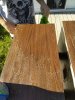
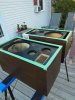

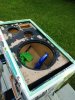


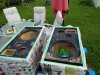

Unfortunately those speaker covers all have deteriorated with time and it's pretty much impossible to find some! I might end up doind custom covers but I kinda like the rest of the speaker look. So if I could hide that ugly brownish ring I would be happy!

