
• The move to the new server is done. There are some software and database maintenance updates in process. This has us passing the hat around to help out. We appreciate any donations. Seriously, even a dollar helps. The payment page may be found here - https://www.audiokarma.org/support.html

BMS Drivers

Skywave's 9844 Findings

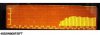
902-8B vs. 4552nd on 811B horn, same filter, just a driver swap:

attachment.php


attachment.php


http://audioheritage.org/vbulletin/showthread.php?p=207967#post207967

I confirm his 902-8B results beginning here:

http://audioheritage.org/vbulletin/showthread.php?p=208995#post208995
 

Attachments

  • Skywave 902 RTA.jpg
    Skywave 902 RTA.jpg
    20.9 KB · Views: 217
  • Skywave 4552 RTA.jpg
    Skywave 4552 RTA.jpg
    17.3 KB · Views: 217
I added the 4 & 8 ohm Mills resisters like Mike Punker X did on his 4552's a couple weeks ago and they made a world of difference. It also gave me a great deal more xover control. These drivers are great. Not ear fatiguing at all. This is a must have, must hear upgrade for Altec M19's.
 
I added the 4 & 8 ohm Mills resisters like Mike Punker X did on his 4552's a couple weeks ago and they made a world of difference. It also gave me a great deal more xover control. These drivers are great. Not ear fatiguing at all. This is a must have, must hear upgrade for Altec M19's.
Mike's additional attenuation for 4552nd in M19 is posted here:

http://audiokarma.org/forums/showthread.php?p=1729569#post1729569

The BMS drivers are much more efficient than the vintage Altecs, and may require padding down to balance in existing passively crossed systems.... :yes:
 
They're both running on whatever variant of N800F is in his 9844s (he's gonna open them up to determine the component values,) and yes, measured at 3 Ft.

I checked that at 10 feet when I measured them; it's not a horn integration issue, bottom curve here:

http://audioheritage.org/vbulletin/showthread.php?p=208995#post208995
I was afraid of that (3FT = 3 foot meas distance). I was hoping it was some arcane designator for Zilch's latest comp network. Why did I hope this?

1. Assuming Skywave's 4552s are the 8 ohm version (based on comments above that "all 12 meas @ 6.2 ohm..."), I find it difficult to believe that he achieves the flat HF response his pics indicate playing thru just the N800-F. OTOH, if the N800 is the asymetric version, an 8 ohm HF load does introduce ~6dB dip (modeled) centered around 2KHz so maybe it's possible. It will be interesting to find out what version of the N800 he has. Based on measurements I'm guessing it's the asymetric version. If so, an acceptable xover design for my project may have been under my nose for the last year and I didn't even see it. Aaarrrgghhh!!! A year of xover design iterations for naught.

2. There must be something wrong with my measuring protocol. The best response I've been able to achieve at HF using the 4550 or 4552 is ~ +/-2dB while Skywave and Jack Giff routinely appear to be getting much better than +/- 1dB. How do they do it? FWIW it seems that your meas variance is more in line with what I get.

Ah well, back to the drawing board.
 
2. There must be something wrong with my measuring protocol. The best response I've been able to achieve at HF using the 4550 or 4552 is ~ +/-2dB while Skywave and Jack Giff routinely appear to be getting much better than +/- 1dB. How do they do it? FWIW it seems that your meas variance is more in line with what I get.
Their RTAs are doing a bit of averaging. I'm seeing +/- 1.5 dB in Skywave's 4552 curve, above.

If I get within +/- 2 dB, I call it "Done," though I think N800F plus bridged-T can dial BMS a bit better than that.... :yes:
 
OK, here's a new one for ya. My LEAK Sandwich speakers are crossed at 900Hz, but have a weak HF. Otherwise they sound amazing. So today, I mounted the BMS/811-B combo in place of the mid/tweeter, sitting on top of the cab, obviously, & it's all but perfect soundwise. :D All it needs to be perfect is an attenuator/L-pad, which won't be long. These are something that you just can't explain, you have to hear them together to understand how good they are. :smoke: I'd like to find some smaller horns, though, with a similar sound to the 811-Bs, as they don't balance on top very well, & I'd rather avoid any "mishaps". I thought about waveguides, but my free baffle space is only about 4"x12". :scratch2:
 
Had a mishap recently. To state the obvious, compression drivers, even ND versions, can be forceful projectiles.
Oh, and now I get to use this:
:worthless
 
Time to bump this quite interesting thread :yes:

I'm looking to add some high end to my recently aquired Valencia 846As. I haven't pulled the back off, but I'm assuming 16 ohm 806As on 811Bs. I too find the highs somewhat lacking. I've messed with it a bit and right now am running a set of Chinese looking bullet tweeters with a 2 uf cap in series as an add on tweeter. They sound much better.
After talking with Newman and Punker at Bauhausler's SMAC meeting last weekend, the BMS drivers came up. The reading here seems to indicate that the 4552NDs would be a nice cure. What do you think I can expect from them with the stock crossover?
 
The reading here seems to indicate that the 4552NDs would be a nice cure. What do you think I can expect from them with the stock crossover?
Either the original "Tank" compensation filter or the adjustable "Bridged-T" will get you full extension from 4552nd.

Buy the 16-Ohm version if it's 846A you're working with.... :yes:
 
Either the original "Tank" compensation filter or the adjustable "Bridged-T" will get you full extension from 4552nd.

Buy the 16-Ohm version if it's 846A you're working with.... :yes:

My $0.02 on the subject would be to opt for the bridged T comp over the "Tank" (assume you're referring to the parallel resonant circuit in series with the HF driver here). This is based on listening on a similar speaker. To my ears, my version of the "Tank" has a tendency to impart a very slight honky or nasal quality to HF compared to the T network. Curiously, the Tank could be made to measure flatter but apparently all is not in the measurements.

Also, based on both listening and measurement, I think the 4550 might be a better choice for a stock N800 xover because it is nominally 800Hz and the 4552 seems to not like going that low. The 4550 seems happier than the 4552 in a stock xover situation. Ideally both drivers seem to like 1,000 - 1,200Hz better than 800. Note that if the N800 is the asymetric version (and I suspect it is), I'm not sure what the actual xover point really is but it might be considered to be approaching the 1,000Hz point or a bit higher.

As always, my opinion: YMMV.
 
Also, based on both listening and measurement, I think the 4550 might be a better choice for a stock N800 xover because it is nominally 800Hz and the 4552 seems to not like going that low. The 4550 seems happier than the 4552 in a stock xover situation. Ideally both drivers seem to like 1,000 - 1,200Hz better than 800. Note that if the N800 is the asymetric version (and I suspect it is), I'm not sure what the actual xover point really is but it might be considered to be approaching the 1,000Hz point or a bit higher.

As always, my opinion: YMMV.

Well that's perhaps the next step as the general consensus seems to be that the Model 19 style crossover at 1200 HZ is a better fit too. Problem is that the schematic is for 8 ohm speakers and mine are 16 ohm and that should require different cap values for the same crossover points. But then I could also I mix the 16 ohm woofer with an 8 ohm BMS 4552ND, or build a bigger cab, or flip all the drivers and buy 19s...
Slippery slope, eh??
 
Well that's perhaps the next step as the general consensus seems to be that the Model 19 style crossover at 1200 HZ is a better fit too. Problem is that the schematic is for 8 ohm speakers and mine are 16 ohm and that should require different cap values for the same crossover points. But then I could also I mix the 16 ohm woofer with an 8 ohm BMS 4552ND, or build a bigger cab, or flip all the drivers and buy 19s...
Slippery slope, eh??
Well, that's the fun part, of course.

Don't be surprised if the 811Bs are gone, too, by the time you're done.... :D
 
Well, that's the fun part, of course.

Don't be surprised if the 811Bs are gone, too, by the time you're done.... :D

And some waveguide crammed in there I presume? Got to say, as good as the Altec 511 and 811 are, this little 9.90 wave guide does them in.:thmbsp:

Russellc
 
My $0.02 on the subject would be to opt for the bridged T comp over the "Tank" (assume you're referring to the parallel resonant circuit in series with the HF driver here). This is based on listening on a similar speaker. To my ears, my version of the "Tank" has a tendency to impart a very slight honky or nasal quality to HF compared to the T network. Curiously, the Tank could be made to measure flatter but apparently all is not in the measurements.

Also, based on both listening and measurement, I think the 4550 might be a better choice for a stock N800 xover because it is nominally 800Hz and the 4552 seems to not like going that low. The 4550 seems happier than the 4552 in a stock xover situation. Ideally both drivers seem to like 1,000 - 1,200Hz better than 800. Note that if the N800 is the asymetric version (and I suspect it is), I'm not sure what the actual xover point really is but it might be considered to be approaching the 1,000Hz point or a bit higher.

As always, my opinion: YMMV.


Hey Steve,
Thanks for your post.
For the helluvit I am going to swap 4550s into the Altec 9844s and put the 4552s into my active system (Econowave) at home. If I remember correctly, the acoustic crossover point in my Altec system is approx. 1.2k with N800F and 8 Ohm loads.

I apologize, I have not been able to open up the stock crossover to check component values. This will not happen in the short term.
 
Hey Steve,
Thanks for your post.
For the helluvit I am going to swap 4550s into the Altec 9844s and put the 4552s into my active system (Econowave) at home. If I remember correctly, the acoustic crossover point in my Altec system is approx. 1.2k with N800F and 8 Ohm loads.

I apologize, I have not been able to open up the stock crossover to check component values. This will not happen in the short term.

No need to applogize. Tearing into one of these potted xovers in the wrong domestic setting is not recommended what with potential for odors and general gloppy mess. OTOH, if you're is into a little measurement, you can pretty closely determine the type of N800 you have w/o destruction. Just connect 16 ohm resistive loads to LF and HF outputs, feed the input with low impedance source, run a frequency sweep, plot the outputs and compare to previously posted plots. Assuming there's nothing defective in the xover, the value of the HF cap will become apparent. I've found this is pretty accurate if one knows the basic circuit and can model and plot the theoretical response.
 
No need to applogize. Tearing into one of these potted xovers in the wrong domestic setting is not recommended what with potential for odors and general gloppy mess. OTOH, if you're is into a little measurement, you can pretty closely determine the type of N800 you have w/o destruction. Just connect 16 ohm resistive loads to LF and HF outputs, feed the input with low impedance source, run a frequency sweep, plot the outputs and compare to previously posted plots. Assuming there's nothing defective in the xover, the value of the HF cap will become apparent. I've found this is pretty accurate if one knows the basic circuit and can model and plot the theoretical response.

Steve, is that like measuring the voltage drive across the resistive load during the sweep? I'm assuming one for the LP and one for the HP.

I am planning to get Soundeasy in the Fall, that should enable this type of measurement.

Zilch showed me a way to do voltage drive readings with pink noise and the DEQ2496, which I already own. Do you think an RTA display will yield a "curve" similar to a swept sine wave graph?

I guess I'll just try it after I get some more resistors.

Thanks!
 
Yes, but don't forget input transformers if you're using amps to drive it.

The voltage drive curves are posted in your 9844 thread on LHF, and elsewhere.
 
Steve, is that like measuring the voltage drive across the resistive load during the sweep? I'm assuming one for the LP and one for the HP.

I am planning to get Soundeasy in the Fall, that should enable this type of measurement.

Zilch showed me a way to do voltage drive readings with pink noise and the DEQ2496, which I already own. Do you think an RTA display will yield a "curve" similar to a swept sine wave graph?

I guess I'll just try it after I get some more resistors.

Thanks!

I don't see any reason you couldn't use something like the DEQ2496 to derive a curve of the xover response. This assumes of course that the 2496 has proper inputs so you can measure voltage across the load resistor. I'm not familiar with the device so can't help with that. One major concern about this method will be the relatively low inherent resolution. You'll probably be able to tell if the cap in the HF section of the N800 is nominally 4uF or 10uF but you wont be able to infer the value of the cap to anything better than +/- 2uF or so. If you're able to put up with the tedium, you can perform the sweep manually with just a signal generator and appropriate AC voltmeter. The resolution can be anything you want with this method.
 
Back
Top Bottom