• The move to the new server is done. There are some software and database maintenance updates in process. This has us passing the hat around to help out. We appreciate any donations. Seriously, even a dollar helps. The payment page may be found here - https://www.audiokarma.org/support.html

Brought home my new project - SX780

I think the originals were all bent the same for ease of installation and clearance. I've bent those on the replacements I've installed, but I end up holding all the pin bases at once and bend all the tips simultaneously. Whatever you decide, make sure the unused pins do not contact anything else.

Yeah, that makes sense, as far as holding it and bending them all at once.

They couldn't have come at a worse time, but luckily, I have off 5 days when I come off of my night shift. I have some Technics SB-G800's out in the garage that I picked up about 15 years ago. I think the 780 will push them okay. I may try to clean them up and sell them locally for whatever I can get for them. I would love to get my hands on some nice, 100-watt HPM-100's for it eventually. I think I have a turntable in the attic of my garage, somewhere. I bet it's been about 23 years since I spun a record. Since them I have bought several albums online, so I can't wait to give 'em a spin. It's all coming together....:D
 
Well, coming off the night shift is never easy for me....worked till 6am and slept till 1 pm today. So I didn't get out today to get the solder I needed to install my power pack, but all was not lost. I did clean up the old solder from where I removed the old Darlington. I had bought one of those simple syringes from RS last week, the simple kind you just squeeze, heat the solder with the gun, wait for it to puddle, then release to suck. Took me a few tries to get it down, but I think I got all 6 puddles fairly cleaned up. Wiped off the excess heat grease that was from the old one as well. Just have to return to RS to get the solder and some new thermal grease.

The good thing is that I'm getting more comfortable with the solder gun. I was very hesitant when I first got this receiver because I had barely used this gun since I bought it. I have an old 25 year old boom box that has a loose connection on the left channel. Looks like I might have another guinea pig to work on. :D

Hopefully I will have a full update by tomorrow afternoon letting everyone know how the repair went.:thmbsp:
 
Ladies and gentlemen, I'm proud to report that the 780 is running on all cylinders!!! I picked up the solder and heat sink compound that I needed this afternoon. Finally was able to come upstairs and attempt my first, real soldering. My first attempt shook my confidence a little....no click of the relay. Cut it off and tried one more time, just for the heck of it. Got the click! But when I cut the volume up, one needle pegged out briefly, then clicked back off. I looked at my pitiful excuse for solder-puddles and thought, one of these looks like it's not quite attached to it's corresponding pin on the Darlington. So I reflowed them all and not only made them look better, but more full. Plugged it back in and I jumped as the music kicked in! Sweet, sweet music.

For now, all I have hooked up are some surround sound speakers because the speakers I have in here now, which are hooked up to my normal receiver, are too difficult to get to. Oh, and my wife just went to bed with a headache. :D

Against the advice of some, I did not replace both of the Darlington power packs, just the one that was bad. I had to prove to myself that I could solder in one of these in, let alone 2. Cosmetically, thanks to one very generous member, I have all the knobs now for it as well. My next project is to see what course of action I'm want to take to fix the faux wood paper that's currently on here. I still have to clean all of the knobs and the face plate as well.

I may add a picture to this post, before all is said and done, of the power pack I replaced. It never hurts to put another pic out there with all that went along with this post, for someone else down the road. I am very appreciative of everyone's help in this process. I can't wait to rescue another unit from an uncertain future. :thmbsp:
 
You ain't done yet! :nono: You should check and adjust the DC Balance. It's in section 8.3 of the service manual. :thmbsp:
 
You ain't done yet! :nono: You should check and adjust the DC Balance. It's in section 8.3 of the service manual. :thmbsp:

LOL, actually, I thought about that this morning while I was at church this morning for my daughter's cheering. That will be on my "to do" list this evening when I get home. I didn't forget! :D
 
I was also timid about my soldering skills 5 years or so ago when I got my 780. All mine needed was a reflow on those 3 notorious points that were mentioned early in the post and I was up and running. You had a bit more work to do with the power pack. I bet your very satisfied on getting it up and running, I know I was. :banana:

The offset adjustment is easy...
 
I was also timid about my soldering skills 5 years or so ago when I got my 780. All mine needed was a reflow on those 3 notorious points that were mentioned early in the post and I was up and running. You had a bit more work to do with the power pack. I bet your very satisfied on getting it up and running, I know I was. :banana:

The offset adjustment is easy...

Very satisfied, indeed! And I did the DC offset last night, with no issues. Piece of cake....just need a steady hand while checking each post. Made sure to wrap the lead on my DVM so only the tip was exposed. I'm going to wait till tomorrow, when I have an empty house, to bring in some speakers from the garage so I can actually hear what this stereo can do. :music:
 
Ok, an update....and a big question!

First of all, I was able to bring in the big Technics SB-G800's from the garage today so I could finally see what this 780 has. And the conclusion is...the mother f'er is loud!!! I mean, really loud.

That brings me to my question. There are 20 dashes on the volume knob. I can get to about 3 and a half before I just have to stop. This has the needles power needles pegging about half-way on each side. Don't get me wrong, it's clear. No distortion whatsoever. Now, in all fairness, I don't have a second set of speakers to hook to the B-side right now. I know on my "newer" receiver, from around 1991, that when I cut the B-side on along with the A-side, there is a drop in power on the A-side. Now with that said, just cutting on the B-side doesn't have that effect right now...I'm assuming since I don't have anything connected to the B-side. Or maybe it's always this loud no matter what. I'm just thinking, these are 250 watt speaker and I can't cut this receiver up half-way!

As far as my settings, I have the loudness on, the Treble is all the way up and the Bass is at around 8. (I know the Bass and Treble are "off" at the very top position, so the Bass is about half-way up in this case). Cutting the loudness off really doesn't matter and cutting the Bass and Treble down doesn't either. It is just loud. And it's not that I'm complaining, I just can't wrap my head around the headroom this receiver has.

If I could squeeze one more question in here, while I'm at it, the right power meter is actually showing power with the volume cut all the way down. I believe that was the power pack that I replaced. When I did my DC Offset, there was a tutorial next to it titled: Meter Drive circuit, where you insert a 1kHz signal into the Aux jacks and adjust the power meters to 50 watts. Would this correct my issue with this one needle?

Thanks!
 
First, the volume control is not linear in operation. It has an "audio taper" or somewhat logarithmic scaling of the resistance through its operating range. This typically contributes a greater change in audible volume at lower settings, and less audible change at higher settings. The audible output is probably close to maximum at 60-70% of its rotation. It's pretty safe to assume that your 1991 vintage unit is the same. The non-linear taper is not completely responsible for perceived relative volume level changes, since speaker input wattage is not related to output dB in a linear fashion, either.

As a result, connection of two sets of 8Ω speakers should not reduce the volume from either pair by half as you might expect, although it will drop since total available output wattage is shared by both pairs. Check the specifications for the unit and you might see that total RMS continuous power is rated at 45 WPC through either 4Ω or 8Ω. This means that speakers will share that wattage when operated in two pairs. Other units are rated differently at 4Ω and 8Ω due to construction, with more wattage available at 4Ω. The hybrid power packs of the SX-780 and supporting circuit and power supply limit total wattage in either mode.

As for the power meters, there is a procedure for setting the power meters outlined in the service manual. You will need to use a voltmeter and inject a signal to set the meters. If you have a CD player and your PC can burn CDs from ISO image files, you can download this file and create a test CD for audio equipment:

http://www.wwdsltd.com/files/AudioTestCDImage.bin

It seems that you just discovered one of the things which made the SX-780 so popular when it was introduced. It made clean sound, fairly faithfully and without excessive "coloring" of the source, had all the most desirable features, was reasonably priced, and with fairly efficient speakers it could fill most rooms with that clean sound quite well.
 
Thanks for that great explanation, Watthour...that makes a lot of sense. I got the notice in my e-mail today that my resistors are on the way, so hopefully sometime this week, I'll have her back up and running. Glad I ordered two power packs, but hey, you live and learn.

Thanks also for the link. I'll get that burned this week as well and have it ready to set up those meters. :thmbsp:
 
I would always power up an amp or receiver for the first time with tone controls flat (12:00 position). From there, you can add or subtract bass/treble to suite your listening tastes. I generally defeat the loudness setting at moderate listening levels and add bass to suit. I find that in most cases, the more bass you add to the mix, the more response you get from the meters. In almost all cases, I rarely advance treble more than a couple steps past flat or the sound is too harsh/bright. I rarely exceed turning the volume control much higher than 1/2 of its travel, unless I'm powering speakers in a big room and then as Watt says, limit it to 60-70% of travel. Keep in mind that having those meters bounce up to 1/2 way is only displaying 5 Watts of power. Transient peaks at higher volume levels will pin the meters.

I'm not sure what kind of Technics speakers you have or how efficient they are. Most Technics vintage that I'm familiar with have large drivers and are bass-heavy. The higher the SPL of your speakers (efficiency) the less power you'll need to drive them to a specified sound level. I've always liked the sound of acoustic suspension speakers of a similar vintage to these old receivers. IMO, the Pioneer receivers pair well with older Acoustic Research, Advent, EPI or similar designs. I run my Pioneer SX838 very close to flat on the tone controls and use loudness up to about the 10:00 postion on the volume attenuator.
 
I would always power up an amp or receiver for the first time with tone controls flat (12:00 position). From there, you can add or subtract bass/treble to suite your listening tastes. I generally defeat the loudness setting at moderate listening levels and add bass to suit. I find that in most cases, the more bass you add to the mix, the more response you get from the meters. In almost all cases, I rarely advance treble more than a couple steps past flat or the sound is too harsh/bright. I rarely exceed turning the volume control much higher than 1/2 of its travel, unless I'm powering speakers in a big room and then as Watt says, limit it to 60-70% of travel. Keep in mind that having those meters bounce up to 1/2 way is only displaying 5 Watts of power. Transient peaks at higher volume levels will pin the meters.

I'm not sure what kind of Technics speakers you have or how efficient they are. Most Technics vintage that I'm familiar with have large drivers and are bass-heavy. The higher the SPL of your speakers (efficiency) the less power you'll need to drive them to a specified sound level. I've always liked the sound of acoustic suspension speakers of a similar vintage to these old receivers. IMO, the Pioneer receivers pair well with older Acoustic Research, Advent, EPI or similar designs. I run my Pioneer SX838 very close to flat on the tone controls and use loudness up to about the 10:00 postion on the volume attenuator.

Hey Bill, it's funny you should mention the Treble and Bass. They both seemed to work fine, that is, they attenuate when cut down, and I hear each increase when cut up. But when I first replaced the power pack and listened to it, I had the Loudness on, the Treble all the way up and the Bass half way between Off and Max. I was able to cut it up to about 3 to 3.5 on the volume and that was about as loud as I could go. With that being said, the sound was very clear, no distortion...and the big woofers on these speakers were barely moving. I'll be honest, I'm not sure how efficient they are. One of them has an issue with both tweeters (they are 4-ways). They are working, but compared to the other speaker, they are barely audible. Not sure if the crossover is failing or it's just the speakers themselves. The only reason I'm really using these big Technics is to test the 780 while I make repairs. I have had them in my garage for about 12 years. I picked them up at a flea market back then....they may not sound the best (for your average audiophile), but I can sure hear them when I'm doing yard work or washing the car. :D Out there I'm using an older JVC receiver that my brother had from around 1990 or so. It does the job, but it doesn't touch this 780. I'm hoping that once I replace the 4 resistors for these 2 power packs, I'll be back in business for good.

As far as the meters and volume relate, the 3.5 or so on the volume dial had the meter needles around mid-way, maybe a hair farther. It was all I could handle. I remember my dad's 980 growing up, I was so fascinated with those needles...he'd have them HPM's bouncing. That's my next item on my list. Just gotta save me a few bucks.:thmbsp:
 
Well, a lot has happened since I have started this project. After installing the right power pack that was blown, I had about 3 days of listening pleasure before it popped. This was after only about 3 minutes of listening at a pretty moderate level and was after I turned it down to change channels on the FM side.

With suggestions to replace the 4 resistors for these power packs, I ordered them this past week and they came yesterday. When I went to put them in, they were much larger than the ones I took out. But I was able to make them work and luckily I had ordered 2 power packs a few weeks ago instead of just one. So after the resistor installs, I soldered in the new power pack and so far so good. DC offset is done. I also used the 1kh test sound to set up my meters properly. Now the right channel isn't propped up like it was at 0 volume. I have been playing it for about 3 hours straight now, unfortunately at low volumes since everyone is in bed. :boring:

The only thing at this moment that "isn't right" with the receiver right now is the tuner. It is roughly .5 mhz off on the FM dial. If I tune in to our classic rock station here, which is supposed to be on 96.5, I have to tune to right at 96. Stations tune in just fine, though, so I don't really mind. I've been around long enough to know where all of the good stations are. :D
 
This is a note I grabbed from the www on adjustment for aligning the indicator to the tuner VC/osillator, but ONLY if there are no other alignment problems:

FM Tuner Indicator Alignment

If FM stations have drifted from the indicated positions on the dial, you might be able to get the FM Local Oscillator back to where it belongs.

Set the SX-780 tuning pointer to about 98 MHz, at the indicated frequency of a known station very close to 98. Use another FM receiver tuned to this station to hear the audio program. Verify that the movable fins of the SX-780 tuning capacitor are at their midpoint of travel - This is critical.

Try adjusting TC3 (it will be a VERY sensitive adjustment) to try to locate and tune the known station. A plastic alignment tool with a small metal screwdriver tip the end is the appropriate tool for this adjustment, but a small screwdriver may suffice. Basically, you are going to "walk" the tuning to the correct indicated dial position.

IF YOU GET LOST, stop at a station, then use the other FM receiver to match the audio and read/set the frequency.

TC3 is shown in the service manual in the FM Alignment section.
 
Thanks Watthour for posting that info!

I just did that procedure on my SX-1050, and it worked perfectly! It used to be .3 off on the FM scale, it's about perfect now.

When you say the adjustment is sensitive, you are not kidding, barely touch it and you are off quite a bit, the second tuner running to verify the station is very helpful.

On the SX-780 in question, make sure you clean the tuning condenser first per the sticky from the Tuner forum, dirt or oil on the condenser will make the tuning go off. Might be all it needs.
 
Well, back to square one. 2nd power pack is toast. This is after replacing the 2 corresponding resistor emitters. This one blew in the same fashion as the first one did. I came in, cut the receiver on, found a good song and cut it up. Not anything crazy, but had the meters jumping about half way. As soon as I cut it down, pop. No sound, you could hear the protection kick in. Un-soldered the new power pack, plugged it in and it cut right on.

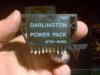
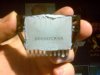
I am posting pictures of the Darlington's I used. I need help from the big boys here. I've read several posts where folks have said that they've received inferior power packs. Does anyone think that this is the case? Is there any other hardware that I need to look at replacing that could be causing this failure? I haven't done anything else to the receiver other than what has been noted in this post.

It's odd to me that in both cases, the power pack didn't blow while at a higher volume, but after the volume had been ramped down.

If someone has a trusted sight that they've ordered power packs from, please let me know....I'm not looking for cheap prices, just reliability.

And the saga continues......:wtf:
 

Attachments

  • Darlington front.jpg
    Darlington front.jpg
    81.1 KB · Views: 205
  • Darlington rear.jpg
    Darlington rear.jpg
    78.9 KB · Views: 204
Back
Top Bottom