• The move to the new server is done. There are some software and database maintenance updates in process. This has us passing the hat around to help out. We appreciate any donations. Seriously, even a dollar helps. The payment page may be found here - https://www.audiokarma.org/support.html

C11 Preamp Restoration - Advice requested on tweaking voltages

I can help with parts lists, and share what I learned during my C11 rebuild.
1st piece of advice, remove the faceplate, end caps, knobs, and glass before you start any work, and pack them away safely until you are done.
 
I can help with parts lists, and share what I learned during my C11 rebuild.
1st piece of advice, remove the faceplate, end caps, knobs, and glass before you start any work, and pack them away safely until you are done.

Thanks for your reply. I didn't think about the faceplate but I'll remove it. If it's okay with my friend, I'm thinking I'll start with the power supplies and try to solve the problem with the phono stage afterward. There's a noticeable difference in gain between channels. Using a scope, I checked it at both 1Khz and 10Khz. The peak to peak waveform appears to be about 25% higher on one channel and has a noticeable hum when the volume is fairly high. The gain is even on the line level inputs. I just hope with problem is not with the compensation network which is potted. BTW this C11 has the Sprague PC 144-208 compensation network like the C22 which combines both channels in one. Thus was replaced at some point or maybe was a later built unit.

I'm not seeing a kit with the filer caps that you describe. Only a kit with three Authenticaps. I guess I could order the filter cans from two sources separately.

I'm pretty busy and may not have time this week but will report back when I dig deeper into this. Thanks again.
 
I purchased the three cans in a kit with a few other parts. Given the large number of caps in this unit, if I were doing this again, I would source the can caps directly, from Authenticap, and CE -- I think this unit took a combination of both, plus one externally mounted cap. I used Russian PIO caps for most of the signal path, but that is not necessary, but they were physically similar to the stock bumble bee, caps, which orange drops, for example, are not.
Regarding the different level channel to channel, this could be due to the circuit, but also the volume pot (mine gave me a lot of trouble until I got it really clean), the balance pot, and don't forget this unit has independent L & R level controls hidden under the faceplate endcaps.
 
I'll probably just order the parts separately. Later this week, when I have time, I'll try to troubleshoot the source of the gain problem, starting with the input selector switch. Although, it seems like the issue is with the circuit since the balance is fine with line level inputs. And all low level inputs have the problem. I was hoping Dave would chime in since he seems to be an expert in this forum. Thanks
 
Lab -- Not knowing what all has or hasn't been done makes it hard to hazard a guess, but if the voltages at the tube socket terminals are all good (or good enough), and you've eliminated all the usual suspects (tubes, socket cleanliness, etc), then if the unit hasn't been otherwise recapped, the most likely suspect is C4, based on the Mac schematic. If it goes open (the usual failure mode), then the open loop gain of the phono preamp circuit is significantly reduced, which will lower the overall output on the right channel phono preamp functions.

I hope this helps!

Dave
 
Thanks Dave. C3 and C4 appear to be leaking and measured around 75-80uf so I replaced them with some 47uf 50v caps I had around. Cleaned the switches and tube sockets etc. The gain seems closer now. Not sure if I fixed it or if I was imagining a larger difference. The right channel still has a noticeable hum on the phono inputs when I turn the volume to 1-2 o'clock. It sounds like power supply hum. Doesn't make sense since both channels use the same power supply?
 
Correct. If one channel is not humming, then it can't be power supply hum.

Mac used a rather unique grounding system in the C11 and other units it manufactured of that day. To minimize ground loops, you normally ground the audio grounds to the chassis (usually at the lowest level points), and isolate the power supply so it can be grounded only through the ground buss. Of course properly implementing that backwards can work too, which is basically what Mac did. The power supply circuits are grounded directly to the chassis where it resides on one end of the chassis, the high level inputs grounded across the length of the rear panel, while the current conducting audio circuits are all grounded at a single point on the other end of the chassis. The actual single point chassis ground connection for the audio circuits is made at one of the mount rivets where the isolated plate for the low level input jacks mounts to the chassis. The plate itself is isolated from the chassis, and also at three of its mounting points -- except for the one mount point with the ground terminal. That's the point where things over time usually fall apart -- not literally, but electrically. Either the connection to the plate, or the plate to the chassis, or the ground terminal to the chassis (or all of them) become compromised. In my own C11, sometimes it would hum, sometimes not, and other times vary anywhere in between. After my repair, it is consistently quiet as a church mouse now. This has been a problem in every C11 I've come into contact with.

The answer is to drill out the one rivet where the ground terminal is located, and replace it with an appropriate screw, lock washer, and nut -- tightly drawn -- to securely form a solid electrical contact at that point between the ground terminal, the plate, and the chassis. Odds are, that's where your problem is, as the problems it can cause are always weird, and all over the map. Your scenario apparently qualifies.

I hope this helps!

Dave
 
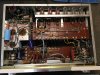
Thanks again Dave. I was thinking there was an component failure on one channel. I'll look into grounding later. I'm attaching a picture of the underside of the chassis. You can see where someone kludged on filter caps. Not very pretty but I imagine it would affect both channels equally if that were the problem. I'd like to solve the hum issue before proposing a complete power supply overhaul to the owner.

MYC11.jpg
 
Gary, Dave:
Thank you for the detail description, photos and write up. I am embarking on a similar path on my C11 (whose faceplate is undergoing relettering from RADIODAZE.com) using the many valuable pieces of information in this thread.
Question on the BOM and procurable of parts. CTECH on ebay offers a complete kit for around $300 with the bypass caps as well as just the power supply rebuild kit. Seems to a good option without dealing with shipping from too many vendors. Also for the bumblebee replacements, what is the negative of replacing them with Mundorfs, Janzens etc.? Would that change the sound too much. Not sure where I get these PIOs that everyone is talking about now, especially with the ongoing conflicts in that part of the world.
 
If you are going to do the work yourself, you should not miss the learning opportunity that coming up with a BOM of your own.
By the time you have checked all the parts in your unit against the schematic, measured and listed those parts, and then searched the available options and made you choice, you will be very well prepared to do the install. You will get parts that are better for less money, and some personal decisions about bypass caps tailored to your tastes can be made. I suggest getting anything you can from the large parts distributers like digikey and mouser. This way you get fresh, currently available parts. If there is a specialty part or two you need then search the smaller audio-centric sources like tubesandmore and hayseedhamfest and the like. Parts on ebay are a last resort for me.
I found the shortcut of buying a kit did not save me any time as I needed to understand where these parts needed to go and why before doing the job anyway.
That is a very nice model and worth the time. It should work for many years to come. Take your time. Good Luck!
 
If you are going to do the work yourself, you should not miss the learning opportunity that coming up with a BOM of your own.
By the time you have checked all the parts in your unit against the schematic, measured and listed those parts, and then searched the available options and made you choice, you will be very well prepared to do the install. You will get parts that are better for less money, and some personal decisions about bypass caps tailored to your tastes can be made. I suggest getting anything you can from the large parts distributers like digikey and mouser. This way you get fresh, currently available parts. If there is a specialty part or two you need then search the smaller audio-centric sources like tubesandmore and hayseedhamfest and the like. Parts on ebay are a last resort for me.
I found the shortcut of buying a kit did not save me any time as I needed to understand where these parts needed to go and why before doing the job anyway.
That is a very nice model and worth the time. It should work for many years to come. Take your time. Good Luck!
Thank you and noted. I might just be the one to come up with the BOM.
 
Here is my version of the BOM:

SectionLabelActual ValuePower/Voltage (minimum)PriceSupplier
Power SupplyC101A – 1000uF (can 1) Authenicap1000uF$ 229.20CTECH
Power SupplyC101B – 40uF (can 1) Authenicap40uFCTECH
Power SupplyC101C – 20uF (can 1) Authenicap20uFCTECH
Power SupplyC101D – 20uF (can 1) Authenicap20uFCTECH
Power SupplyC102A/B/C – 50uF (can 2) Authenicap50uFCTECH
Power SupplyC103A/B – 1200uF (can 3) CE Distribution Made by Mallory1200uFCTECH
Power SupplyC104 40uF 200VDC47uF350VCTECH
Power SupplySR1 Diode (1N4007)CTECH
Power SupplySR2 Diode (1N4007)CTECH
Power SupplySR3 Full Wave BridgeCTECH
Power SupplyR101 1.0M 1/2W (VISHAY CMF601M0000BEEK 1W 1%)1M1/2W$ 1.44Digikey
Power SupplyR102 1.5K 1/2W (VISHAY CMF601K5000BEBF 1W 0.1%)1.5K1/2W$ 1.33Digikey
Power SupplyR103 1.5K 1/2W (VISHAY CMF601K5000BEBF 1W 0.1%)1.5K1/2W$ 1.33Digikey
Power SupplyR104 1.5K 1/2W (VISHAY CMF601K5000BEBF 1W 0.1%)1.5K1/2W$ 1.33Digikey
Power SupplyR105 2.7K 1/2W (VISHAY CMF202K7000JNEA)2.7K1/2W$ 0.79Digikey
Power SupplyR106 10K 1/2W (VISHAY CMF6010K000FKEB 1W)10K1/2W$ 0.65Digikey
Power SupplyR107 7.5 ohm >=5W (VISHAY CW0057R500JE73)7.55W$ 1.64Digikey
Power SupplyR108 7.5 ohm >=5W (VISHAY CW0057R500JE73)7.55W$ 1.64Digikey
Power SupplyR109 47 ohm 1W (VISHAY CMF6047R000FKBF)471W$ 0.71Digikey
Left Channel PhonoC1 – 39pF (WIMA FKP2J000391D00HSSD)39pF630V$ 1.95Digikey
Left Channel PhonoC3 – 50/3 Replace 50uF with 100uF Spragie Atom TVA series electrolytic 100V or Jupiter Cosmos Series Axial 100uF 100Vdc/50Vdc based on c2250/316V/50V/100V$ 5.95Partsconnexion
Left Channel PhonoC5 – 0.01uF 400V Obbligato 630V Copper Series0.01uF400V$ 1.92Partsconnexion
Left Channel PhonoC7 – 0.22uF 630V0.22uF630V$ 6.35Partsconnexion
Left Channel PhonoC9 – 0.47uF 630V0.47uF630V$ 6.35Partsconnexion
Left Channel PhonoR5 – 330K 2W LN (VISHAY PPC330KW-3JCT-ND)330K2W$ 0.72Digikey
Left Channel PhonoR13 – 1M (VISHAY CMF601M0000BEEK 1W 1%)1M1W$ 1.44Digikey
Left Channel PhonoR15 – 120K 1W (VISHAY CMF60120K00BEBF)120K1W$ 1.17Digikey
Left Channel PhonoR17 - 820 (VISHAY CMF60825R00FHEK)8201W$ 0.43Digikey
Left Channel PhonoR23 – 330K (VISHAY PPC330KW-3JCT-ND)330K2W$ 0.72Digikey
Left Channel PhonoR25 – 330K (VISHAY PPC330KW-3JCT-ND)330K2W$ 0.72Digikey
Left Channel PhonoR27 – 1M (VISHAY CMF601M0000BEEK 1W 1%)1M1W$ 1.44Digikey
Left Channel PhonoR29 – 47K (VISHAY CMF6047K000BEBF)47K1W$ 0.94Digikey
Left Channel LineC11 – 39pF (WIMA FKP2J000391D00HSSD)39pF630V$ 1.95Digikey
Left Channel LineC13 – 0.0068uF (6800pF NICHICON QXT2J682KRPT)0.0068uF630V$ 1.30Digikey
Left Channel LineC15 – 0.1uF 400V (Nichicon PWS1633100KG)0.1uF400V$ 2.85Digikey
Left Channel LineC17 – 0.22uF 630V0.22uF630V$ 6.35Partsconnexion
Left Channel LineC19 – 0.47uF 630V0.47uF630V$ 6.35Partsconnexion
Left Channel LineC21 – 0.022uF 630V (Nichicon PWS1632220KD)0.022uF630V$ 1.76Digikey
Left Channel LineC27 – 0.025uF (25000pF) (Affinity For Artifacts EBAY)0.025uF630V$ 4.00Affinity For Artifacts
Left Channel LineC23 - 0.47uF 630V Mundorf MCAP Classic0.47uF630V$ 6.35Partsconnexion
Right Channel PhonoC2 – 39pF (WIMA FKP2J000391D00HSSD)39pF630V$ 1.95Digikey
Right Channel PhonoC4 – 50/3 Replace 50uF with 100uF Spragie Atom TVA series electrolytic 100V or Jupiter Cosmos Series Axial 100uF 100Vdc/50Vdc based on c2250/316V/50V/100V$ 5.95Partsconnexion
Right Channel PhonoC6 – 0.01uF 400V Obbligato 630V Copper Series0.01uF400V$ 1.92Partsconnexion
Right Channel PhonoC8 – 0.22uF 630V0.22uF630V$ 6.35Partsconnexion
Right Channel PhonoC10 – 0.47uF 630V0.47uF630V$ 6.35Partsconnexion
Right Channel PhonoR6 – 330K 2W LN (VISHAY PPC330KW-3JCT-ND)330K2W$ 0.72Digikey
Right Channel PhonoR14 – 1M (VISHAY CMF601M0000BEEK 1W 1%)1M1W$ 1.44Digikey
Right Channel PhonoR16 – 120K 1W (VISHAY CMF60120K00BEBF)120K1W$ 1.17Digikey
Right Channel PhonoR18 - 8208201W$ 0.43Digikey
Right Channel PhonoR24 – 330K (VISHAY PPC330KW-3JCT-ND)330K2W$ 0.72Digikey
Right Channel PhonoR26 – 330K (VISHAY PPC330KW-3JCT-ND)330K2W$ 0.72Digikey
Right Channel PhonoR28 – 1M (VISHAY CMF601M0000BEEK 1W 1%)1M1W$ 1.44Digikey
Right Channel PhonoR30 – 47K (VISHAY CMF6047K000BEBF)47K1W$ 0.94Digikey
Right Channel LineC12 – 39pF (WIMA FKP2J000391D00HSSD)39pF630V$ 1.95Digikey
Right Channel LineC14 – 0.0068uF (6800pF NICHICON QXT2J682KRPT)0.0068uF630V$ 1.30Digikey
Right Channel LineC16 – 0.1uF 400V (Nichicon PWS1633100KG)0.1uF400V$ 2.85Digikey
Right Channel LineC18 – 0.22uF 630V Mundorf MCAP Classic0.22uF630V$ 6.35Partsconnexion
Right Channel LineC20 – 0.47uF 630V Mundorf MCAP Classic0.47uF630V$ 6.35Partsconnexion
Right Channel LineC22 – 0.022uF 630V (Nichicon PWS1632220KD)0.022uF630V$ 1.76Digikey
Right Channel LineC28 – 0.025uF (25000pF) (Affinity For Artifacts EBAY)0.025uF630V$ 4.00Affinity For Artifacts
Right Channel LineC24 - 0.47uF 630V Mundorf MCAP Classic0.47uF630V$ 6.35Partsconnexion
 
All:
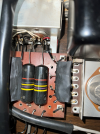
Can someone help me identify the two "PECs" adjacent to C23 and C24. The ones on my C11 appears not to be original and one has a broken lead. Without the unit in front of me, I surmise they are either the HF filters PC120-160C or the rumble filters PC120-138. Appreciate the help in advance.

1715570163022.png
 
Last edited:
Those look like homemade versions of the actual encapsulated devices, I do believe they are one or the other of the filters as you say, the pair being for L and R channels. It looks like they're wired into the tube, likely V6 pin 2 and 7? That's the rumble filter. You can verify by tracking what it's wired to. You can ask McIntosh if they have any replacements but my guess is if yours are not working you're going to be in the business of building your own as well.
 
Back
Top Bottom