• The move to the new server is done. There are some software and database maintenance updates in process. This has us passing the hat around to help out. We appreciate any donations. Seriously, even a dollar helps. The payment page may be found here - https://www.audiokarma.org/support.html

C22

sberger

Hard Core Geezer
Subscriber
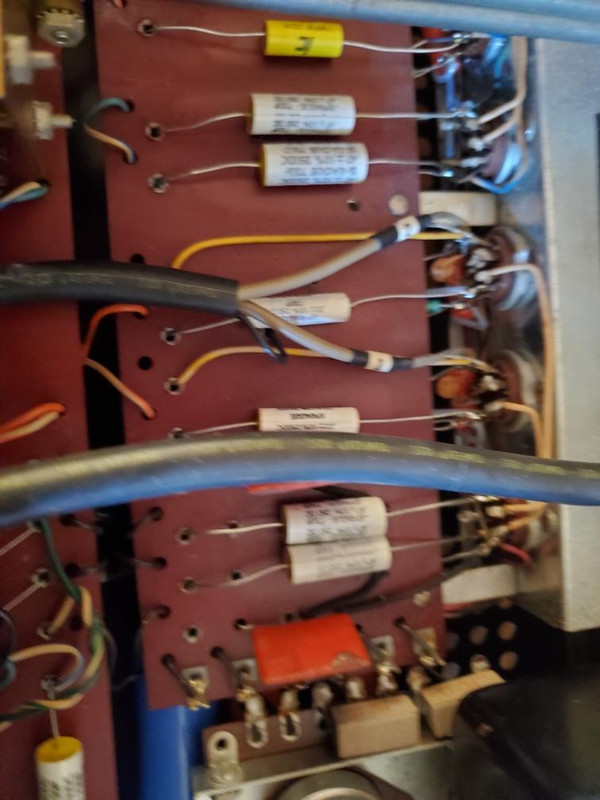
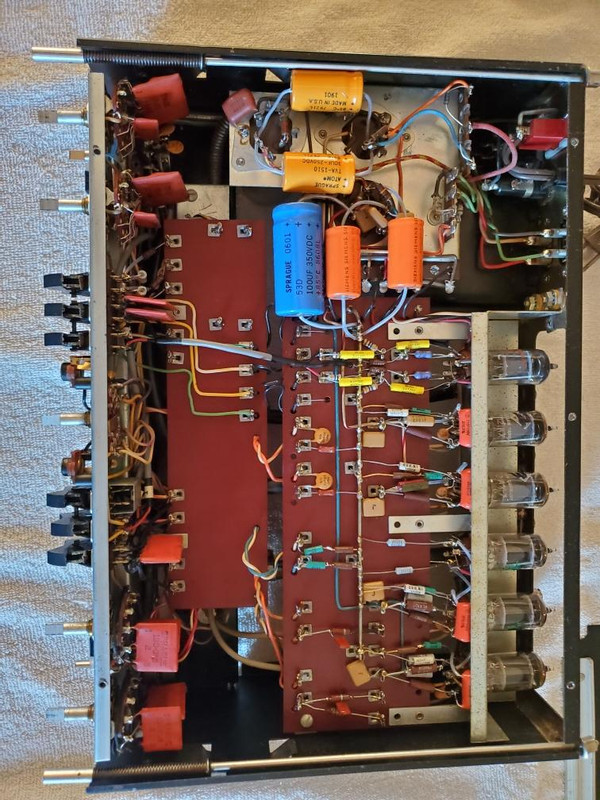
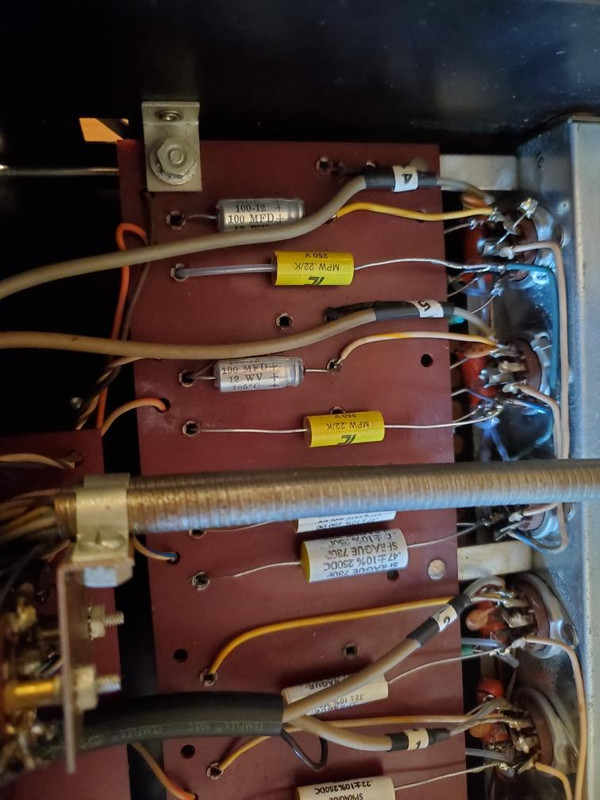
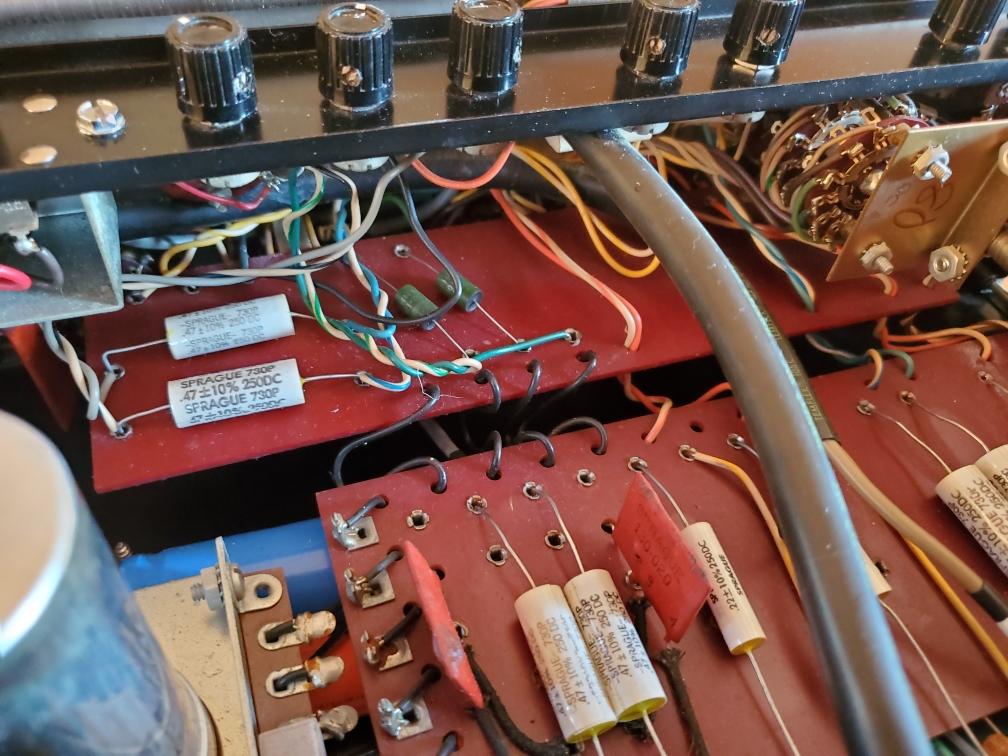
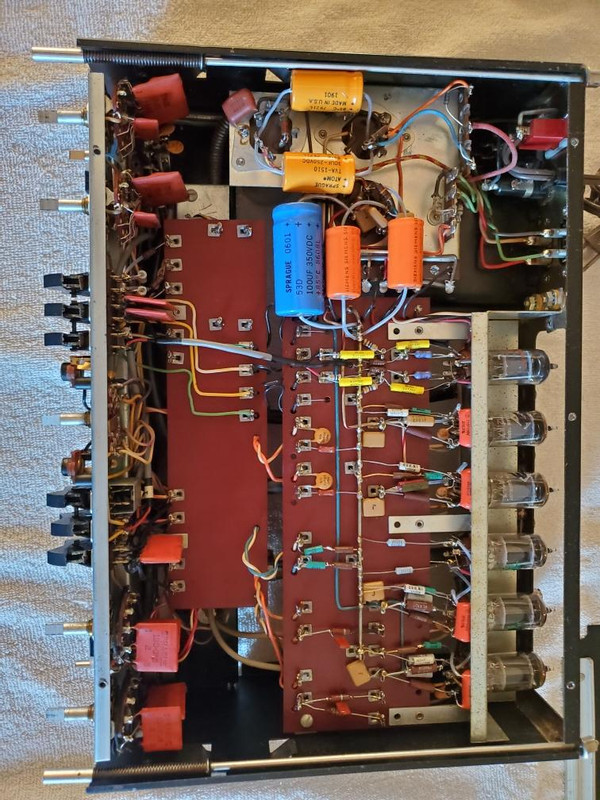
There's one not far from me that has become available. Definitely don't need it. Very much like my C34V in my current rig. That said, it's a C22 in beautiful shape, and it had at least some restoration in the mid 90's. So I'm intrigued. I have no knowledge of electrical restoration, so when folks look at these pictures I would appreciate thoughts on them, and anything else that I might want to focus on when I have the chance to give it a run though.

F307-F169-2-B7-F-4779-A108-398-E028-F21-E7.jpg


E0-BB45-D2-5142-48-AB-9-DC7-989-F008-D5-B4-E.jpg


B347064-E-AAA8-4-EAC-8715-C83-AD71-EC89-A.jpg


337-C0668-064-F-4-C7-D-87-C6-1-FF4-D3328414.jpg


337-C0668-064-F-4-C7-D-87-C6-1-FF4-D3328414.jpg


1-E8-C471-E-8858-4-E5-C-BC2-C-77-EE73-C3-FA4-D.jpg


0703039-D-F7-C4-42-A3-94-A1-4-EAA1674-B1-F1.jpg
 
Register to hide this ad
Looks pretty clean. I’m not a C22 expert so have no idea of the validity of what had been done. But if the cosmetics are good everything else can be fixed. If the price is right, why not go for it?
 
Looks pretty clean. I’m not a C22 expert so have no idea of the validity of what had been done. But if the cosmetics are good everything else can be fixed. If the price is right, why not go for it?

Thanks.

To answer your question, still waiting on a price. Good tube tech's in the Bay Area are almost non-existent, which is a big reason why I no longer own any tube gear. This would be the main reason I would pass.

On the other hand, if it's in good shape, and had a decent restoration then I might be inclined because I'm a degenerate addict when it comes to this stuff, especially when things like this become available essentially in my backyard from a person I deal with pretty regularly. I have 2 amps now that I could use with it so that's an added plus.
 
I doubt it'll be an improvement over the C34, especially with the loss of tonal flexibility if nothing else - but what do I know... :dunno:
 
I doubt it'll be an improvement over the C34, especially with the loss of tonal flexibility if nothing else - but what do I know... :dunno:

Thanks.

Better is subjective. Which is why I would be trying it first. To see if I like it more. The tonal flexibility of the 34 is nice to have, but it's more or loss never used in my application.

That said, I really, really like the 34, and so the 22 will have to seriously impress me to take it's place, especially given that I would probably be using the 34 in trade to get it.

Mostly I wanted to put the pictures up to better understand if it looks like it's in good electrical shape, or will need help sooner rather then later.
 
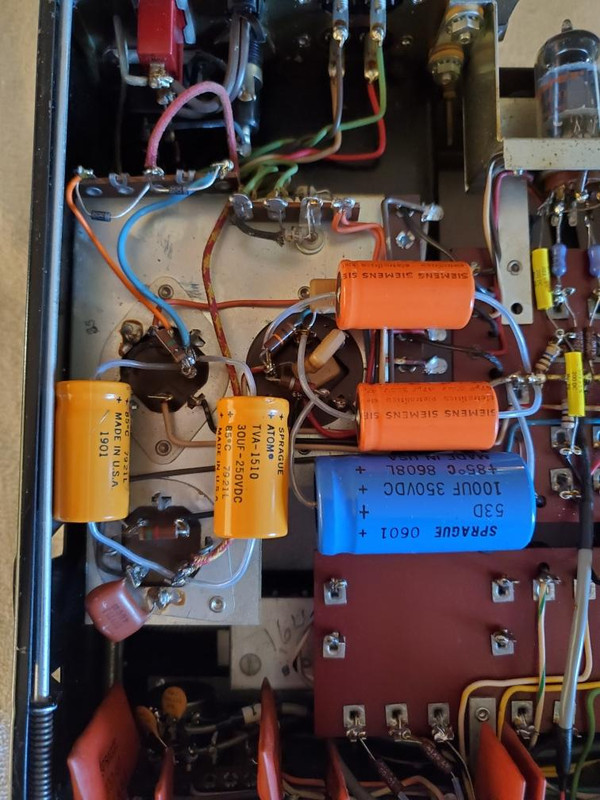
It looks fully recqpped. I think the date codes on the electrolytic caps show they were made 2001. The tubes are teles which are about the best there is. If you can try it out, do it. You may well love it.
 
It looks fully recqpped. I think the date codes on the electrolytic caps show they were made 2001. The tubes are teles which are about the best there is. If you can try it out, do it. You may well love it.

That’s what I’m afraid of!:eek:

Seriously though thanks. I am looking at giving it a test drive next week and will report back. Glad to hear that it looks like a reasonable amount of work was done. If it was done 20 years ago does that mean it might need more preventative work done soon? How long would caps like these typically be good for?
 
Sprague Atom even make the TVA yellow nowadays? And the Siemens may be older as well. Nothing a new can or newer lytics would cure.
I’d jump on it myself quick.
 
Sprague Atom even make the TVA yellow nowadays? And the Siemens may be older as well. Nothing a new can or newer lytics would cure.
I’d jump on it myself quick.

Thanks.

Basically if I do decide to jump on this, assuming I like how it integrates with my other gear, and the price is right, a big factor would be the plug and play aspect. As I've indicated, excellent vintage tube gear restoration is not easy to find where I live, and sending something like this to AC or some other outfit is not something that I would prefer to do. So I'm basing a big part of my decision on these photo's and the opinions you folks have as to it's durability prospects, understanding of course that nothing is guaranteed. But at least I know with my current gear, there is a tech nearby who does good work and can help me in a pinch. Unfortunately he only works on SS, not tube.
 
Can you examine the top side of this to look at the three aluminum can capacitors? See if they have any labels on them to indicate they are newer than 1960s? My only hesitation is that it looks like those blue and orange capacitors were paralleled onto the old can caps to make up for bad sections of what might be the original cans. If that is the case you definitely want to put in at least the three new can caps.
 
Can you examine the top side of this to look at the three aluminum can capacitors? See if they have any labels on them to indicate they are newer than 1960s? My only hesitation is that it looks like those blue and orange capacitors were paralleled onto the old can caps to make up for bad sections of what might be the original cans. If that is the case you definitely want to put in at least the three new can caps.

I will and let you know. Thanks.
 
Pretty hard to evaluate the electrical condition with just pictures of the circuits. Maybe you can take it to a local tech and pay them to test and evaluate (with no plan to have them work on it otherwise) to see if it's making specs for noise, distortion, output level, RIAA accuracy, etc. - like getting a PPI for a used car.

Note that this preamp does not support driving loads (amplifier inputs) below 50 kOhm. E.g., my C22 will not work (optimally) driving my MC452.

The two power amps in your signature will work fine (50K for MC2250 and 200K for MC2105) but the C22 may have difficulty with modern power amps you may have or get in future. Also, you had a recent thread about running both of these amps at the same time with the same preamp. Note that the C22 has only one main output so you'll need a RCA splitter cable to run both amps at the same time. Also, the two amps connected together will present a load of 40 kOhm which is below what McIntosh recommended. It should work and won't damage anything but sound quality might be compromised.

This text is taken from the operator's manual: "The MAIN jacks are fed from cathode followers. Longer cables than are normally supplied can be connected between the C22 and the amplifiers. The length of the cable is limited by the capacity of the cable. The total capacity must not exceed 1000 mmf. For instance: cables with a capacity of 25 mmf per foot may be 40 feet long; 13.5 mmf per foot cable may be 75 feet long. The input impedance of the amplifiers should be 50,000 ohms or greater."

As a long time operator of the C22, I note that this is a full-featured preamp with many features relevant in 1962 no longer needed today. This means that the preamp has a lot of controls, switches, pots, etc. These will all have to properly cleaned periodically. I had an issue with the sound getting really bad because some of the controls along the normally-hidden top row had become oxidized. I had completely forgotten those controls were there, but they are in the circuit all the time. Faderlube fixed the issues.

 
Can you examine the top side of this to look at the three aluminum can capacitors? See if they have any labels on them to indicate they are newer than 1960s? My only hesitation is that it looks like those blue and orange capacitors were paralleled onto the old can caps to make up for bad sections of what might be the original cans. If that is the case you definitely want to put in at least the three new can caps.

Yeah, I was going to comment that those non original axial electrolytic caps look to be simply tacked on the original chassis can caps, that are still connected and in use in the power supply..
When I zoomed the pics of that area, it appeared that the can caps look original and that somebody just tried to inexpensively/lazily boost the lowering of their mfd. with age by tacking in those new caps..
It`s quite possible that the can caps are also running warm because of the increased internal leakage brought on by the breakdown/drying out of the electrolyte which is not good for the power transformer by stressing it.
I recommend that situation be looked into and addressed.

Ciao
 
Pretty hard to evaluate the electrical condition with just pictures of the circuits. Maybe you can take it to a local tech and pay them to test and evaluate (with no plan to have them work on it otherwise) to see if it's making specs for noise, distortion, output level, RIAA accuracy, etc. - like getting a PPI for a used car.

Note that this preamp does not support driving loads (amplifier inputs) below 50 kOhm. E.g., my C22 will not work (optimally) driving my MC452.

The two power amps in your signature will work fine (50K for MC2250 and 200K for MC2105) but the C22 may have difficulty with modern power amps you may have or get in future. Also, you had a recent thread about running both of these amps at the same time with the same preamp. Note that the C22 has only one main output so you'll need a RCA splitter cable to run both amps at the same time. Also, the two amps connected together will present a load of 40 kOhm which is below what McIntosh recommended. It should work and won't damage anything but sound quality might be compromised.

This text is taken from the operator's manual: "The MAIN jacks are fed from cathode followers. Longer cables than are normally supplied can be connected between the C22 and the amplifiers. The length of the cable is limited by the capacity of the cable. The total capacity must not exceed 1000 mmf. For instance: cables with a capacity of 25 mmf per foot may be 40 feet long; 13.5 mmf per foot cable may be 75 feet long. The input impedance of the amplifiers should be 50,000 ohms or greater."

As a long time operator of the C22, I note that this is a full-featured preamp with many features relevant in 1962 no longer needed today. This means that the preamp has a lot of controls, switches, pots, etc. These will all have to properly cleaned periodically. I had an issue with the sound getting really bad because some of the controls along the normally-hidden top row had become oxidized. I had completely forgotten those controls were there, but they are in the circuit all the time. Faderlube fixed the issues.

Great information. Thanks!

Can't bring it to a local tech because there aren't any. I'm in the Bay Area like you, and the only reputable tech close to me(I'm in Oakland) that I know about is Champlifier, and he only works on solid state. Bringing in my C34V to him this week for a check up, but he won't work on tube gear. This is a major reason why I'll probably(operative word here) not go for this.

I also like to use 2 amps with the preamp. I've had great success doing this with the 34V, and while I'm not concerned about a modern amp not working with it since I doubt I'll ever be in the market for one, if I ever have the opportunity to acquire another 2250 or 2255 I almost certainly would. Would love to be able to run a pair in mono. But that sounds like it would be a problem for the C22 as well. As for my current set up, I hadn't done the math and because the 2 amps separately are within the 22's recommended loads, I just assumed pairing them would work(albeit with a splitter as another thing the 22 gives up the 34V that's important to me is multiple pre outs) but now it sounds like there would potentially be a sonic compromise. Bleah.

Bottom line is everything you mention certainly makes me go into this audition with eyes wide open. And because I'm quite sure that the seller would be asking a premium for this, I would say that the chances of my actually acquiring it is looking slimmer by the moment. Which is why I started this thread. I'm infatuated quite easily by pieces like this and I do need and appreciate the real like grounding that comments like the one's in this thread provides me.
 
Yeah, I was going to comment that those non original axial electrolytic caps look to be simply tacked on the original chassis can caps, that are still connected and in use in the power supply..
When I zoomed the pics of that area, it appeared that the can caps look original and that somebody just tried to inexpensively/lazily boost the lowering of their mfd. with age by tacking in those new caps..
It`s quite possible that the can caps are also running warm because of the increased internal leakage brought on by the breakdown/drying out of the electrolyte which is not good for the power transformer by stressing it.
I recommend that situation be looked into and addressed.

Ciao

Remember you're talking to an electronics infant. Which one's are the can caps?

Oh, the blue and orange one's?
 
C22 will be limited in the number of amplifiers it will be able to drive simultaneously. From the MC2105/2505/2300 and earlier, the input impedance is 200K ohms and higher so no problem there.

Input impedance drops to 100K ohm on MC2205/2125 & MC2200/2120. so it could still drive 2 of those (or one + one of the earlier 200K models) and still be right at 50K ohms (or above) which exactly the minimum impedance the C22 should be used with.

Then for the MC2255/2155 & MC2250/2150 input impedance drops again to 50K ohms so the C22 would only be able to drive just one of those and nothing else. Input impedance drops even further with later Mc amplifiers which would not at all be compatible with the C22.

The C3x series however can be used with any Mc amp of any generation.

The final consideration is repairs which it is almost guaranteed to need - sooner or later. This should be contemplated carefully if the logistics of obtaining reputable tube repair/restoration services is in doubt. On the plus side the C22 is a fairly lightweight unit so should theoretically be less problematic to ship. On the negative is the C22's high value which adds a bit of trepidation to the prospect.
 
Last edited:
Back
Top Bottom