

You are using an out of date browser. It may not display this or other websites correctly.
You should upgrade or use an alternative browser.
You should upgrade or use an alternative browser.
Can a Rek O Kut S-320 vintage tonearm utilize an AT microline stylus?
- Thread starter monkboughtlunch
- Start date


monkboughtlunch
Super Member
Did we ever resolve if it takes standard headshells? If so, they enable adjustment. Many have Azimuth too. Monk can also play with h'shells of differing mass.
- I seem to recall that Rek O Kut advertised some type of cartridge alignment adjustment adapter. But I've never seen one in the wild. Most folks must have just used the two fixed screws holes and called it a day.
- I am not sure if ROK uses a standard headshell. I seem to recall someone posting online that ROK used a proprietary mount. Maybe someone here knows for sure.
monkboughtlunch
Super Member
Nat is correct, their is no way to adjust the cart. It is set.
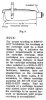
There is a way to adjust overhang on a Rek O Kut headshell. Below is from the Rek O Kut tonearm instruction manual. Adjustable overhang requires installation of the Rek O Kut KT-126 mounting kit. But the KT-126 must be as rare as hen's teeth today, as I've never seen the kit.
"This kit consists of a cartridge bracket with slotted holes which allow the cartridge to be moved forward or backward until proper overhang is accomplished."
monkboughtlunch
Super Member
Can you align cartridges in the headshell? My memory is that you have two internally threaded posts and if the dimensions of the cartridge work with where the posts are, you are good. If not, you don't have any recourse. With a conical stylus, it may not matter. With a line contact, it certainly will.
In theory, overhang can be adjusted in a Rek O Kut headshell with the Rek O Kut KT-126 mounting kit. However, I've never seen this kit in the wild.
monkboughtlunch
Super Member
Again, I don't think you should go by the conversion numbers here since we have resonance numbers.
What are the resonance numbers?
monkboughtlunch
Super Member
Does anyone know the effective mass of an S-320 tonearm?

bimasta
Addicted Member
@monkboughtlunch Drawing looks almost standard (pins seem a trifle long). Can you take a pic of the female, and check if its pins are spring-loaded? Do you have a normal h'shell in the house just to try? It also gives the overhang, a good thing to know.
Also, the unobaintable KT-126 adapter does not appear hard to make.
Also, the unobaintable KT-126 adapter does not appear hard to make.
Last edited:
KentTeffeteller
Gimpus Stereophilus!
Hi Kent - not sure what you mean by the 540 being too low in mass.
They both weigh about the same
Both have the same dynamic compliance rating 10 x 10-6 cm/dyne (100Hz)
- 6.4g -- VM540ML
- 6.1g -- AT-VM95ML
- When converted to an approximate 10Hz rating, both have a compliance of about 18.
The arm resonance is the biggest issue comparing the two. The AT-VM 95 is more favorable on that dimension. You want to keep the resonance frequency in the 9-11 hertz region due to micro warps on records and static compliance is in the AT-VM 95's favor about what will play nice with your arm. The AT-VM 95 cantilever and suspension is better suited to this application.
monkboughtlunch
Super Member
@monkboughtlunch Drawing looks almost standard. Can you take a pic of the female, and check if its pins are spring-loaded? Do you have a normal h'shell in the house just to try?
I only have a Technics shell to compare. The ROK headshell is definitely not compatible with Technics.
Spring-loaded pogo pins are in different locations. The diameter of tube is 11/32" for the ROK and 5/16" for the Technics.


monkboughtlunch
Super Member
The arm resonance is the biggest issue comparing the two. The AT-VM 95 is more favorable on that dimension. You want to keep the resonance frequency in the 9-11 hertz region due to micro warps on records and static compliance is in the AT-VM 95's favor about what will play nice with your arm. The AT-VM 95 cantilever and suspension is better suited to this application.
What is the estimated resonance for the AT 95 vs the AT 540 in the ROK 320?

patient_ot
Super Member
What are the resonance numbers?
I posted in this thread. Read my prior posts.
monkboughtlunch
Super Member
I posted in this thread. Read my prior posts.
Gotcha. So 9Hz is the resonance with 23 grams effective mass for the AT 95? Do you know what the resonance would be for the AT 540?
What is the difference between static and dynamic compliance? The dynamic of both carts is the same. Only the static is different.
patient_ot
Super Member
Gotcha. So 9Hz is the resonance with 23 grams effective mass for the AT 95? Do you know what the resonance would be for the AT 540?
What is the difference between static and dynamic compliance? The dynamic of both carts is the same. Only the static is different.
To the first question, I covered that up thread.
To the second question, both numbers would need to match if compliance were the same on both. They aren't. Not in specs or measurements.
monkboughtlunch
Super Member
To the first question, I covered that up thread.
To the second question, both numbers would need to match if compliance were the same on both. They aren't. Not in specs or measurements.
Understood. But 7.5hz resonance of the 540 was conducted on a different tonearm with a different effective mass vs the 9Hz reading you got on the 95. Was just curious if anyone has compared resonance of both carts using the same arm and headshell.
patient_ot
Super Member
Understood. But 7.5hz resonance of the 540 was conducted on a different tonearm with a different effective mass vs the 9Hz reading you got on the 95. Was just curious if anyone has compared resonance of both carts using the same arm and headshell.
I don't need to do that because I can work backwards and figure out what the approximate dynamic compliance @10hz of each cart is. I do this by using the VE resonance calculator along with the known, measured values for resonance and the EM of each arm.
The compliance for the 540ml is likely 20-25.
The compliance for the 95ml is likely 11-15.
TLDR, if you have a medium mass/medium heavy tonearm use the 95ml. The 540ml will work best on light and light-medium tonearms.
monkboughtlunch
Super Member
This thread suggests that dynamic compliance values (not static compliance) are the ones used to determine resonant frequency. Is this accurate?
https://www.vinylengine.com/turntable_forum/viewtopic.php?f=19&t=110426
If this thread is accurate, don't the AT 95 and 540 have the same dynamic values? Would they not both have an approximate dynamic compliance of 18 at 10Hz? What significance should the static compliance value be given (if any)?
https://www.vinylengine.com/turntable_forum/viewtopic.php?f=19&t=110426
If this thread is accurate, don't the AT 95 and 540 have the same dynamic values? Would they not both have an approximate dynamic compliance of 18 at 10Hz? What significance should the static compliance value be given (if any)?
Last edited:
monkboughtlunch
Super Member
I don't need to do that because I can work backwards and figure out what the approximate dynamic compliance @10hz of each cart is. I do this by using the VE resonance calculator along with the known, measured values for resonance and the EM of each arm.
The compliance for the 540ml is likely 20-25.
The compliance for the 95ml is likely 11-15.
TLDR, if you have a medium mass/medium heavy tonearm use the 95ml. The 540ml will work best on light and light-medium tonearms.
Did you measure resonance on the 95ML the same way that hometheaterhifi did when they tested the 540ml?
Here's what HomeTheaterHifi said about their test: "We are using an unorthodox test for the low frequency resonance. This is the resonance excited by groove noise and rumble. We do not measure the resonance with spot frequencies. The spectrum above is typical of the sub-sonic response you will get when you play an LP."
KentTeffeteller
Gimpus Stereophilus!
What is the estimated resonance for the AT 95 vs the AT 540 in the ROK 320?
AT 95 gets you at 9 hertz, an AT 540 is 11-12 hertz in the ROK arm. Which is beginning to be in the skittish region for subsonic nasties.
KentTeffeteller
Gimpus Stereophilus!
Did you measure resonance on the 95ML the same way that hometheaterhifi did when they tested the 540ml?
Here's what HomeTheaterHifi said about their test: "We are using an unorthodox test for the low frequency resonance. This is the resonance excited by groove noise and rumble. We do not measure the resonance with spot frequencies. The spectrum above is typical of the sub-sonic response you will get when you play an LP."
My test was ran with some torture test LP discs and a HP spectrum analyzer. I got 9 Hertz with the AT-VM 95 ML, 11-12 Hertz with the AT-VM 540ML. Test was performed with a 1961 Rek-O-Kut Rondine B 12-H, with Ashland Motor (rebuilt 3 months ago by a local motor shop) with Rek-O-Kut S-320 tonearm (late model BE built example, from 1988). Turntable had a full mechanical overhaul 3 months prior to the tests. With a rebuilt idler wheel (Gary Stork at Voice Of Music). This was done at the engineering office at work. Test discs used were a warped, but playable copy of Vern Gosdin/Greatest Hits, and my warp torture test 45 of Rich Little/That's Life. Tracking force used was 2 grams.