• The move to the new server is done. There are some software and database maintenance updates in process. This has us passing the hat around to help out. We appreciate any donations. Seriously, even a dollar helps. The payment page may be found here - https://www.audiokarma.org/support.html

Can a Rek O Kut S-320 vintage tonearm utilize an AT microline stylus?

Did you measure resonance on the 95ML the same way that hometheaterhifi did when they tested the 540ml?

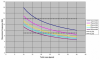
Here's what HomeTheaterHifi said about their test: "We are using an unorthodox test for the low frequency resonance. This is the resonance excited by groove noise and rumble. We do not measure the resonance with spot frequencies. The spectrum above is typical of the sub-sonic response you will get when you play an LP."

I measured with the CBS STR100 test record. I also checked the resonance with a record of actual music. It was the same. This is a common procedure to check resonance. If you want to doubt my test, go ahead. It is not a professional measurement but gets one close enough for actual matching of a cartridge to tonearm.

You can also debate this all day long and not get close to an answer, start multiple threads, yadda yadda yadda.

Or you can buy the damn cart from a place that takes generous returns, set it up in your tonearm, take measurements yourself, and observe performance while playing actual records that contain music. Your call.

Not much else to say here. I doubt anyone else has much better info for you either, since this tonearm is not commonly in use in 2019...
 
This thread suggests that dynamic compliance values (not static compliance) are the ones used to determine resonant frequency. Is this accurate?

https://www.vinylengine.com/turntable_forum/viewtopic.php?f=19&t=110426

If this thread is accurate, don't the AT 95 and 540 have the same dynamic values? Would they not both have an approximate dynamic compliance of 18 at 10Hz? What significance should the static compliance value be given (if any)?

For tonearm matching purposes in the Western world, yes, we use the dynamic value @ 10hz.

HOWEVER, Japanese companies do not provide that. They provide a value @100hz. That can be "converted" using rough guesstimation or you can measure the resonance.

When looking at Japanese stats, we do know that in order for two carts to have identical compliance, BOTH the dynamic AND static numbers need to match. If they don't, compliance will LIKELY be different. Of course, different manufacturers have different ways of measuring compliance also, which is where things can get confusing.

IMHO it is always best to measure the cart when mounted on your specific tonearm. The numbers manufacturers provide are meant to avoid GROSS mismatches.
 
My test was ran with some torture test LP discs and a HP spectrum analyzer. I got 9 Hertz with the AT-VM 95 ML, 11-12 Hertz with the AT-VM 540ML. Test was performed with a 1961 Rek-O-Kut Rondine B 12-H, with Ashland Motor (rebuilt 3 months ago by a local motor shop) with Rek-O-Kut S-320 tonearm (late model BE built example, from 1988). Turntable had a full mechanical overhaul 3 months prior to the tests. With a rebuilt idler wheel (Gary Stork at Voice Of Music). This was done at the engineering office at work. Test discs used were a warped, but playable copy of Vern Gosdin/Greatest Hits, and my warp torture test 45 of Rich Little/That's Life. Tracking force used was 2 grams.

Excellent. This is an apples to apples comparison using both carts under discussion in the Rek O Kut S-320 tonearm! Did you test any other carts on the S-320?
 
Last edited:
AT 95 gets you at 9 hertz, an AT 540 is 11-12 hertz in the ROK arm.

Thanks again. Did you detect any resonance issues with the 540 in the Rek O Kut S-320 arm when playing warped records?

I found this guidance from Ortofon, which suggests 11-12 hertz is fine. If that's the case, is the 540 ML better sounding than the 95 ML?

• Resonance frequency within 7-12Hz is optimal for the system.
• Resonance frequency slightly outside optimal interval 6,5-7Hz and 12-14Hz can be considered as a possible that probably can be used without problems.
• Resonance frequency outside the interval 6,5-7Hz and 12-14Hz is questionable, and the system might not work properly.

resonance-frequency.png
 
@KentTeffeteller do you know the effective mass of the Rek O Kut S-320 tonearm? It seems to be a mystery spec. Can't find it anywhere.

Also, did these AT ML carts sound OK in the ROK headshell using the fixed (non-adjustable) screw positions? Or did you have to use a mounting kit to optimize the cart overhang?
 
Last edited:
Excellent. This is an apples to apples comparison using both carts under discussion in the Rek O Kut S-320 tonearm! Did you test any other carts on the S-320?

Yes, Denon DL-102, DL-103, Shure M 44-7, Shure M75-6, Stanton 681A and 680 EL. I liked the Stanton 681A best on performance. The Shure M 44-7 was excellent also. Waiting on an AT 95E to test. I also used the resonance test on the CBS Laboratories STR 100 test record, and on the CBS Laboratories Broadcast Test Record.
 
Yes, Denon DL-102, DL-103, Shure M 44-7, Shure M75-6, Stanton 681A and 680 EL. I liked the Stanton 681A best on performance. The Shure M 44-7 was excellent also. Waiting on an AT 95E to test. I also used the resonance test on the CBS Laboratories STR 100 test record, and on the CBS Laboratories Broadcast Test Record.

Which of the conicals you tested had the least inner groove distortion (IGD) and sibilant artifacts in the ROK arm using the fixed screw holes (no mounting kit)?
 
Here’s an interesting development. Jico is now offering an SAS version of the SS35C and N35X (N447x) on their web site.

These SAS styli are apparently microline (?) options that track at 1.5 grams. Would these be a good match for the ROK S320?

Does Jico alter compliance when they modify a classic MM Shure stylus with a SAS stylus? These SAS styli track a bit lighter.
 
Last edited:
I call the Stanton 681a what it is. Flat and Accurate. The disc cutting engineer's calibration standard. Will accept the EEE styli. But also nothing else but genuine will do, aftermarkets not anywhere as good. Very hard to get the cantilever suspension right, the tip alignment right, and get the generics to track right.
 
I call the Stanton 681a what it is. Flat and Accurate. The disc cutting engineer's calibration standard. Will accept the EEE styli. But also nothing else but genuine will do, aftermarkets not anywhere as good. Very hard to get the cantilever suspension right, the tip alignment right, and get the generics to track right.

Thanks Kent. Does Jico offer styli for the 681?

Thoughts on Jico SAS SS35C and N35X (N447x) in a ROK s320? I guess they are microline or micro ridge and track at 1.5g.
 
They do. But not quite as good, need to track heavier than originals do. Not as rugged either. Perform fairly well otherwise. Jico's the best you and I can do which is available. They're consistent as they get, and actually reasonably good in conical and elliptical.
 
I had been running a Shure M3D on my ROK micropoise arm. Nice smooth sound, treble rolls of noticeable on inner grooves. High VTF of 5 grams. Sibilance handling fairly good but not great. Sounds a bit congested on loud, complex passages.

I had a used M447 in a drawer and installed it in the ROK arm. Tracked at 3 grams. Sibilance handling much superior. Typical bold n447 sound. Treble did not fall off as much on inner grooves. Less congestion on loud passages.

I must say the ROK arm loves the M447 more than the M3D. I think I’ve figured out a major reason why.

The ROK instruction manual states the stylus tip should be 1 31/32” from the back of the cart for optimal overhang. Keep in mind the ROK headshell has fixed mounting screws. The M447 meets this overhang requirement exactly, whereas the M3D does not. The M3D stylus tip falls several mm short of the overhang ROK prescribed. It’s enough to put the M3D a bit out whack and sibilance are quite as good as they should be. I guess the M3D came out before Shure standardized overhang distance.

Now ROK did offer an overhang kit to adjust overhang but these kits are impossible to find today. So if just using the standard ROK screw mount, the M447 is superior from a sibilance and treble tracking performance standpoint, even if the M3D is more musical and less fatiguing overall.
 
Last edited:
Given that the Micropoise arm (and head shell with fixed screw holes) loves the Shure M-44 cart and N44-7 stylus, was how well would these other N44 compatible styli offered by Jico perform with the S-320 arm mounted to a M447 body?

I suppose each of the styli below might be more musical and less brash than the N44-7, but would their compliance be too high for the ROK arm?

  • N55 SAS line contact
  • N44E elliptical
  • N44G conical
In particular, I’m really curious how the SAS N55 line contact would fare in a ROK arm tracking at 1.5 grams.
 
Last edited:
Back
Top Bottom