• The move to the new server is done. There are some software and database maintenance updates in process. This has us passing the hat around to help out. We appreciate any donations. Seriously, even a dollar helps. The payment page may be found here - https://www.audiokarma.org/support.html

Cap Coupled Receivers?

mistergsf

New Member
So a buddy of mine is thinking of buying a 2230B and since I have a 2226, he asked if I knew what the differences was between the 2230 and 2230B. After doing a search, one of things I came upon was the 2230 is cap coupled and the B is not.

I went over to YouTube and watched some videos about capacitor coupling and how it works and what it does. That said I was hoping some experts out there can help me understand it better and answer some questions. Forgive me in advance if my questions might not make sense.

1. If the 2230 is cap coupled, what do you call a non cap coupled receiver?
2. What are the advantages/disadvantages of both? Is one preferred over the other by audio purists?
3. How would you describe the sound profiles of both?
4. Which models in the 22xx series are and aren't cap coupled? What about my 2226?

I've always loved my vintage audio equipment when I was growing up but was never really interested in the engineering until now. I appreciate all the knowledge I'm gaining from these forums. It's ironic that I'm online trying to buy back equipment I let go in the late 80's and early 90's. It's a good thing I held on to my turntable. Somehow, I couldn't let that go.
 
Register to hide this ad
1. If the 2230 is cap coupled, what do you call a non cap coupled receiver?
2. What are the advantages/disadvantages of both? Is one preferred over the other by audio purists?
3. How would you describe the sound profiles of both?
4. Which models in the 22xx series are and aren't cap coupled? What about my 2226?
First, here's my explanation of the difference. A direct coupled unit has a positive and negative supply rail, and it is balanced so the DC on the output is 0. A cap coupled unit only has a positive supply rail, and uses a large coupling cap to keep DC off the output.

1. You could call it direct coupled, or DC coupled.
2/3. Running the signal through a large blocking cap will create "distortion". The audible result of this is a warmer fatter sound. A direct coupled unit will generally be more neutral/less coloured. The direct coupled unit will be more true to the signal, but some people might like the warm sound of a cap coupled unit.
4. The 2230 series is cap coupled from the BOTL, to the 2230. The next one up, the 2245 is direct coupled. All later series were all direct coupled. So your 2226 would be direct. I'm not sure any manufacturers made cap coupled units after the early 70s.

You can easily tell if a unit is cap couple when you open it. Just look at how many large caps there are.
A direct coupled unit will have two, one for the positive supply rail, and one for the negative supply rail. Or four if it is dual mono. In any situation it will have an even number. And they will all be the same size.
A cap coupled unit will have one filter cap because it only has a positive supply rail for the amp. There will then be two coupling caps. These caps likely won't be the same size as the coupling caps. In most cases there will be an odd number of caps, or a few caps of various sizes plus the coupling caps.
 
First, here's my explanation of the difference. A direct coupled unit has a positive and negative supply rail, and it is balanced so the DC on the output is 0. A cap coupled unit only has a positive supply rail, and uses a large coupling cap to keep DC off the output.

1. You could call it direct coupled, or DC coupled.
2/3. Running the signal through a large blocking cap will create "distortion". The audible result of this is a warmer fatter sound. A direct coupled unit will generally be more neutral/less coloured. The direct coupled unit will be more true to the signal, but some people might like the warm sound of a cap coupled unit.
4. The 2230 series is cap coupled from the BOTL, to the 2230. The next one up, the 2245 is direct coupled. All later series were all direct coupled. So your 2226 would be direct. I'm not sure any manufacturers made cap coupled units after the early 70s.

You can easily tell if a unit is cap couple when you open it. Just look at how many large caps there are.
A direct coupled unit will have two, one for the positive supply rail, and one for the negative supply rail. Or four if it is dual mono. In any situation it will have an even number. And they will all be the same size.
A cap coupled unit will have one filter cap because it only has a positive supply rail for the amp. There will then be two coupling caps. These caps likely won't be the same size as the coupling caps. In most cases there will be an odd number of caps, or a few caps of various sizes plus the coupling caps.

Wow! Thank you, Raccoon. I actually understand all of that. You confused me, though, about my 2226. If the 22xx series from BOTL to 2230 were cap coupled, then my 2226 is cap coupled and NOT DC, correct?

Having this information, now I would like to get my hands on a DC model. I'm not partial to one sound profile especially with the many genres of music I listen too. Thanks again!
 
Wow! Thank you, Raccoon. I actually understand all of that. You confused me, though, about my 2226. If the 22xx series from BOTL to 2230 were cap coupled, then my 2226 is cap coupled and NOT DC, correct?

Having this information, now I would like to get my hands on a DC model. I'm not partial to one sound profile especially with the many genres of music I listen too. Thanks again!

The 2226 was from a later series. The earlier series had the 2215, 2220, 2230 I think. Then there was the B series. Then the series your 2226 is from. And there is another later B series with different numbers, like the 2252B.
 
The 2226 was from a later series. The earlier series had the 2215, 2220, 2230 I think. Then there was the B series. Then the series your 2226 is from. And there is another later B series with different numbers, like the 2252B.

Aha! I gotcha. I should of known not to rely on the numbers in determining. Then, I wanna get my hands on a cap coupled model now that I've got something to compare it to.
 
Cap coupled outputs should only be blocking dc if done right. Some recapping them start messing with the cap values but should leave well enough behind. By inserting a cap, the damping factor is affected and lower than dc. By being lower, it comes nearer to or is in the range of a tube amp and this is the reason it may sound closer to a classic tube amp. Also,.why a transformer or autoformer coupled amp can exhibit a similar voicing. A typical listener generally finds the sound warmer. It is different than dc but, better or not depends on individual preference. I have found I generally prefer cap coupled amp voicing but, I grew up on tubes.

A lot about it still will boil down to how it mates with the speaker.
 
Aha! I gotcha. I should of known not to rely on the numbers in determining. Then, I wanna get my hands on a cap coupled model now that I've got something to compare it to.

If 30 watts is sufficient get a 2230 by all means and the version with the preamp outputs and main amp inputs. You have added flexibility. The 2270 is arguably the most popular of the capacitor coupled output receivers.
 
If 30 watts is sufficient get a 2230 by all means and the version with the preamp outputs and main amp inputs. You have added flexibility. The 2270 is arguably the most popular of the capacitor coupled output receivers.

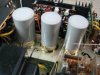
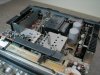
The 2270 does NOT have cap coupled outputs. A quick look at the inards will tell the story, 3 big caps, cap coupled outputs, two big caps, direct coupled.

Tom
 

Attachments

  • 2230-2 CC (1).JPG
    2230-2 CC (1).JPG
    95.8 KB · Views: 263
  • 2270.jpg
    2270.jpg
    60.6 KB · Views: 254
I have rebuilt both a 2230 and a 1060. The two units have the same preamp/power amp. The only real difference is that the 1060 has no tuner. I installed Nichicon Gold Tune capacitors in place of the factory output caps. I love the way these amps sound. I also have a small sansui cap coupled receiver and used Nichicon Muse KZ. That amp sounds great as well. The sansui model is 350a.
 
Thanks For That explanation!
I never did my homework on what the heck cap coupled meant, but your explanation was simple and to the point:thmbsp: jk
 
Good point on the damping and speaker choice. Capacitors also add and subtract things.... Like phase shift.


Cap coupled outputs should only be blocking dc if done right. Some recapping them start messing with the cap values but should leave well enough behind. By inserting a cap, the damping factor is affected and lower than dc. By being lower, it comes nearer to or is in the range of a tube amp and this is the reason it may sound closer to a classic tube amp. Also,.why a transformer or autoformer coupled amp can exhibit a similar voicing. A typical listener generally finds the sound warmer. It is different than dc but, better or not depends on individual preference. I have found I generally prefer cap coupled amp voicing but, I grew up on tubes.

A lot about it still will boil down to how it mates with the speaker.
 
Guess another mind slip. I remember them as cap coupled; oh wait, I really dislike their sound so, they must not be. A few morphine can do things to your mind.
 
We forgive you brian, after all , if my figures are correct, you've been posting 4 times a week for the last 80 years. Very impressive::D
Enjoy that morphine, you've earned it:thmbsp:
 
If the output cap is included in the feedback loop, damping will not be affected, and performance can be superb.

mjr7-5.gif
 
Nice try, but that ain't how Marantz designed their cap couple units.... :)
 
Last edited:
First, here's my explanation of the difference. A direct coupled unit has a positive and negative supply rail, and it is balanced so the DC on the output is 0. A cap coupled unit only has a positive supply rail, and uses a large coupling cap to keep DC off the output.

1. You could call it direct coupled, or DC coupled.
2/3. Running the signal through a large blocking cap will create "distortion". The audible result of this is a warmer fatter sound. A direct coupled unit will generally be more neutral/less coloured. The direct coupled unit will be more true to the signal, but some people might like the warm sound of a cap coupled unit.
4. The 2230 series is cap coupled from the BOTL, to the 2230. The next one up, the 2245 is direct coupled. All later series were all direct coupled. So your 2226 would be direct. I'm not sure any manufacturers made cap coupled units after the early 70s.

You can easily tell if a unit is cap couple when you open it. Just look at how many large caps there are.
A direct coupled unit will have two, one for the positive supply rail, and one for the negative supply rail. Or four if it is dual mono. In any situation it will have an even number. And they will all be the same size.
A cap coupled unit will have one filter cap because it only has a positive supply rail for the amp. There will then be two coupling caps. These caps likely won't be the same size as the coupling caps. In most cases there will be an odd number of caps, or a few caps of various sizes plus the coupling caps.


I know this thread is old & I'm new to this stuff, but how do you check the DC offset & idle current on cap coupled receivers ? Thanks !
 
Idle current is set just like any other Marantz receiver. Just follow service manual for test points. You don't adjust DC Offset. There is no way to get the speaker terminals to zero VDC.
 
Back
Top Bottom