• The move to the new server is done. There are some software and database maintenance updates in process. This has us passing the hat around to help out. We appreciate any donations. Seriously, even a dollar helps. The payment page may be found here - https://www.audiokarma.org/support.html

Capacitor Confusion

Steve_NZ

New Member
Hi,

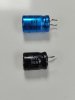
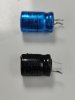
I purchased a pair of Mission M790 speakers about 12 years ago. Recently one of the speakers stopped working. I removed the crossover and using a multimeter identified that two of the capacitors had failed. I have attached photos identifying the capacitors that are no longer working.

Details of the failed capacitors are as follows;

Capacitor 1 (blue capacitor in photos)
  • Identified as “C4” on crossover board
  • 22uF
  • 63V
  • NP105 degrees C
  • Type: Radial
  • Distance between wires: 5mm
  • Length: 15mm (excluding wires)
  • Diameter: 10mm
Capacitor 2 (black capacitor in photos)
  • Identified as “C5” on crossover board
  • 8uF
  • 100V
  • NK105 degrees C
  • Type: Radial
  • Distance between wires: 5mm
  • Length: 13mm (excluding wires)
  • Diameter: 10mm
I don't know if these capacitors are Polarised or Non-Polarised (bi-polarised). I have assumed that the 'NP' bit of the 'NP105 degrees C' on the Blue Cap stood for Non-Poarised, but now I'm not sure. The other cap is NK105 degrees C - have no idea what the NK stands for, unless it is a series ID (which means the NP on the other one could be a series ID??? Very confusing.

Anyway, I'm having a hard time trying to track down Caps with these specs. I live in New Zealand and there isn't a huge range of Capacitor suppliers over here. For Cap 1 I've found a 22uF 63V Cap but its Polarised. For Cap 2 Ive found a 10uF 100V Cap which is also Polarised.

Questions:
How can I confirm whether my caps are polarised or non-polarised?
If they are non-polarised, does it matter if I use polarised?
Can I use a 10uF 100v cap instead of an 8uF 100V cap?

Many thanks in advance for any assistance!

Cheers,
Steve
View attachment 2543180 View attachment 2543181 View attachment 2543182
Capacitors Photo1.jpg Capacitors Photo1.jpg Capacitors Photo2.jpg Crossover Photo.png Capacitors Photo1.jpg Capacitors Photo2.jpg Crossover Photo.png
 
Register to hide this ad
Crossover capacitors are non-polarized, as a rule.

You can find out more than you ever wanted to know here:

https://audiokarma.org/forums/index.php?threads/polarized-capacitors-in-crossovers.920908/page-2

Do NOT use polarized caps as substitutes.

While you can certainly go up in voltage, it is best to keep capacitance the same, or at least within 10%.

You can put capacitors in parallel to get the needed value. For example, a 4uf in parallel with a 6uf = 10uf.

Parts Express is a good supplier for crossover caps here in the States, but I don't know if they have operations in NZ. Note that you can use film caps, including mylar, polyester, etc...your local electronics supplier might have more choices in that category, but they are practical only for smaller values.
 
Last edited:
Questions:
How can I confirm whether my caps are polarised or non-polarised?
If they are non-polarised, does it matter if I use polarised?
Hi, Steve. Welcome to AK.

Polarised caps will always have markings to clearly indicate polarity of at least one of the leads. Yours don't, nor should they be expected to. As @spark1 suggests, polarised caps are very rarely seen in loudspeaker passive crossovers.

Element14 Australia stocks parts that might be made to work, if their shipping rates to New Zealand are reasonable.

They list a 22µF 63V radial NPE. It is physically smaller than your stock capacitor, as modern day equivalents to their vintage counterparts often are. Its lead spacing is only 3.5mm, so they would need to be splayed out a bit.

NPE 8µF radial caps of suitable voltage are indeed rare -- I've failed to locate any even here in the States for a project of my own. If you decide to parallel 2 caps as suggested above, Element14 stocks both 4.7µF and 3.3µF 100V NPE radial caps. These each have 2.5mm lead spacing, both being smaller than the stock 8µF original. Leads appear to be long enough to flex them apart and fit side-by-side in the provided space. The 22µF cap could also flex over a bit to make more room if needed.

This is just one possible solution sourced from a nearby geographical location. There may be others that better serve your project.
 
For small orders in NZ the Jaycar stores are often the best option if you’re near to one. Their green 100 V caps are reputed to be of reasonable quality. Prices aren’t cheap but there are reasons for that and other suppliers like element14 charge quite a lot for shipping until your order exceeds a relatively high minimum value.

If I liked the speakers I’d consider replacing caps in both speakers to keep things even, despite the cost. Especially if the caps seem prone to failure, which is apparently the case.
 
NP usually indicated Non Polar or bipolar depending on what term you use. Not sure how old this speaker is, but if the two smaller caps failed, may not be a bad idea to replace all the electrolytics.

Mouser should have what you need.
 
Back
Top Bottom