It's the best I can do, but I'm happy to help.:thmbsp::thmbsp:
well I expect wise-ass comments from Nate, even if he can't.
I don't care what the visual content of the image is, as long as you don't alter it in any way. The inside of your pocket is fine (as long as there are no holes in your pockets!).
I work as a forensic investigator and to promote my business I write articles for various publications, and give presentations to different groups of lawyers.
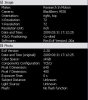
Digital images contain metadata (data about data) that can contain a wide variety of information. Some phones have limited capabilities, but others provide a wealth of info. For instance, the iPhone embeds GPS coordinates, and the Palm phones include the owner's name. As you can imagine, this information can be pretty useful in an investigation.
The information is called EXIF, a brief description complements Wikipedia follows (
http://en.wikipedia.org/wiki/Exchangeable_image_file_format)
Background
Exif was created by the Japan Electronic Industries Development Association (JEIDA). Version 2.1 of the specification is dated June 12, 1998, and the latest, version 2.2 dated April 2002, is also known as Exif Print. Though the specification is not currently maintained by any industry or standards organisation, its use by camera manufacturers is nearly universal.
The metadata tags defined in the Exif standard cover a broad spectrum:
* Date and time information. Digital cameras will record the current date and time and save this in the metadata.
* Camera settings. This includes static information such as the camera model and make, and information that varies with each image such as orientation, aperture, shutter speed, focal length, metering mode, and ISO speed information.
* A thumbnail for previewing the picture on the camera's LCD screen, in file managers, or in photo manipulation software.
* Descriptions and copyright information.