
• The move to the new server is done. There are some software and database maintenance updates in process. This has us passing the hat around to help out. We appreciate any donations. Seriously, even a dollar helps. The payment page may be found here - https://www.audiokarma.org/support.html

Characteristic impedance of speaker cables

Capitol C

AK Subscriber
Subscriber
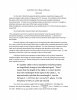
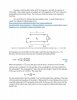
I've come across some threads and manufacturers web sites that treat speaker cables using ideas from transmission-line theory, such as this one: https://www.psaudio.com/article/the-sound-of-speaker-cables-an-analysis/. I spent some time in the last few days looking at this, since I've taught courses on vibrations and waves including transmission lines. Basically, I believe that the claims made start out with an interesting idea, but fail to follow through. If they did, they'd find that speaker cables are just wires, ie, transmission-line effects don't matter until the speaker cables are many miles long. I've attached more details for anyone who is interested. Please note that I am not telling anyone what to buy, or what is better, I'm just looking at this as a problem in electrical engineering/physics.
 

Attachments

  • Characteristic imedance of speaker cables_Page_1.jpg
    Characteristic imedance of speaker cables_Page_1.jpg
    131.4 KB · Views: 14
  • Characteristic imedance of speaker cables_Page_2.jpg
    Characteristic imedance of speaker cables_Page_2.jpg
    96.4 KB · Views: 13
Register to hide this ad
I totally agree with you. I remember back when I started doing high frequency and fast pulse instrumentation I had to worry about coaxial cable impedance and length matching. I had a thought - "What if my speaker cables aren't length matched?". Then I realized that for transmission line effects to matter at audio frequencies we were talking thousands of feet.

Edit: I looked at the website you linked to. Figure 13, the scope traces, has no information regarding risetime of the square wave or sweep speed of the scope, and therefore cannot be judged as to its relevance to the discussion.
 
Last edited:
I am getting ready to run some new speaker wire to some speakers in a cabinet. One run will be 25 feet the other only needs 5 feet. I bought enough wire to make them even but that means the short one would have to coiled up. But if I understand y'alls conclusion it doesn't matter until you get a lot longer. I was already wondering if coiling one of them up defeated the benefit of same length.
 
The bottom line is that Speaker Cabling is VERY forgiving. You can do a LOT of odd things, the impact will be immaterial and it won't matter. It is possible to mess up to where the sound suffers, but it takes some doing.

Mark Gosdin
 
You should know by now that posts about cabling should be posted on Cutting Edge where this topic has already been discussed.

And yes, a cable's L and C values do interact with both the amplifier driving them and the crossover network at the other end in my experience. Chortle all you wish...
 
What you want is cable that can handle the current and has very little resistance and hasn't been tuned by the maker to emphasize a certain spectrum of sound. Yes, Dorothy, there are tuned expensive speaker cables.
 
This is a marketing scam used by cable manufacturers. Mention some real science and try to tie your product to it with nothing but your claims to the connection. There’s one that claims their special cables utilize ‘quantum tunneling’ to improve sound and then claim the cable is ‘engineered’ with that property, but you can’t ( more like won’t)measure anything to know that your engineering works-WTF? Engineers and physicists cringe
 
Also, no skin effects (at least in audible frequencies and 10x as high).

Ok, if that`s so, why is the FCC frequency allocation chart in my radio/computer room indicate that 9kHz to 13kHz is allocated to radio navigation ?

Has to be skin effect for that radio service to function(those audible frequencies have to leave the antenna & propagate, and that requires "skin effect"), one would think, if those in the audio range frequencies are to radiate from the transmitting antenna !

And my Mil. grade & respected (circa ~ 1995) $ 4,000.00 Watkins Johnson very HQ HF 1000 receiver`s bottom frequency tuning range starts at 5kHz..

And one more source, if I may : my collage level electronics book called Electronic Communication (5th edition) by Robert L. Shrader(former Chairman of Electronics, Laney Collage US Merchant Marine Academy, Kings Point, Ret. indicates that the VLF radio range is between 10- 30kHz and services in this range include radio navigation, time and frequency standards, maritime mobile and aeronautical communications, and though I can`t seem to find it right now, for the 30 + yrs. I`ve owned this 5th edition, and have read in this respected book that the " Skin Effect" starts occurring at 5 kHz, and my own experience concurs within audio, via twin coaxial speaker cables that I created in the eighties, that I built for myself and many friends that I have posted about on this site on and off over the past few yrs.

Most curious, as Mr. Spock would say..


Ciao
 
Electromagnetic waves can be of very low frequency. Antennas need to be large to deal with the long wavelengths. An electromagnetic wave and an audio signal of the same frequency are entirely different animals.
 
I've come across some threads and manufacturers web sites that treat speaker cables using ideas from transmission-line theory, such as this one: https://www.psaudio.com/article/the-sound-of-speaker-cables-an-analysis/. I spent some time in the last few days looking at this, since I've taught courses on vibrations and waves including transmission lines. Basically, I believe that the claims made start out with an interesting idea, but fail to follow through. If they did, they'd find that speaker cables are just wires, ie, transmission-line effects don't matter until the speaker cables are many miles long. I've attached more details for anyone who is interested. Please note that I am not telling anyone what to buy, or what is better, I'm just looking at this as a problem in electrical engineering/physics.
Yep. Absolutely correct. Lumped equivalent network is all that matters at this frequency. It's all audiophile nonsense, but everyone has a story and someone always buys it.
 
You should know by now that posts about cabling should be posted on Cutting Edge where this topic has already been discussed.

And yes, a cable's L and C values do interact with both the amplifier driving them and the crossover network at the other end in my experience. Chortle all you wish...
Yes, you are correct, but it's all simulatable, and no transmission line effects are required. No mystery here...
However, you do need to have at least a simple model for the speaker and amps as well as the cable, and be able to run SPICE-like simulators.
Not everyone can do that.
If you are sufficiently anal to measure/model your components then all is well, but that's not so simple for the average audiophile without an EE PhD.
 
Ok, if that`s so, why is the FCC frequency allocation chart in my radio/computer room indicate that 9kHz to 13kHz is allocated to radio navigation ?

Has to be skin effect for that radio service to function(those audible frequencies have to leave the antenna & propagate, and that requires "skin effect"), one would think, if those in the audio range frequencies are to radiate from the transmitting antenna !

And my Mil. grade & respected (circa ~ 1995) $ 4,000.00 Watkins Johnson very HQ HF 1000 receiver`s bottom frequency tuning range starts at 5kHz..

And one more source, if I may : my collage level electronics book called Electronic Communication (5th edition) by Robert L. Shrader(former Chairman of Electronics, Laney Collage US Merchant Marine Academy, Kings Point, Ret. indicates that the VLF radio range is between 10- 30kHz and services in this range include radio navigation, time and frequency standards, maritime mobile and aeronautical communications, and though I can`t seem to find it right now, for the 30 + yrs. I`ve owned this 5th edition, and have read in this respected book that the " Skin Effect" starts occurring at 5 kHz, and my own experience concurs within audio, via twin coaxial speaker cables that I created in the eighties, that I built for myself and many friends that I have posted about on this site on and off over the past few yrs.

Most curious, as Mr. Spock would say..


Ciao
Skin effect can occur at 5kHz- but so what? All that matters is the network that is the amplifier output impedance, the interconnect cable and the load.
You can model the RLC + skin effect ((it looks like a kind of frequency dependent resistance- otherwise known as an inductance (well, not really- it actually is a frequency dependent resistance)- complicated by the fact that it reduces the actual inductance at the same time because it affects the magnetic field in the cable) pretty easily and for most cables combined with most speakers it really doesn't matter.
Even with my ML electrostatics that are resonant at c. 30kHz at 0.9 ohms resistive, it doesn't matter to a significant degree using 10awg 2m stranded cu cables, and I have the simulations and measurements to prove it- not that most of you care.
 
Last edited:
This is a marketing scam used by cable manufacturers. Mention some real science and try to tie your product to it with nothing but your claims to the connection. There’s one that claims their special cables utilize ‘quantum tunneling’ to improve sound and then claim the cable is ‘engineered’ with that property, but you can’t ( more like won’t)measure anything to know that your engineering works-WTF? Engineers and physicists cringe
Like the Townshend cables. they show reflections in their blurbs due to transmission line effects and somehow neglect to mention that they excite them with very fast risetime square waveforms and that the impedance mismatch, and subsequent reflections, is at multi MHz frequencies. No mention that band limited audio just does not excite this behavior and it's all crap.
 
Last edited:
Electromagnetic waves can be of very low frequency. Antennas need to be large to deal with the long wavelengths. An electromagnetic wave and an audio signal of the same frequency are entirely different animals.

I`m talking about running a wide audio bandwidth signal down a set of wires, you know a closed circuit..
The reference was about the frequencies and it`s action and what happens as it`s sent down wires !!
Bandwidth propagation percent that is frequency dependent..
I was given a example of the nature of higher frequency AF that falls in the RF realm..

Never mind, I`m tired of wasting my time trying to help folks grasp the proven concept..
Enjoy your music in anyway that you see fit..

Ciao
 
I`m talking about running a wide audio bandwidth down a set of wires, you know a closed circuit..
The reference was about the frequencies and it`s action and what happens as it`s sent down wires !!
Bandwidth propagation percent that is frequency dependent..
I was given a example of the nature of higher frequency AF that falls in the RF realm..

Never mind, I`m tired of wasting my time trying to help folks grasp the proven concept..
Enjoy your music in anyway that you see fit..

Ciao
Yes, Bill, it's always a fascinating exercise trying to describe these matters. It can be fun, but it's mostly frustrating, so I share your pain.
 
Back
Top Bottom