• The move to the new server is done. There are some software and database maintenance updates in process. This has us passing the hat around to help out. We appreciate any donations. Seriously, even a dollar helps. The payment page may be found here - https://www.audiokarma.org/support.html

"Chrylser" + "Imperial" 1964-1966

The title would have had been too long for what I wanted.
Anyway:
1) They where strong cars in terms of body work - at least the "Imperials". But I wonder how they would behave comparing to today's cars;
2) Did the driver's side mirror could be "remote controled" via a knob that moved a cable? :)
 
The title would have had been too long for what I wanted.
Anyway:
1) They where strong cars in terms of body work - at least the "Imperials". But I wonder how they would behave comparing to today's cars;
2) Did the driver's side mirror could be "remote controled" via a knob that moved a cable? :)

I did find this in a search of when cars got remotely adjustable rear view mirrors;

"Manual remote side view mirrors were introduced and gained popularity in the early 1960s. These systems used a mechanical connection, often a small joystick or control handle inside the car, allowing the driver to adjust the mirror's position without rolling down the window or getting out of the vehicle. A remote control left exterior mirror was even standard equipment on some vehicles, such as the 1966 Thunderbird."

As to the crashworthiness factor of old cars VS new, it's helpful to remember that old cars were (somewhat) engineered to attempt to have the car survive a crash, which eventually proved unsustainable, whereas modern cars are engineered to attempt to minimize injuries to the occupants, at the sacrifice of the vehicle itself.
 
The old cars were fine in slow speed fender benders and could be repaired, but dangerous as **** in crash above 30 mph- you'd likely be severely injured and above 50 mph likely dead. Modern cars are made to fold up on impact and be thrown away afterwards, while you walk aware with a little skin burn from the airbag... I'll take the new cars every time.
 
Old cars, pre '70's-'90's, yes, but since this was strudier then other cars of that era... anyway, I would feel safer in a 1964-1966 "Imperial" than into a "G.M." car from that era or even some "Ford" one. Probably "A.M.C." cars would offer some safety.
 
The "Imperials" of 1964-1966 seemed to be quite strong cars (in terms of structure) for theyr days, because they where banned from that stupids destructions races. Probably not safe by today's standards, but safer then other cars of theyr days. They also offered in 1965? headreasts for 2 front passanger, which was very rare at that time.
How where the top "Chrylsers" of those years? Did they where as strong in structure as the "Imperials"?
I know that they ate a lot of fuel... but they where relaible cars? I like the look of them. Allmost nothing like from that era in U.S.A ("Chrysler" got better looks in 1965, one year after the "Imperial"), they where out of the future. The 1964 "Imperial" was designed by the... Italians.
We used to refer to those a bus killers. As in an accident with a bus if they hit one they'd kill it.
 
The problem with cars that will survive such a thing is that the meat bags inside of it may not. Modern stuff has crumple zones to absorb the energy to protect the passengers on a sudden decel like hitting something. Old stuff didn't do that.

Not sure offhand when collapsible steering columns became a requirement but they were a good idea. At least until they seized up. So were 3 point seat belts. No belt and you go flying. Lap belts will smash your face into the dash or steering wheel. The old fixed columns were basically a spear aimed at chest level so if the front end of the car got shoved back it would just push the wheel right up into the driver.
 
The problem with cars that will survive such a thing is that the meat bags inside of it may not. Modern stuff has crumple zones to absorb the energy to protect the passengers on a sudden decel like hitting something. Old stuff didn't do that.

Not sure offhand when collapsible steering columns became a requirement but they were a good idea. At least until they seized up. So were 3 point seat belts. No belt and you go flying. Lap belts will smash your face into the dash or steering wheel. The old fixed columns were basically a spear aimed at chest level so if the front end of the car got shoved back it would just push the wheel right up into the driver.
When young I worked in the machine shop that built the motors for the NM State Police- one of the officers explained how gory a wreck at just 50 mph could be. He said "put three or four raw eggs in a plastic sandwich bag then smash them, that's what it feels like when you have to pull a dead body out of a bad wreck"... yikes !
 
The old cars were fine in slow speed fender benders and could be repaired, but dangerous as **** in crash above 30 mph- you'd likely be severely injured and above 50 mph likely dead. Modern cars are made to fold up on impact and be thrown away afterwards, while you walk aware with a little skin burn from the airbag... I'll take the new cars every time.
Hit a telephone pole at 45 mph no seat beaks on ( stupidly of youth ) in my 1975 Monte Carlo because of a patch of black ice on a curve sustained a bad headache ! And with in a month had the car back on the road !
 
As for lap only belts, I wonder if you can add some kind of soft pad to it, to ofer some up from the waist protection.
Or put some belt around the chair for same purpose. This car didn't had a B pillar.
But it did had some padding on the dash. Other cars didn't even had that.
 
Pad the dash is better than nothing but its not a complete fix. I don't think any extra padding on the lap belt will help either. Its just a physics thing. If the car stops suddenly, you body will want to keep moving. With a lap belt it stops your lower body, but everything above the waist keeps going. Basically it just pivots your face downward like bending over to pick something up.

The seats aren't typically structural enough to make them effective as an anchor point either. Thin steel as a frame, and they just bolt through the sheet metal floor pan. Doesn't take that much to bend a seat frame or floor.

Having been in an accident not terribly long ago I can tell you that the seat belt causes extensive bruises where your body presses into it. I'd rather have the bruises across my chest than have my face stopped by a dash pad though
 
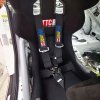
Very wide belts with more than 3 points of attachment are a very good option. But it will not be comfortable to sit fixed in the seat. 1763327997365.jpeg In a normally used car, such belts would not be desired.
 
Race seats are also built a lot sturdier than seats in old cars at least. Modern ones may be better but this is what the typical guts of an old bench seat look like.


its not a whole lot, something around the outside to make the shape and some wire springs for support. Bucket seats weren't much better, you just get two smaller versions of this basic thing.

The belts generally anchor directly to the floor.
 
IIRC 1967 was the first year for collapsible steering columns (and dual master brake cylinders) for Mopar in general.
Being Imperials, they could have gotten it a year earlier, as those and other top line Chryslers did sometimes.
 
IIRC 1967 was the first year for collapsible steering columns (and dual master brake cylinders) for Mopar in general.
Being Imperials, they could have gotten it a year earlier, as those and other top line Chryslers did sometimes.
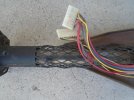
My 68' Newport had the collapsible column and dual chamber master cylinder with disc brakes up front, that leaked fluid- I replaced them with the better type from the 73' models. The steering column was made with a mesh steel:
s-l1600.jpg
 
interesting. I'm used to the splined or double flat setup with the lower shaft slid into the upper one. Not a column that will actually collapse like expanded metal will.

1763399044487.png

Thats an aftermarket one with U joints instead of a rag joint for a late 70s Bronco but the shaft arrangement is pretty typical. They did a nice job of rusting where the two go together though and they won't slide. Makes changing a steering box a giant pain in the neck. When I did the one on the Towncar I had to torch the shaft to get the miserable thing apart. It went back together with a healthy amount of grease.

I think '68 is when the dual circuit master cylinder became a federal requirement.
 
Back
Top Bottom