• The move to the new server is done. There are some software and database maintenance updates in process. This has us passing the hat around to help out. We appreciate any donations. Seriously, even a dollar helps. The payment page may be found here - https://www.audiokarma.org/support.html

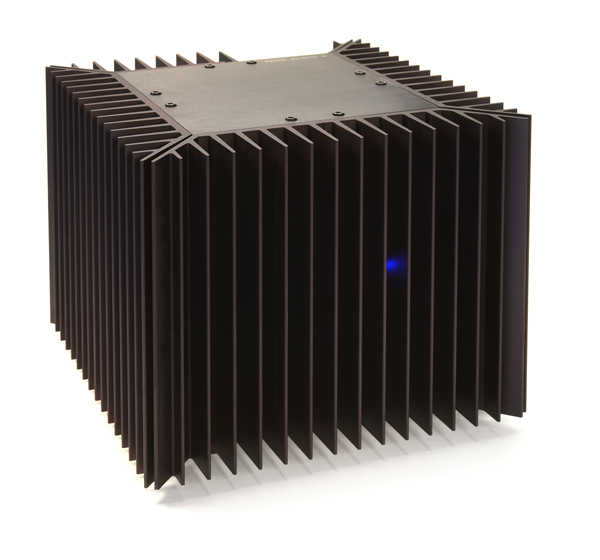
CLASS A amp runs cool

I think the "class A up to N watts" characterization is a pretty reasonable way to look at it. I'll still call that class AB 'til the cows come home, and I would call the above-N-watts operation class C

Class C?, everything I read says C is too distorted for audio use. :idea:
 
Class C?, everything I read says C is too distorted for audio use. :idea:

If an amp were operating in class C regardless of output level, then yes, but no audio amp works that way.

My point was that, if we're going to talk about an amp operating in in class A up to some level, then in what class is it operating when it exceeds that level?

My stance is that, for such output levels, the amp's output devices are conducting for less than 50% of the duty cycle when they are delivering the peaks. Less than 50% is class C. Because only the peaks are handled in the class C realm of operation, and those peaks can be delivered faithfully, distortion is not necessarily a problem.

Is it silly and pedantic to say that an amp is operating in class C above N watts, when it can be said to operate in class A below N watts? Well, yeah, probably. That's exactly why class AB was instituted. (In my view of history, that is. I don't claim to have been present at birth. Pretty close, though.) For my part, I will persist in calling all such amps class AB, no matter what "N' is.

Cheers and respect, really.

Just to get back to the OP topic to soothe my conscience, I agree that it would be odd for a class A amp to run cool at idle, even if it is only supposed to run in class A up to 50W. If it was on my bench, I would be looking to measure the idle current in the outputs.

 
Agree with spark1; the amp has to be designed to operate in class A. Cranking up the bias in a class AB design would likely cook the power supply.
 
Just to get back to the OP topic to soothe my conscience, I agree that it would be odd for a class A amp to run cool at idle, even if it is only supposed to run in class A up to 50W. If it was on my bench, I would be looking to measure the idle current in the outputs.

Not sure how many transistors the Luxman L-550 has, but the owner said that he ran the amp overnight and the amp was just warm, the L550 is a 50 watts class A and is known to get hot, so I got hesitant and decided not to push through with the purchase. My L510 is 8 watts Class A and 100 AB and that amp gets hot.

He was going to pass on the purchase based on his definition of "hot" and the seller's definition of "warm", not the same person checking or an actual temp.
The L-550 is a different design with "heat pipes", so it may just deal with the heat better than the L-510, or it may be what is warm to one person is hot to someone else. ;)
Of course a bench test would be good to make sure it is operating as designed.
Personally if I wanted the amp and it was a good price I would just buy it, not worrying about how the operating temp was described (unless on fire or smoking).

I try to use my ears to tell me if I like something or not and try to ignore all the marketing about what makes a design special. :)
 
Last edited:
But what is class A/B? They all are class A to some point, right?

Actually AB is typically two devices (transistors in this discussion) operating in a push-pull design. Such that as one partner transistor nearly gets to cutoff (no current flow) the other transistor starts conducting hard to pick up the signal on the opposite phase. So the transistors on their own are operating class B (biased at cutoff or nearly cutoff). Push-Pull was used (I think) as a simile to try and depict the see-saw motion of the signal through the final amplification stage.

A phase inverter provides an opposing signal versus the input signal. The input signal is fed to one side of the push-pull pair and the signal from the phase inverter is fed to the other side of the push-pull pair. So together both transistors are summing up a complete output signal with decent amplification and efficiency. Class AB.

--Joe
 
So many different designs out there - the ACA amps are the simplest of the class A amps, one can build. The other Pass designs for kits are also simple, but sound great.

Yea, this whole thread is an eye-opener.

And just when I was out of the rabbit hole of amp classes you mention this class A push-pull.
Because, to me, each device is always on in the Q state, just so weird. I just see don't any advantage...yet.

I will search and learn. :)


--Joe
 
I have built 3 of Nelson Pass Class A diy designs and none run cool. In fact they sound better the hotter they run ... The Aleph J is one you can crank up the bias from the base line but you will need a bigger set of heat sinks to do that and 55 c is a temp to shoot for on the sinks.I am amazed at the Firstwatt class A sound quality and a recent V-fet diy amp.... cheers
 
Nelson Pass loves himself some Class A amps. He really is the master of that design.
Yes he keeps coming out with different configurations to keep it interesting. It blew me away as to how little was require in components, to give the sound they do.
 
The Pioneer is a really unique piece. It came out at the time of the SX-1250. I think the M-22 was Pioneer Engineers just pushing out a piece of kit with as much engineering as possible.

Yea, I'll say it's unique, checking the schematic out as well. And this is from '77/'78 ??? Wow.
For sure that is a very tidy layout.
thanks for sharing.
 
Actually AB is typically two devices (transistors in this discussion) operating in a push-pull design. Such that as one partner transistor nearly gets to cutoff (no current flow) the other transistor starts conducting hard to pick up the signal on the opposite phase. So the transistors on their own are operating class B (biased at cutoff or nearly cutoff). Push-Pull was used (I think) as a simile to try and depict the see-saw motion of the signal through the final amplification stage.

A phase inverter provides an opposing signal versus the input signal. The input signal is fed to one side of the push-pull pair and the signal from the phase inverter is fed to the other side of the push-pull pair. So together both transistors are summing up a complete output signal with decent amplification and efficiency. Class AB.

--Joe

Thanks, but I'm not sure if you have read all my posts and the post I quoted when I asked the question.
From NP and others description: "Class AB push-pull amplifiers are hybrids between Class B and Class A. Class AB run Class A at low power levels, and become Class B amplifiers at output currents determined by the bias."

From this I don't understand how amps can by themselves go from A to A/B, therefore my question.
I always assumed amps that are referred to as A A/B are actually just high biased A/B amps.
So although I appreciate the effort, I don't see how you answered my question.
 
Here is an analogy regarding A/B amps from NP:
"Imagine that the two transistors are runners in a relay race and that the signal is the baton they carry. In a real relay race, the runner receiving the baton begins running before the hand-off, which is made with the runners at speed. The runners who hand over the baton at a dead stop will operate at a severe disadvantage.

So it is with push-pull power transistors. The higher the bias, the smoother, more seamless is the transition."

Yes, I was relying on my old knowledge of classes A, AB, B, C and little D.
But from this thread there's a whole lot more to class A topology than I expected.

So, I've no answers, only more info gained.
THX.
 
I had a pair of class A mono amps and I had to pass them on because I truly believed that something that ran that hot simply would not last long.My MC240 runs cooler than those monoblocks ever did.
 
I'm not sure if the OP has gotten anything useful out of this thread, but I have. Not sure of the order of importance of these learnings - probably all are crucial:
  • There is no subject so simple that it can't be viewed from points of view so different that they are apparently contradictory.
  • If you find yourself disagreeing with Nelson Pass, your point of view just might be too extreme to be shared in public (*).
  • Don't post with a sleep disorder, or with a cocksure attitude, and especially not with both.
(*) Not much of a disagreement. Only about what to call the "leaving class A" realm of operation. That's what led to my "class C" tangent.
 
Okay, my inner farmer engineer asks why not add a water glycol heat transfer radiator. You know like a big intercooler on a pikes peak hill climber. With some feedback code to keep it at an optimal temperature. We are on this forum because it’s all about the sound. Hell, you could even add some temperature modulated wavelength LED’s.
 
Okay, my inner farmer engineer asks why not add a water glycol heat transfer radiator. You know like a big intercooler on a pikes peak hill climber. With some feedback code to keep it at an optimal temperature. We are on this forum because it’s all about the sound. Hell, you could even add some temperature modulated wavelength LED’s.

Because big honkin heatsinks everywhere looks way cool (pun intended) and they heat the house in winter.

1136.jpg
 
https://www.passlabs.com/technical_article/leaving-class-a/

I consider the amps he listed to be fairly characterized as Class A amps. Calling them AB is a disservice, and not accurate, since they operate fully in Class A to their rated Class A power.

I believe that power amps operating in Class A to their peak output are a rare commodity.

Fair, until someone starts blowing smoke their "30W Class A" amp is way stronger than other 30W amps. Point being, it might be 30W Class A, but that doesn't mean it's just a 30W amp.
 
Back
Top Bottom