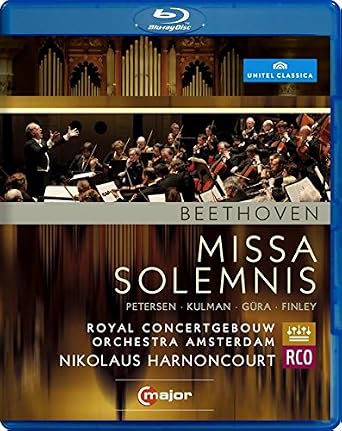
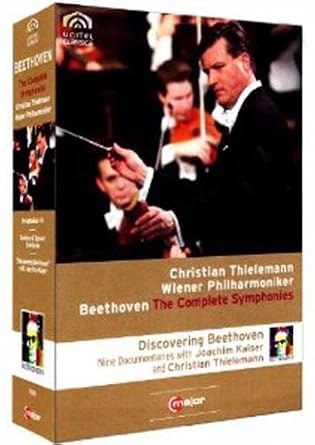
Capitol C: I’m glad to hear from another classical music fan. This is a good topic for my post number 1,000.
I’ve organized my opinions according to your questions for classical music fans:
“Requirements for their systems that are different from the mainstream?”
“Is there a right way for it to sound? What kind of things classical listeners look for, what they like and don’t like?”
“Where they are on the objective vs subjective spectrum.”
“What formats do they prefer?”
“What music do they use to audition equipment?”
Requirements for their systems that are different from the mainstream?
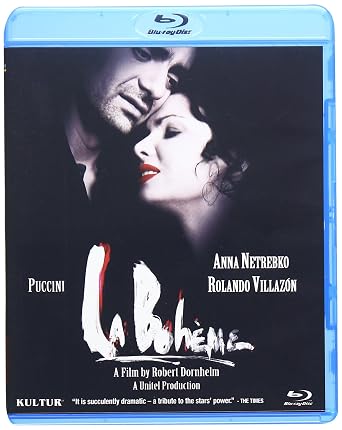
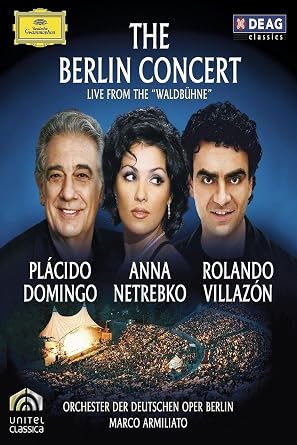
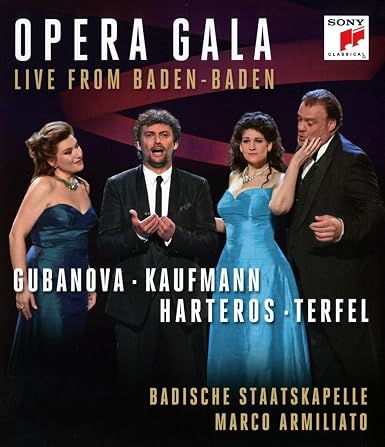
Each person must define their unique goals for their hi-fi system and/or home theater system. Because I enjoying watching as well as listening to recordings of classical orchestral concerts, and I watch/listen to recordings of opera, and I occasionally watch/listen to recordings of ballet - and I enjoy surround-sound - I make no distinction between a “hi-fi” system and a “home theater” system.
I attend more than 20 live world-class classical concerts each year, including season tickets to the symphony and opera, plus I attend several performances of chamber music each year.
The music I listen to (classical) therefore has a clear benchmark for how the music “should” sound – i.e., the live performance. When I attend the symphony and opera, I experience wonderful 100% natural sound. No electronics are used when the musicians create the performance in the symphony hall or opera house – no sound reinforcement system – no mixing board or sound board – no software plug-ins creating sounds or altering sound - etc. I’ll clarify what I mean:
Classical Symphonic Music vs. Pop Musicians Performing with Orchestra vs. Outdoor Performances
My local symphony orchestra performs a Classical Series, plus a number of “pop concerts”, and a few outdoor concerts.
For the Classical Series – which involves classical music performed live in the symphony hall, a sound reinforcement system is NOT used. I’ve confirmed with the symphony’s Executive Director that the microphones that can be seen hanging above the stage are used solely for recording, NOT for amplifying the sound in the symphony hall. My local symphony hall has world-class acoustics, and the natural sound is amazing.
OTOH, when pop music is performed in the same hall, electronics are often used. An example is when a pop singer uses a microphone to sing. And for some pop concerts, electric guitars, electronic organs, etc. are sometimes used.
And, of course, on the rare occasion when the symphony performs an outdoor concert (e.g., outdoor Memorial Day concert), then of course a sound reinforcement system must be used.
Opera vs. Musicals
IMO one of the hallmarks of opera is that the singers do NOT use microphones. And the orchestra does NOT use a sound reinforcement system. No electronics are involved when an opera is performed in my local opera house. (I have confirmed this with management.)
OTOH, musicals (vs. opera) typically involve singers using microphones.
And, of course, on the rare occasion when an opera singer performs the National Anthem at the baseball park, then they must sing into a microphone.
Chamber Music
IME chamber music performances generally do not involve a sound reinforcement system. (I’ve been to one concert by a string quartet that used sound reinforcement because the venue had poor acoustics. I won’t attend another concert at that venue.)
For classical music, “the way the music is intended to be heard” is the live performance.
Obviously, my memory of live classical concerts isn’t perfect, but I’ve heard enough large-scale orchestras, operas, and small-scale chamber groups perform without a sound reinforcement system that I’m confident that I can recognize natural sound reasonably well. (And my memory is refreshed more than 20 times every year by virtue of attending live classical performances.)
For those of us who regularly attend live classical concerts, we have a pretty good memory of what a violin should sound like – independent of whether we were at a particular recording session. We know how a trumpet sounds. We know how an oboe sounds. We know how a double bass sounds. Some of these natural instruments have complex sounds – and when many such instruments play together in an orchestra – the sound is extremely complex – and we know how that sounds when they’re performing live with no sound reinforcement system. (Recognizing some variance due to the acoustics of the venue, and the listener’s seat location.)
For classical music performed in its intended venue, the artists are the composer, the conductor, and the musicians - and IMO the “work of art” was the live performance. I’m using the term “work of art” in terms of what represents a benchmark for the sound quality of the recording when played via a home hi-fi system, not in terms of Intellectual Property law. The same
might be true of other genres that involve natural music performed live, such as some big-band, some jazz, some folk, etc. I’m not knowledgeable about these genres, so I can’t say. (OTOH, reportedly
some pop music is completely different – particularly if there never was a live performance and electronic sounds were cobbled together by recording engineers – in which case the artists arguably are the producer and engineers and the “work of art” is the recording. Other than the few people who were listening to the studio monitors when such a pop music recording was created, how would anyone else know how such an electronically created recording “should” sound? )
IMO, recordings and hi-fi gear are like every other creation of mankind – i.e., imperfect. IME recorded music reproduced in the home cannot perfectly recreate the live experience. I want the inevitable imperfections in the sound from my home-hi-fi to sound pleasant vs. unpleasant.
One of my priorities for recorded music is for the timbre of the orchestra instruments to sound natural. This is why I generally prefer tube amps. And I like to achieve dynamic range that approaches the live concert experience for a large-scale orchestra. (Consider the contrast between the 4th and 5th movements of Mahler Symphony 2.) This is why I like large Klipsch speakers, and subwoofers.
I’ve heard some people say that the goal for classical music reproduced in the home is to create an “illusion” or “simulacrum” of the live performance – which I think are good descriptions.
Is there a right way for it to sound? What kind of things classical listeners look for, what they like and don’t like?
Different people have different sensitivities to different facets of sound quality, and that can influence their goals for their hi-fi system, and which trade-offs they’re willing to accept. Some people are sensitive to spatial presentation. Some are sensitive to the accurate timbre of orchestral instruments. I’ve heard people talk about the “rhythm” of a hi-fi system. Etc. Each consumer must listen with their own ears and form their own opinion about the sound quality of their hi-fi system.
As I said earlier, my goal is for classical music reproduced via my hi-fi systems to sound like what I remember hearing in the symphony hall or opera house – and I want any inevitable deviations to sound pleasant vs. unpleasant to my ears.
My biases are that I can’t tolerate poor audio quality. And, I don’t like overly “bright” sound. When the sound of my hi-fi systems inevitably deviates from “natural” sound, I want the sound to be pleasant, “warm”, and “rich”, vs. “dry”.
I’ve found that synergy between an amp and speakers is important. In each of my 5 hi-fi systems, the amps were paired with speakers based on my listening tests. And then I “tube rolled” each amp to optimize the audio quality.
I know from experience that certain recordings sound better on a particular one of my 5 hi-fi systems. For example, an operatic soprano can sing with tremendous power capable of filling an opera house with their natural voice (i.e., no PA system). Some tweeters strain to deliver concert hall volume levels for operatic sopranos. High-end Klipsch speakers’ horn-loaded high frequency drivers can deliver the operatic soprano voice with no hint of strain.
Moreover, I know from experience that certain amps pair well with certain recordings to deliver the illusion of the live concert hall experience. (For example, one of my favorite opera recordings sounds “lean”, and I know which tube amps give it a more natural sound to my ears.)
If room layout dictates that the main speakers must be relatively far apart, then a surround-sound system’s center channel can be helpful. (In classical recordings the rear channels mostly contain hall sound.) Subwoofers can help deliver the impact of large-scale orchestral music (e.g., double bass, bass drum, pipe organ).
For large-scale orchestral music, I generally prefer my 4.2 system in my basement, which can deliver a near-live-classical-concert-experience. Front, center, and left speakers are Klipsch RF-7 II. A single rear speaker is a Klipsch RF-7. Subwoofers: SVS SB16-Ultra, Klipsch R-115SW. These four tower speakers plus two subwoofers provide plenty of acoustical power in this average size listening room. (I sit approximately 10 feet from the speakers.) Collectively, they total four 1 ¾” titanium compression drivers mated to Tractrix horns, eight 10” woofers, one 15” powered subwoofer, and one 16” powered subwoofer
Source: Oppo UDP-205. The Oppo UDP-205 provides "bass management" - i.e., a built-in crossover, and a connection for a powered subwoofer. With Oppo's bass management, the low frequencies are off-loaded from the main amp and speakers, thereby facilitating greater overall dynamics.
IME, tube amps generally deliver the most natural sound with Klipsch speakers. Here's the tube amps that I have in my basement system: Scott 272 (EL34), Inspire “Fire Bottle” SE Stereo Tube Amplifier HO (single-ended-pentode (SEP) power amp currently equipped with 6L6GC), Scott 222C (7189), McIntosh MX110Z tuner/preamp, Fisher KX-200 (7591), Scott 296 (6L6GC), Pilot SA-260 (EL34), Scott LK150 (KT88). A patch panel allows me to connect the speakers to whichever amp(s) I want, and F/F RCA cables enable me to connect an amp to the Oppo, and a power amp to the MX110Z (if I choose to have a pre-amp in the audio chain).
IME, the RF-7II can reproduce the natural sound of orchestral instruments, when driven by the
right tube amps. I often use the Scott 296 to drive the front L&R speakers, and the Fisher KX-200 to drive the center and rear. Sometimes I like to change which amp I use, because each amp brings a unique set of trade-offs to the audio quality.
This system can deliver near-concert-hall dynamics and full frequency-range for large-scale classical music, and does a good job of reproducing the natural timber of orchestral instruments.
I regard my hi-fi systems as being “dialed in” when I completely forget about the equipment, and lose track of time, and become engrossed in the music, and I can listen for hours without “listener fatigue”.
Where they are on the objective vs subjective spectrum.
I rely on my ears to assess the sound quality of my hi-fi systems – not graphs that are based on a “calibrated” mic and some PC software. I point this out because some people are adamant that because a graph from their PC software shows that their system is “flat”, therefore they must be hearing what the producer “wanted them to hear”. My position: I don’t give a rat’s ass what the record producer wanted – for classical music they’re not the artist.
In other words, for me the audio quality of my hi-fi systems is subjective.
... to be continued ...