• The move to the new server is done. There are some software and database maintenance updates in process. This has us passing the hat around to help out. We appreciate any donations. Seriously, even a dollar helps. The payment page may be found here - https://www.audiokarma.org/support.html

Connecting XLR to Standard Speaker Wire Jacks

Mrs. Henry

New Member
Hello,

Are there speaker cables available that would enable me to connect a Luxman R-1050 (standard speaker wire jacks) to the XLR input on Spendor BC 3 speakers?

Much appreciated. Thanks!
 
Register to hide this ad
Parts-express sells XLR connectors. You could buy a pair and solder/connect them onto your existing speaker wire.

Or there are premade cables out there with XLR on one end, and bare wire/banana jacks on the other end.
 
Parts-express sells XLR connectors. You could buy a pair and solder/connect them onto your existing speaker wire.

Or there are premade cables out there with XLR on one end, and bare wire/banana jacks on the other end.

Thanks!

So I can, in fact, connect my Luxman to the Spendors? They are passive speakers?
 
No idea on whether they are passive or active. You'll have to look up the manual for them.

If they are active you can get RCA to XLR connectors and hook them up to the receiver if it has a line out

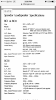
Edit: Looks like they are passiveIMG_8931.PNG
 
Last edited:
Note the speaker literature says XLR 4-pin.

3-pin is the common/norm (as in normally what you get ordering an "XLR" connector). One will have to ensure 4-pin XLR is ordered if that's what's necessary, and then find out the proper wiring connections as it's likely non-standard as well. The typical, off-the-shelf premade cables and adapters probably need not apply unless they are specifically 4-pin variants.
 
Last edited:
Hello,

Are there speaker cables available that would enable me to connect a Luxman R-1050 (standard speaker wire jacks) to the XLR input on Spendor BC 3 speakers?

Much appreciated. Thanks!
Why bother? Get rid of that crap and replace with standard 5 way binding posts.

This will give you far, far great flexibility in the future.

Regards,
Jerry
 
Why bother? Get rid of that crap and replace with standard 5 way binding posts.

This will give you far, far great flexibility in the future.

Regards,
Jerry
X 10 for truth and emphasis.

XLR connectors were never engineered to carry low impedance high voltage signal, they're engineered for high impedance, low voltage, low current signals and should NEVER be used as a speaker connector, period.
 
FWIW, both Switchcraft and Neutrik rate their 4-pole XLRs at 10A per pole.

Future flexibility may be a consideration for the OP, his/her call, but the ability of the connector to handle the signal for this particular speaker application is not a concern.
 
Last edited:
BBC used XLRs for speakers. Just buy some from a vendor, and solder up some cables, no need to modify anything. Consult the manual for what pins to use, or use a multimeter and a battery to find continuity and polarity.
 
FWIW, both Switchcraft and Neutrik rate their 4-pole XLRs at 10A per pole.
By-product. Would be hard to design a contact pair that had the low impedance loss characteristics without being able to pass a certain amount of current, no?

The design goal of the XLR series was continuous shielding, and shield/ground first to make, last to break contact.

More than one audio manufacturer that i(and many others) hold in high regard make specific notes in their manuals that XLR's are NOT speaker connectors.
 
By-product. Would be hard to design a contact pair that had the low impedance loss characteristics without being able to pass a certain amount of current, no?

The design goal of the XLR series was continuous shielding, and shield/ground first to make, last to break contact.

More than one audio manufacturer that i(and many others) hold in high regard make specific notes in their manuals that XLR's are NOT speaker connectors.

Despite whatever personal or industry segment opinions there may be, the contacts are rated 10A.

This is a low power speaker setup, and it is 4 pole not 3 pole so cross connecting line level and speaker level in the system won't happen.

There is no technical issue using this connector in this application.
 
Last edited:
BBC used XLRs for speakers. Just buy some from a vendor, and solder up some cables, no need to modify anything. Consult the manual for what pins to use, or use a multimeter and a battery to find continuity and polarity.

Indeed. XLR connectors have been used for many different things by many different companies. There is no problem here that needs fixing - other than ascertaining the correct pinout.
 
Indeed. XLR connectors have been used for many different things by many different companies. There is no problem here that needs fixing - other than ascertaining the correct pinout.

Yes, these things can be used, but the very "non-standard" application make for confusion for prospective future buyers. I mean, as you said, which pins are which?

Then think about how more difficult it becomes if you want to do a simple thing like moving the speakers further apart.

Whoaru99, even you must admit that converting to the typical red and black binding posts makes future changes and sales easier.

Regards,
Jerry
 
Yes, these things can be used, but the very "non-standard" application make for confusion for prospective future buyers. I mean, as you said, which pins are which?

Then think about how more difficult it becomes if you want to do a simple thing like moving the speakers further apart.

Whoaru99, even you must admit that converting to the typical red and black binding posts makes future changes and sales easier.

Regards,
Jerry

Frankly, none of that is my concern to quibble about future value or future convenience. If those are major concerns for the OP, by all means they should act accordingly.

My primary point is that the connector is technically competent for the job and that there is no technical reason to change it. It is more than capable of the task at hand. Splendor, a well respected brand, AFAIK, apparently thinks so too.

Future convenience? Make the cables a bit longer than immediately necessary and include the cables with the future sale, if there is one.
 
Last edited:
Are these ex bbc speakers by any chance? If so confirm that it is infact an XLR connector. The bbc also used a connector called the Neutrik LNE connector for power connectors and speaker terminals, looks like an xlr but totally different.
 
i had some rather large pa speakers that came from the bbc . they had xlr connectors in and out to daisy chain . so i am certain they can take plenty of power .. amp manufactures etc wouldn't use them if no good .. i prefer 1/4 jack as it happens only because its the cheaper option .
 
Thanks everyone!

Despite what the manual says, there are three pins in the Spendor's XLR input. I found out, from another old forum post, which pins are which, and I soldered some 12 gauge speaker wire into XLR connectors. As far as I can tell, the speakers are working perfectly despite my sloppy soldering job (first time!).

I did consider adding binding posts instead, but I didn't want to alter these classic speakers from their original state.
 
We used xlr connectors on speaker wires all the time when I was with Hanley. 16ga zip cord on them. Seemed to work just fine, and nobody yanked the wires out during a show either.
 
Are these ex bbc speakers by any chance? If so confirm that it is infact an XLR connector. The bbc also used a connector called the Neutrik LNE connector for power connectors and speaker terminals, looks like an xlr but totally different.

Yes, they are old BBC speakers. It is an XLR connector with "cannon" written on it. The XLR connectors I bought fit right on it.
 
Back
Top Bottom