• The move to the new server is done. There are some software and database maintenance updates in process. This has us passing the hat around to help out. We appreciate any donations. Seriously, even a dollar helps. The payment page may be found here - https://www.audiokarma.org/support.html

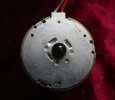
Crouzet 240V Synchronous Motor

JamesML

Well-Known Member
Have installed this motor in a Transcriptors Hydraulic Reference Turntable to correct what I thought to be a slow running motor.
Alas, despite successful install the turntable is still running slow.
I have cleaned the main TT bearing and re-oiled, cleaned all pulleys, replaced the belt and done everything else I can think of.
The purpose of this thread; I was wondering about oiling the motor bearing and how to do this. Showing my ignorance about such things; Not for the first time.
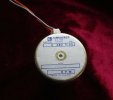
There seems to be a tiny hole (see pic) offset from the centre of the motor top plate which might be the place for lubricant (I'd use sewing machine oil). But, I'm not sure.
I wasn't even aware that this type of electric motor should even be lubricated at all.
Any offers of help or advice on this topic would be appreciated. Criticisms are also welcome.
I don't pretend to be a tech guru. I've fixed lots of audio equipment in the past, mainly electrics, but the practical mechanics I usually steer clear.
Thanks in advance.
Jim
 

Attachments

  • motor1.jpg
    motor1.jpg
    78.7 KB · Views: 19
  • motor2.jpg
    motor2.jpg
    78.3 KB · Views: 20
Register to hide this ad
Is the belt too thin? Belts on pulleys act like the center of the belt is the functional diameter of the pulley - on the inner side of the belt, compression, on the outer, tension, and the middle is unchanged.
 
Is the belt too thin? Belts on pulleys act like the center of the belt is the functional diameter of the pulley - on the inner side of the belt, compression, on the outer, tension, and the middle is unchanged.
Thanks for your suggestion Nat.
I've used 3 different belts with the same results. The Transcriptor's belt is a cylindrical core, best way I can put it, only a few millimeters in diameter.
I have tried to be careful when loading the belt by not twisting it unduly. Thanks again for your input.
Jim
 
Is there a motor cap, and did you check it? (I'm just making wild guesses here)
And were the three belts different thicknesses? If not, one wouldn't expect much difference in speed.

If it is any comfort, I'm having a similar issue with a Philips GA 202, which has two square section belts - there is an intermediate pulley between the motor and the platter. I can't seem to find any specs or even belts offered for sale for the smaller belt, so I'm just trying belts that are at hand, and they fit, but have yet to get proper speed, even with the fairly wide speed adjustment of the turntable.
 
Is there a motor cap, and did you check it? (I'm just making wild guesses here)
And were the three belts different thicknesses? If not, one wouldn't expect much difference in speed.

If it is any comfort, I'm having a similar issue with a Philips GA 202, which has two square section belts - there is an intermediate pulley between the motor and the platter. I can't seem to find any specs or even belts offered for sale for the smaller belt, so I'm just trying belts that are at hand, and they fit, but have yet to get proper speed, even with the fairly wide speed adjustment of the turntable.
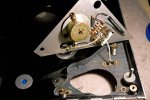
This is an old view of the motor assembly. I have, in the meantime, replaced the small cap and a sheathed (not visible here) resistor which comprise the spark suppressor to get rid off loud popping noises.
Apart from this cap I can't see any other cap associated with the motor. There appears to be another resistor and a
quite large white ceramic? block shaped resistor and fuse. That's all.
Appreciative of your interest. Many Thanks.
How slow is slow?
I suspect very much that others may not even notice the difference in speed. But, I definitely can hear it. The difference is slight.
I can, using the paddle lever on the deck, slow the speed down more. But, I cannot increase it.
Thanks for your interest.
 

Attachments

  • ak1.jpg
    ak1.jpg
    116 KB · Views: 13
Is there a motor cap, and did you check it? (I'm just making wild guesses here)
And were the three belts different thicknesses? If not, one wouldn't expect much difference in speed.

If it is any comfort, I'm having a similar issue with a Philips GA 202, which has two square section belts - there is an intermediate pulley between the motor and the platter. I can't seem to find any specs or even belts offered for sale for the smaller belt, so I'm just trying belts that are at hand, and they fit, but have yet to get proper speed, even with the fairly wide speed adjustment of the turntable.
Interesting Nat about your Philips, GA 202. Altho sorry you are having similar problems.
I was once the very proud owner of a Philips RH891 music centre purchased in 1971. This incorporated the GA 202 deck.
I would love to get my hands on one of these again! They are rare.
 
Maybe this is it - could the silicon in the trough (which is used to control speed) be too thick? Can you, and have you, adjusted the paddle so it is completely out of the silicon so you can see the intrinsic speed of the drive system?
 
Maybe this is it - could the silicon in the trough (which is used to control speed) be too thick? Can you, and have you, adjusted the paddle so it is completely out of the silicon so you can see the intrinsic speed of the drive system?
Thanks Nat. Yes, I've made sure that the paddle is out of the silicon completely.
Apparently, the motor, by default, should run fast which should necessitate usage of the paddle.
 
I strongly suspect that the motor is not a synchronous but an asynchronous (induction) motor .

Reasons being:-

1) There are only two wires on the motor for power supply and there is no external phase shift capacitor. Synchronous motors of this form as seen on the Thorens TD 150/160 and many other tts have four wires on the motor, two for each coil and also external phase shift cap.

2) Fine speed control mechanisms such as paddle in a fluid trough, eddy current brake , variable voltage do not work with synchronous motors. Their speed is locked to the supply frequency and can be changed only by changing that frequency .

My suggestion would be to measure the voltage the motor is receiving. The large white register is most likely a voltage dropper. Tracing the supply wiring and drawing the schematic shall help confirm this. This register has probably drifted up and slowed down the motor.

The motor is rated for 240v . A quick test would be to connect it directly to the wall socket, bypassing all the internal switches and components. The platter speed shall be correct or maybe fast and that shall identify the cause.

HTH
 
^^^ @analogadict has probably hit the nail on the head….

ROK Rondine Deluxe B12H synchronous hysteresis not affected by voltage (until stall) only freq manipulation

TD124 and/or Garrard 301/401 (eddy brake bias adj) frequency & voltage sensitivity

VR
Andy
 
I strongly suspect that the motor is not a synchronous but an asynchronous (induction) motor .

Reasons being:-

1) There are only two wires on the motor for power supply and there is no external phase shift capacitor. Synchronous motors of this form as seen on the Thorens TD 150/160 and many other tts have four wires on the motor, two for each coil and also external phase shift cap.

2) Fine speed control mechanisms such as paddle in a fluid trough, eddy current brake , variable voltage do not work with synchronous motors. Their speed is locked to the supply frequency and can be changed only by changing that frequency .

My suggestion would be to measure the voltage the motor is receiving. The large white register is most likely a voltage dropper. Tracing the supply wiring and drawing the schematic shall help confirm this. This register has probably drifted up and slowed down the motor.

The motor is rated for 240v . A quick test would be to connect it directly to the wall socket, bypassing all the internal switches and components. The platter speed shall be correct or maybe fast and that shall identify the cause.

HTH
Thanks for your detailed contribution analogadict.
The only reason I refer to the motor as being Synchronous is because it is advertised as such on Ebay. But you may well be right.
I will try and check the voltages I'm getting to the motor later on. Also I'll look at what you suggest is the voltage dropper resistor.
I think I might also connect the TT via my variac which will go up to 280v and see if it affects the speed.
An annoying problem but interesting though.
I also have a Thorens TD124 , Garrard 301 grease bearing and a Telefunken studio 220 all good turntables. I mention this because I was surprised
at how good the Transcriptors is in comparison (SME series III, Ortofon OM 40).
Many Thanks again.
 

Attachments

  • two_plus_one.JPG
    two_plus_one.JPG
    62.8 KB · Views: 4
^^^ @analogadict has probably hit the nail on the head….

ROK Rondine Deluxe B12H synchronous hysteresis not affected by voltage (until stall) only freq manipulation

TD124 and/or Garrard 301/401 (eddy brake bias adj) frequency & voltage sensitivity

VR
Andy
Thanks Andy
I note what you say about the speed s/be unaffected by the voltage.
Jim
 
Jim:

Garrard even published a technical paper suggesting the use of wiring an in series low wattage bulb into the power cord for speed control with the 301s (this was after they suggested changing the grease to oil in GB models)

Have a digital copy of that 3 page document but it’s not very clear….

I’ve experimented with different approaches in abating vibration and controlling speed with different motor types, and finally built a control for both voltage and frequency, which can be used on a variety of AC motors and I’m very pleased with it….many ways to accomplish the same here’s a good info site on the subject

 
Thanks for your detailed contribution analogadict.
The only reason I refer to the motor as being Synchronous is because it is advertised as such on Ebay. But you may well be right.
Checked the manual on VE and it does say synchronous motor so now this is a big mystery for me.

Regards,

Anwesh
 
Jim:

Garrard even published a technical paper suggesting the use of wiring an in series low wattage bulb into the power cord for speed control with the 301s (this was after they suggested changing the grease to oil in GB models)

Have a digital copy of that 3 page document but it’s not very clear….

I’ve experimented with different approaches in abating vibration and controlling speed with different motor types, and finally built a control for both voltage and frequency, which can be used on a variety of AC motors and I’m very pleased with it….many ways to accomplish the same here’s a good info site on the subject

Wow! This is really interesting stuff. I'll check out this document and return with comments.
How could you possible change the frequency from an AC voltage supply? As a non technical person I can only imagine passing the power thru another motor to
change the frequency. I've never come across any piece of equipment that can facilitate this. Like I say, Interesting.
Thanks Andy
Jim
 
Last edited:
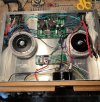
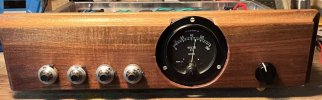
Mine is a version of Nigel’s controller from Lencoheaven uses an IC, 2 transformers and several POTs for voltage & frequency adjustments…The one in the photos is my 301 controller.
D9D687DE-97A0-4305-B6F8-AB31C905241C.jpeg0A968645-53C7-4E7B-86B8-E45D0A03891B.jpegC8F222C2-95E4-48F0-AD97-115002539F43.jpeg

Edit: Should have said, large knob on the right selects speed 33,45,78 and 3 of the small pots on the left control frequency for each speed the 4th is for overall voltage control.

For my 301 it’s a combination of frequency & voltage that produces the best results leaving the table speed selection at 33 rpm

Using the same type controller with my Russco Studio Pro, it responds better to selecting the desired speed with the turntable and just adjusting from there but I can run 78 rpm’s on it with the controller (originally only 33/45)

Have also used one to turn my Fairchild 412-1 into a 3 speed table
 
Last edited:
Mine is a version of Nigel’s controller from Lencoheaven uses an IC, 2 transformers and several POTs for voltage & frequency adjustments…The one in the photos is my 301 controller.
View attachment 3188965View attachment 3188966View attachment 3188967

Edit: Should have said, large knob on the right selects speed 33,45,78 and 3 of the small pots on the left control frequency for each speed the 4th is for overall voltage control.

For my 301 it’s a combination of frequency & voltage that produces the best results leaving the table speed selection at 33 rpm

Using the same type controller with my Russco Studio Pro, it responds better to selecting the desired speed with the turntable and just adjusting from there but I can run 78 rpm’s on it with the controller (originally only 33/45)

Have also used one to turn my Fairchild 412-1 into a 3 speed table
Wow, can I have one! This is very impressive. It's the neatest thing I've seen in ages.
Very clever to use pots to adjust the frequencies.
 
This will undoubtedly come as no suprise to anyone who knows about mechanical engineering and/or electronics; But,
changing the input voltage to this AC Synchronous 240v motor does not affect the turntable speed at all.
Using a Variac I dropped the voltage down to about 160 volts and subsequently raised it to 280 and this
has no effect on the speed of the turntable at all.
I include this info for the benefit of people like myself who have limited knowledge of such things.
 
Back
Top Bottom