• The move to the new server is done. There are some software and database maintenance updates in process. This has us passing the hat around to help out. We appreciate any donations. Seriously, even a dollar helps. The payment page may be found here - https://www.audiokarma.org/support.html

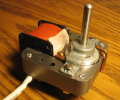
Crouzet 240V Synchronous Motor

Wow, can I have one! This is very impressive. It's the neatest thing I've seen in ages.
Very clever to use pots to adjust the frequencies.

Thanks Jim, but someone much smarter than I designed it, my contribution was collecting the parts and building it
Also, as noted in the link shared above, there’s many ways to accomplish the same task…

So your voltage tests confirm the motor type, that’s good….of course Garrard used slightly different size capstans or pulleys to alter speed related to operating frequencies by location in the world. Edit: Plus Fairchild used different belt tension pulley to adjust speed.

There’s someone on eBay selling a simple speed control device for certain Fairchild & ROK synchronous motors, one has adj pots, don’t know anything about them other than what’s stated on the ebay page.

Andy
 
Thanks Jim, but someone much smarter than I designed it, my contribution was collecting the parts and building it
Also, as noted in the link shared above, there’s many ways to accomplish the same task…

So your voltage tests confirm the motor type, that’s good….of course Garrard used slightly different size capstans or pulleys to alter speed related to operating frequencies by location in the world. Edit: Plus Fairchild used different belt tension pulley to adjust speed.

There’s someone on eBay selling a simple speed control device for certain Fairchild & ROK synchronous motors, one has adj pots, don’t know anything about them other than what’s stated on the ebay page.

Andy
Thanks Andy
I'll check out the speed control device on Ebay.
Jim
 
Should adjusting speed take so much work? I can't help but think that there is an easier answer that a variable frequency power supply (and my candidate is changing the viscosity of the silicon bath). There are quite a few of these tables out there, and others would have had problems if variable frequency was required.
Is it possible that you have a 60 hz pulley in a 50 hz grid?
 
Should adjusting speed take so much work? I can't help but think that there is an easier answer that a variable frequency power supply (and my candidate is changing the viscosity of the silicon bath). There are quite a few of these tables out there, and others would have had problems if variable frequency was required.
Is it possible that you have a 60 hz pulley in a 50 hz grid?
Hi Nat
I think I have solved the problem. I have added 1 drop of sewing machine oil to the centre spindle of the motor bearing
(top) which has definitely made the platter spin faster. At last. Odd, that both my old motor and the new one, albeit NOS
were giving the same symptoms.
The problem I have is having no knowledge of electric motors whatsoever. And, I'm very wary of pouring oil into
a place it ought not to be, if you understand my drift.
I have other turntables, all of which have copious amounts of maintenance detail in this place, with photographs
giving good direction as to exactly where the lube should go. Not so with the Transcriptors equipment.
I like the fact that you picked up on the strobe possibly being the wrong frequency.
I had thought of this and can give the following info for anyone wishing to check they have the correct one.
Transcriptors Hydraulic Refeference turntable - 33rpm 40 DOTS for 60hz
- 35 DOTS for 50hz (UK)
Thanks again for your interest. And thanks to adnick too!
Jim
 
didn't catch every single comment here, but it is possible to have a synchronous motor that doesn't involve a run cap or a second set of windings. Its called a "shaded pole" motor. These are low power things, but this is not a high power application so it would make sense. Basically it will have a shorted turn somewhere to create the "shade" or gap in the magnetic field. On this one its that loop of copper at the corner

1714569164262.png
 
Both the Thornes TD124 and Garrard 301/401 use shaded pole motors, however the 124 motor is about 1/2 as powerful…

They are very sensitive to frequency changes and somewhat to voltage's

My 301 is smoother at just over 100V but it was built around 1955

Andy
 
yeah synchro motors are frequency sensitive. They are mildly sensitive to voltage, but mostly only when it lowers enough to drop the power enough that it falls out of lock. Its not like say a vacuum cleaner motor that you could put on a variac and dial the speed up and down across the entire range.

the window fan I use out in the shop runs on my isolation transformer because it can dial the voltage down to 80. Makes them a lot less noisy.
 
Back
Top Bottom