• The move to the new server is done. There are some software and database maintenance updates in process. This has us passing the hat around to help out. We appreciate any donations. Seriously, even a dollar helps. The payment page may be found here - https://www.audiokarma.org/support.html

Cutting Boards. Dumping my Bamboo boards.

transmaster

AK Subscriber
Subscriber
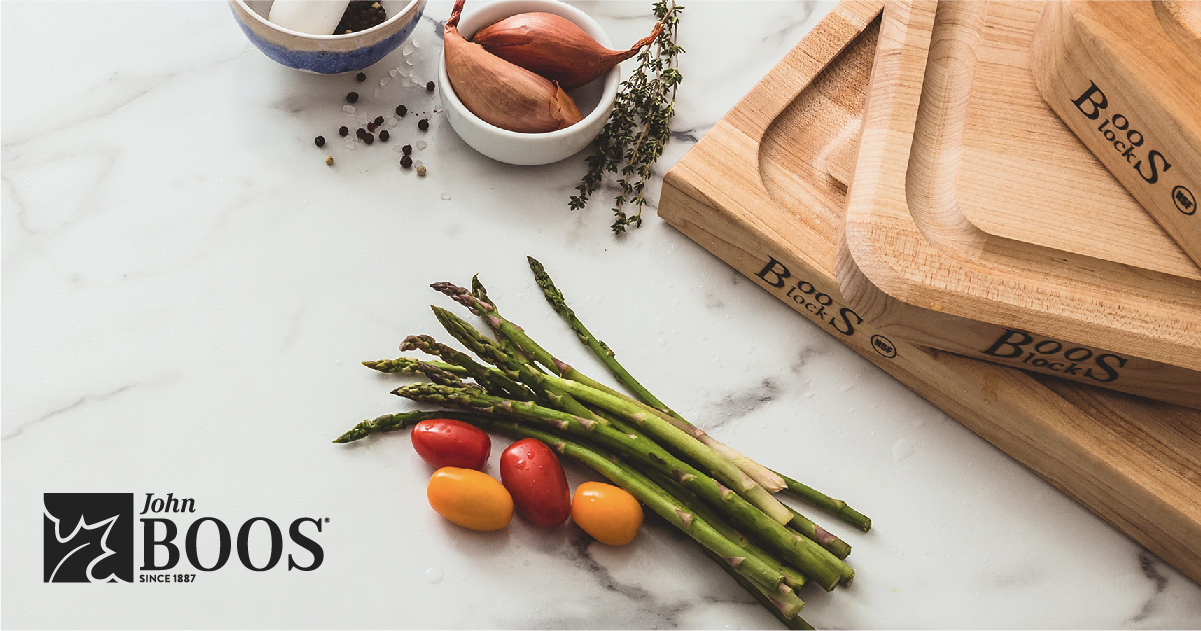
I have used bamboo cutting board for years. I was reading up on cutting boards. I found out that Bamboo is very hard on knife blades. Plastic boards are OK but with heavy use they wear very quickly. Looking around it would seem the US made John Boos cutting boards and chopping blocks are the very best. They have boards, blocks, and butchers blocks made from Maple, American Walnut, and Cherry woods. The are based in Effingham, Illinois and was established in 1887. The consensus is Maple is the best and most durable, and Cherry is the easiest on knife blades but does not last as long. In both cases we are talking about many, many years of use with proper care. I don't know much about American Walnut boards there's not much said about them.
 
Register to hide this ad
I use maple only. It's the hardest and easiest to maintain. Cherry, like oak, will leave black tannin spots if left wet.
 
My cutting board is my favorite kitchen tool. Had a thread on it once. Most of my food picts are on my cutting board. Mine has to be thick and strong. I use a cleaver a lot.
 
We use plastic cutting boards and replace them when necessary since they are inexpensive. Its easy to store several of them in a drawer and always have a clean one ready when needed. This is convenient when preparing a meal where there are different food types being prepped. Plus, cleaning them is easy since they can go in a dishwasher.
 
Last edited:
Apropos of this forum, I found a nice cutting block in a thrift store for cheap. It however is starting to come apart ever so slightly. Not enough to be noticeable but enough I don't want to use it for cooking as I would think food debris would get down in the cracks and not be able to be rinsed out. My original thought was to use it under a turntable for isolation. However, is it possible to repair something like this to make it perfect again? I do have pipe clamps. Just not sure how I would get wood glue into the miniscule cracks.
 
Apropos of this forum, I found a nice cutting block in a thrift store for cheap. It however is starting to come apart ever so slightly. Not enough to be noticeable but enough I don't want to use it for cooking as I would think food debris would get down in the cracks and not be able to be rinsed out. My original thought was to use it under a turntable for isolation. However, is it possible to repair something like this to make it perfect again? I do have pipe clamps. Just not sure how I would get wood glue into the miniscule cracks.
Here is a good tutorial on the subject. They talk about a food safe glue. looking this up the most mentioned brand is Titebond 1415 ultimate wood glue, the 2nd most mentioned is Gorilla wood glue.

 
Here is a great tutorial on the seasoning of a new cutting board, and it maintenance. They talk about not cutting raw meat of a wooden cutting board because of contamination. The contamination they are talking about is cutting non Kosker, or Halal meats, pork being a big no-no. A properly seasoned cutting board wiped down with a food safe disinfectant, hydrogen peroxide being a very good one, will have no problems. One thing I have done is wipe the board down with some medical grade alcohol outside and burn it off. it gets hot enough to cook all bio evils and is gone so fast the wood is not impacted at all, zero water to damage it. afterwards wipe it down with food grade mineral oil.

 
Just purchased a bottle of this. This is also a good coating for carbon steel kitchen knives.

I also use mineral oil for knife and utensil handles. Not only wood ones but believe it or not it'll make old bakelite or phenolic handles look less beat up too.

I keep a Mason jar full of it and just stand items in it to soak maybe once or twice a year. I just purchased a new cleaver that came with a wood handle and you wouldn't believe how thirsty that wood was! I guess that makes sense though, you'd want it as dry and shrunk as possible before fitting it to the tang.
 
I’ve been wondering if my bamboo boards are too hard. I really like their lightweight. I have a Boos, but it’s overkill and has to be repaired. I’ll split the open joints, joint and re-glue it. I have a relatively soft plastic board for raw meat.
 
I pulled out a white plastic cutting board I have had for at least 25 years. I was thinking about the reason why I bought it to begin with. It was the ease of keeping in clean and sanitary. As has been pointed out here you can put them in a dishwasher or wash them in the kitchen sink. I started looking at plastic cutting boards and I found this site. They cut to order plastic cutting boards. You specify the thickness, edge, size, and color. The have them in a number of colors which would be really handy The USDA recommends not using the same cutting board for meats and vegetables. I like the prices.

 
This outfit will custom cut Richlite cutting boards. Richlite is a compressed particle board. Review sites have picked cutting boards made with this stuff and being about the best. If has the advantage of being used as a table top trivat. So you can put hot pans and such on it.

 
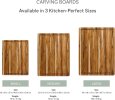
I like the large teak wood..."Teakhaus" boards. Though pricey as any large slab of quality wood is, they perform well and are knife friendly. Has some weight to it to keep it in place. As needed, gets a coat of mineral oil to prevent splitting.


71ge9OZYonL._AC_SL1500_.jpg
 
Last edited:
There is a problem with teak cutting boards. Teak wood contains a high amount of silicates up to 1.5% this is why the wood is so resistant to water damage and why it is used in ship building. This silicate content makes the wood hard on knives. In Japan they use the wood of the hinoki cypress. It is naturally antibacterial and wood is very easy on knife blades.

Screenshot 2023-09-13 at 20.21.42.png
 
My cutting board has a story to go along with. Starting in 1976, I work for Barnum and Bailey Circus at a place called "Circus World" West of Orlando, Fl.
I became good friends with the man running the shop, which typically built props. My friend was asked by the elephant trainer to build a set of elephant stands for the show. He requested that they be made out of ash, which is way expensive. The props were made and there were a few scraps of ash leftover and my buddy made a cutting board for me by laminating some slabs of ash and then cutting it to size. I still have the board and it is basically scarless. In all these years, I have never even noticed any wear at all. It will outlive me and my kids too.
 
I always heard that hard maple is naturally antibacterial.

That said, my cutting bords pretty much suck. Definitely a blind spot in our kitchen setup.
 
We have 3 plastic and 3 bamboo boards. The smallest plastic is for garlic/onion. The medium and large plastic are for meats. They all go in the dishwasher after use.
The bamboo are more general purpose. They all lay nicely in a top drawer.

The kitchen island has a maple butcher block top, which gets used once in a while too.
 
we have a restaurant supply co not too far from me. we buy large plastic cutting boards from them
they color code them for use and have matching colored plastic knives. they are not hard like ones from a dept. store.
they call them gel boards.
various sizes and easy to clean.
 
I have a walnut board I bought at the local farmer's market which has now lasted me 5 years and looks like I'll get at least another 5 out of it. It is a glue & biscuits job, not even a solid piece. Walnut seems like a great choice. I just liked the look... I use it every day, it has been abused somewhat taking it around to potlucks and forgetting it & they throw it in the dishwasher (heathens!) and such things...
 
Back
Top Bottom