• The move to the new server is done. There are some software and database maintenance updates in process. This has us passing the hat around to help out. We appreciate any donations. Seriously, even a dollar helps. The payment page may be found here - https://www.audiokarma.org/support.html

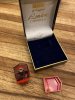
DECCA OF ENGLAND LONDON MAROON PHONO CARTRIDGE

Chevaldebois

New Member
Hi! I was lucky enough to purchase a Denon DP-790W turntable that came equipped with a Decca Maroon cartridge. Did some research and it is quite rare (and pricey) so I am thinking of having it rebuilt because it is in rough shape: the body has some scratches and there is a hum. Does anybody have any experience with this cartridge and knows where I could send it for repairs? TIA.
 

Attachments

  • F2FB8BEA-B3E4-49FC-86BD-1910348A42E1.jpeg
    F2FB8BEA-B3E4-49FC-86BD-1910348A42E1.jpeg
    153.1 KB · Views: 154
  • BC54393B-1E28-41E7-8DA1-56E7542D6FCC.jpeg
    BC54393B-1E28-41E7-8DA1-56E7542D6FCC.jpeg
    99.2 KB · Views: 154
  • BB354298-0312-4FF6-AF86-8D69F6FE61A6.jpeg
    BB354298-0312-4FF6-AF86-8D69F6FE61A6.jpeg
    117.6 KB · Views: 146
  • BA51C022-1623-4D6C-9435-1BD0765561C1.jpeg
    BA51C022-1623-4D6C-9435-1BD0765561C1.jpeg
    106.9 KB · Views: 151
Register to hide this ad
Joseph long in instagram he's groovetickler
Just this time I will disagree, working on Decca is not the same as other carts, Decca have some odd things you need to know about and they are quite particular to calibrate.
To OP the hum could be a few things, the clips on the slide and the contact dots can oxidise or sometimes the contacts need prising out a bit to get a decent connection. Other reason for hum is the cart is close to EMF, the Decca is not a shielded cart so near a transformer or near a turntable motor that is not shielded again will hum.
The cart will have at least two issues that will need to be addressed to make it work correctly, first for sure the tieback will be slack, if it is slack the armature will be bottoming out and if not then at best you will have music but virtually mono. The armature needs to be in the correct position between the coils and all old Decca will be wrong. Next issue will be the damping rubber that was originally stuck to the base of the stylus holder (what Decca call the cantilever) will have turned to gluey snot and the stylus holder will be resisted correct movement by this goop, most old Decca will need this cleaned up and new rubber to be fitted. When this is done the stylus holder needs to be in the correct position and then the cart correctly calibrated using calibration screws to get correct stereo. Lastly a retip and damping.. Joseph could do a retip but I doubt he would be able to do any of the other things as you need to know Decca intimately and know there querks. It is worth pointing out too that coils on these 40 year old carts co open circuit when you as much as look at them so massive care needs to be taken lifting out coils to do the work. I have spares for this reason and you cant just put a new coil in it must be fitted in same orientation as others, like I said Decca are a bit special. Also worth mentioning that servicing a Decca the OP should get a line contact stylus, but also get the internals damped which will take the cart he has up to super gold specs.
I would be talking to John Wright in the UK and nobody else as there are very few of us who know how to do Decca and even fewer who have spares for them.
Chris

 
Just this time I will disagree, working on Decca is not the same as other carts,

Agree 100% here Chris. I have had plenty of cartridges re-tipped and repaired by Mr. Long but for my Decca's they all go back to the mothership in the UK. John Wright does all the work back to factrory specs. Turn around is excellent, pricing is fair and the results are outstanding. I have two Super Golds and a Blue. All have seen John's bench since I picked them up used. The link is below. One of my favorite cartridges. When properly calibrated and setup it's a unique listening experience that certainly grabs your attention.

http://www.london-cartridges.co.uk/
 
Just this time I will disagree, working on Decca is not the same as other carts, Decca have some odd things you need to know about and they are quite particular to calibrate.
To OP the hum could be a few things, the clips on the slide and the contact dots can oxidise or sometimes the contacts need prising out a bit to get a decent connection. Other reason for hum is the cart is close to EMF, the Decca is not a shielded cart so near a transformer or near a turntable motor that is not shielded again will hum.
The cart will have at least two issues that will need to be addressed to make it work correctly, first for sure the tieback will be slack, if it is slack the armature will be bottoming out and if not then at best you will have music but virtually mono. The armature needs to be in the correct position between the coils and all old Decca will be wrong. Next issue will be the damping rubber that was originally stuck to the base of the stylus holder (what Decca call the cantilever) will have turned to gluey snot and the stylus holder will be resisted correct movement by this goop, most old Decca will need this cleaned up and new rubber to be fitted. When this is done the stylus holder needs to be in the correct position and then the cart correctly calibrated using calibration screws to get correct stereo. Lastly a retip and damping.. Joseph could do a retip but I doubt he would be able to do any of the other things as you need to know Decca intimately and know there querks. It is worth pointing out too that coils on these 40 year old carts co open circuit when you as much as look at them so massive care needs to be taken lifting out coils to do the work. I have spares for this reason and you cant just put a new coil in it must be fitted in same orientation as others, like I said Decca are a bit special. Also worth mentioning that servicing a Decca the OP should get a line contact stylus, but also get the internals damped which will take the cart he has up to super gold specs.
I would be talking to John Wright in the UK and nobody else as there are very few of us who know how to do Decca and even fewer who have spares for them.
Chris
Thank you for your very detailed answer. I will definitely contact John Wright.
 
Just this time I will disagree, working on Decca is not the same as other carts, Decca have some odd things you need to know about and they are quite particular to calibrate.
To OP the hum could be a few things, the clips on the slide and the contact dots can oxidise or sometimes the contacts need prising out a bit to get a decent connection. Other reason for hum is the cart is close to EMF, the Decca is not a shielded cart so near a transformer or near a turntable motor that is not shielded again will hum.
The cart will have at least two issues that will need to be addressed to make it work correctly, first for sure the tieback will be slack, if it is slack the armature will be bottoming out and if not then at best you will have music but virtually mono. The armature needs to be in the correct position between the coils and all old Decca will be wrong. Next issue will be the damping rubber that was originally stuck to the base of the stylus holder (what Decca call the cantilever) will have turned to gluey snot and the stylus holder will be resisted correct movement by this goop, most old Decca will need this cleaned up and new rubber to be fitted. When this is done the stylus holder needs to be in the correct position and then the cart correctly calibrated using calibration screws to get correct stereo. Lastly a retip and damping.. Joseph could do a retip but I doubt he would be able to do any of the other things as you need to know Decca intimately and know there querks. It is worth pointing out too that coils on these 40 year old carts co open circuit when you as much as look at them so massive care needs to be taken lifting out coils to do the work. I have spares for this reason and you cant just put a new coil in it must be fitted in same orientation as others, like I said Decca are a bit special. Also worth mentioning that servicing a Decca the OP should get a line contact stylus, but also get the internals damped which will take the cart he has up to super gold specs.
I would be talking to John Wright in the UK and nobody else as there are very few of us who know how to do Decca and even fewer who have spares for them.
Chris

John Wright is the Decca cartridge expert. And your go to for repair and retipping. Use no one else on these, he's your man.
 
That’s a stretch there Chris.
:) I meant most good retippers. The thing is most actually almost all retippers after the retip wont have a clue how to calibrate which needs doing on all old Decca so as much as most could get the diamond positioned correctly they wont be able to do the next step. Also calibration is a bit of a pain in the butt, you adjust and test, adjust and test adjust and test so much more labour intensive than a normal retip and as I said they need to know how to do it but most could get the diamond correct but could not finish the job.
Chris
 
I am in agreement with most of the above, but would add something: The construction of that era Deccas was pretty dodgy. Everything is built on a relatively soft plastic chassis, with a folded metal case, with a slide in top, and the whole shebang is slid into a softish plastic bracket.
Clean and Deoxit the contacts on both side of the bracket. Slide the top forward and off, and look inside, first, because it is interesting, but second because I've found magnets in the wrong place - they weren't solidly glued, and during shipment, or the cartridge being dropped (!), they got dislodged. Putting them back (and gluing in with white glue (strong and flexible but easily removed if necessary) helped a lot. When you put the top cover back on, run a bead of white glue around the seam to damp it.
A lot more can be done to make the mounting and case more rigid - machined aluminum clamp cases and so on - but it will cost real money.

Working well, Deccas are a revelation, and a stinging reproach to practically every other cartridge maker.
 
This is directed especially at cafe latte: I understand John Wright has used up his stock of armatures, and no longer makes new cartridges. Worse still, he plans to retire in November of this year as he will be seventy. I have a Reference in his hands for a re-tip. I can see someone like you being able to re-tip cartridges, maybe repair internal coils and wiring issues, but it's the lack of armatures that will bring us all to a grinding halt. Any comments?
 
This is directed especially at cafe latte: I understand John Wright has used up his stock of armatures, and no longer makes new cartridges. Worse still, he plans to retire in November of this year as he will be seventy. I have a Reference in his hands for a re-tip. I can see someone like you being able to re-tip cartridges, maybe repair internal coils and wiring issues, but it's the lack of armatures that will bring us all to a grinding halt. Any comments?
Retip are a little different to most carts but fine when you have a method and coils are not a problem, John even buys them in.
Armatures are not often broken as they are mostly inside the cart. The issue is getting someone to cut the template out and the correct thickness of metal but it is being looked into. Even if this is not possible most issues will be coils, tiebacks and retips which can be done.
Cheers
Chris
 
Most armatures that fail, fail due to poor storage because they can rust in a moist environment.

John had been looking into getting new armatures made by the original manufacturer, but that manufacturer had inexplicably destroyed the tool to make them since John hadn’t ordered any in a while. They just destroyed it for lack of orders but, apparently, without contacting John first. To make a new tool would require $20,000 which I guess is too much given the relative obscurity of Decca cartridges and demand these days. Shame, really.
John sent me a sample and the cad drawings which I forwarded on to someone who may be able to help.
Making the stamp mold is not a problem the issue is cutting out the shapes. He suggested another person laser cut the shapes and then he stamps them. John wants to retire anyway but it would be good to have a full supply of parts including the armature.
Chris
 
My memory is that armatures also were treated cryogenicaly, which hardened them and improved response.
For those who haven't owned a Decca or perused their literature, they are unlike conventional cartridges that have the stylus fixed at close to a right angle in a cantilever which is in a damper suspension to allow it to wiggle. The Decca, by contrast, has the stylus at the tip of a thin piece of metal that points down from the cartridge, and the stylus is restrained from being swept away by the movement of the record by a nylon cord. This piece is called the armature, and because it is ferrous, when it moves, it disturbs the magnetic field which three coils read in a completely different electromagnetic scheme than close to all other cartridges, which is why the Decca only has three output pins ( and the perversity of Decca in refusing to add a fourth pin connected to the third pin so that normal humans could use it without lengthy explanation (and to make them normal size - they wanted you to use sleeves and solder to them(!!!!!)) goes some distance in explaining why the greatest cartridge in the world never got much headway.

That said, I think (and it is easy for me to say because I'm not putting my money up) that, given the prices Deccas go for, twenty grand would be amortized fairly quickly.
 
Back
Top Bottom