• The move to the new server is done. There are some software and database maintenance updates in process. This has us passing the hat around to help out. We appreciate any donations. Seriously, even a dollar helps. The payment page may be found here - https://www.audiokarma.org/support.html

Depth of Field

uplander

Well-Known Member
Greetings all.

I just purchased a new camera, and have a bit of a learning curve in front of me. I've only used small sensor cameras in the past, and so enjoyed having a huge DOF in all of my photos. The flip side has been not having a lot of flexibility in using shallow DOF creatively. My new camera has a DSLR sized sensor and a 28-112 lens, so I'll now be able to experiment with a much wider range of DOF in my photos.

I'd be very interested to hear perspectives about how photographers use DOF effectively and creatively. Any input is welcome.
 
Register to hide this ad
Basic understanding of using your F stop and lens aperture goes a long way to working with your DOF. At least it did for me. This article does a pretty good job in explaining. Read this and try some test shots for different results.

Have fun... http://electronics.howstuffworks.com/cameras-photography/tips/how-to-know-what-f-stop-to-use.htm

Here are 2 test shots I used on another forum where the assignment was shallow DOF-Shot with a Sigma EX/DG 50mm 1.4

DOFTest31of1.jpg


Reel1of1_zpsebe8cef4.jpg
 
Last edited:
In general, when I want to show everything crisp and clear and true to life, I use a large DOF. Works great with landscapes and anything really big.

Selectively focusing with a small DOF makes for more dramatic images. By blurring the foreground and or background. Works very well with smaller objects.
 
A lot of portraiture is also shot using a fairly shallow DOF. Draws attention to the object and less background distraction. It is best if the background is uncluttered to begin with but if not, your fast lens and F stop will help.

Like Carl said above, Landscapes I usually start at F8 and top out at around F16 or so. Most lens will have a sweet spot and with enough shots you will find it.
 
Yup, spend time getting to know your len(s), makes a huge difference. The carousel images was shot wide open with a f1.7, 20mm lens, at 1/30 sec., hand held without a flash. DOF is wide for a f1.7 lens.

Carousel.jpg


Macro photography has the tightest DOF. f5.8, 140mm, 60 seconds.

tubes_macro2.jpg
 
Generally with landscapes I'm shooting with a lens that's fairly wide, somewhere between 28mm and 50 (on a full frame). Wider angle lenses inherently have greater DOF. I'm also usually shooting around f8 (if possible) so it's all tack sharp.

With portraits, I like to shoot with an 85mm minimum and often as not I'm f2.8 or 3.5. I like a blurred background as long as the eyes, and nose are sharp, I'm happy.

50mm f11

bridge1-1.jpg


300mm f5.6

notachristian.jpg
 
Last edited:
Reel1of1_zpsebe8cef4.jpg

I really like the R2R portrait; is that a Tandberg, perhaps? I am getting a Tandberg vibe.

P1020715.jpg


I have nothing to offer here (as you can see from the above) :-P ... so I'll post a couple from my son's photoblog http://icouldbeahero.blogspot.com

http://icouldbeahero.blogspot.com/2011/06/field-of-view-and-depth-of-field.html
http://icouldbeahero.blogspot.com/2011/06/more-depth-of-field-and-perspective-fun.html

0027_%2523%2523%252366340027s.jpg

Leica IIIf, Tokyo Optical Co. 5cm f/1.5 Simlar

74770010s.jpg

74770008s.jpg

Rolleiflex

74920037s.jpg


...and if you think playing with DOF is fun... you'll love macrophotography :-)
http://icouldbeahero.blogspot.com/2012/01/macro-musings.html

DSC_8719.jpg
 
Last edited:
Wow, thanks for all of the great replies. I understand that using a larger aperture yields a narrower DOF than a smaller aperture. All of the reading that I've done in the past has been more or less theoretical since I was limited by the small sensor in my previous camera. Now I can actually experiment and try to learn to visualize the outcome.

The thing that seems to jump out at me from the examples posted is that it seems that the closer the shooter is to the point of focus, the greater the ability to create a shallow DOF. Is that accurate?
 
A useful detail about depth of field and using it as part of the picture composition has to do with the lens construction. The lens aperture is made of "blades" that retract - to open - or extend - to close - the aperture. The more blades a lens uses, the smoother the blur becomes when the DOF is shallow.

There are some lenses that make a smooth blur and others that create artifacts and a noisy blur. To the extreme are the mirror lenses - budget telephotos - that not only they lack a real aperture with blades they also form doughnut shaped artifacts in the OOF areas of the picture.
 
A useful detail about depth of field and using it as part of the picture composition has to do with the lens construction. The lens aperture is made of "blades" that retract - to open - or extend - to close - the aperture. The more blades a lens uses, the smoother the blur becomes when the DOF is shallow.

There are some lenses that make a smooth blur and others that create artifacts and a noisy blur. To the extreme are the mirror lenses - budget telephotos - that not only they lack a real aperture with blades they also form doughnut shaped artifacts in the OOF areas of the picture.

Thanks for the response. I have seen pics in lens reviews that do a good job of illustrating the smoothness (or lack thereof) of the blur. My new camera has a fixed zoom lens, so that is one factor that I won't be able to take into consideration until I make the move into the world of removable lenses.

What I'm really searching for are insights as to when a narrow depth of field will make more impact, how to achieve that impact, and what is the thought process that accomplished shooters use when choosing an aperture setting. Up until now, with the limits of a small sensor, I've never really thought about these factors before. Now I'd like to learn to think beyond just getting the exposure right.

Thanks in advance for any further insights.
 
This thread has some very good examples.
http://www.audiokarma.org/forums/showthread.php?t=261187

As for "insights" and "thought process" since I've been taking photos for 30+ years, I kinda shoot without thinking about it. But it does helps to take a lot of variations though.

Just start taking pics and experiment with the camera on manual and set to A (aperture). Taking lots of pictures is the best way to learn how to take pictures.

Have fun!
 
The thing that seems to jump out at me from the examples posted is that it seems that the closer the shooter is to the point of focus, the greater the ability to create a shallow DOF. Is that accurate?

Well (and I'll readily admit that, compared to some other posters to this thread, I am way out of my depth!)... the focal length of the lens is a major factor, too. A wide angle lens will have proportionately more depth of field at any given aperature and at any given distance - thus the carousel in Onepixel's great photo above ("f1.7, 20mm lens, at 1/30 sec" - I am guessing this is 35 mm film format - which is, if memory serves, 24 x 36 mm?) An f1.7 50 mm lens (normal lens at 35 mm format) would have considerably less depth of field, e.g. A 200 mm (again, at 35 mm format) at f1.7 (besides being scary-expensive!) would have even less. The 20 mm would be a wide angle, the 50 mm would be normal field-of-view, and the 200 mm a telephoto (4x magnification relative to 50 mm).

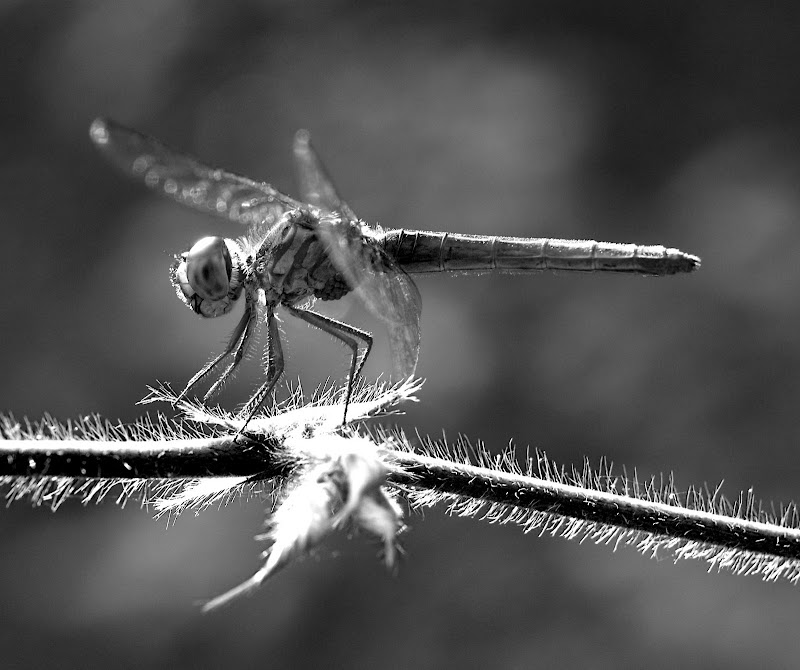
DOF will drop percipitiously in macrophotography, all else being equal (cf. my son's dragonfly photo I posted above; I think that was taken with a simple add-on "close-up" lens that installs like a filter). There are many other different strategies for macrophotography - macro-focusing lenses, close up 'tubes' or bellows, and reversed-lens adaptors.

Any and all variables are fair game!

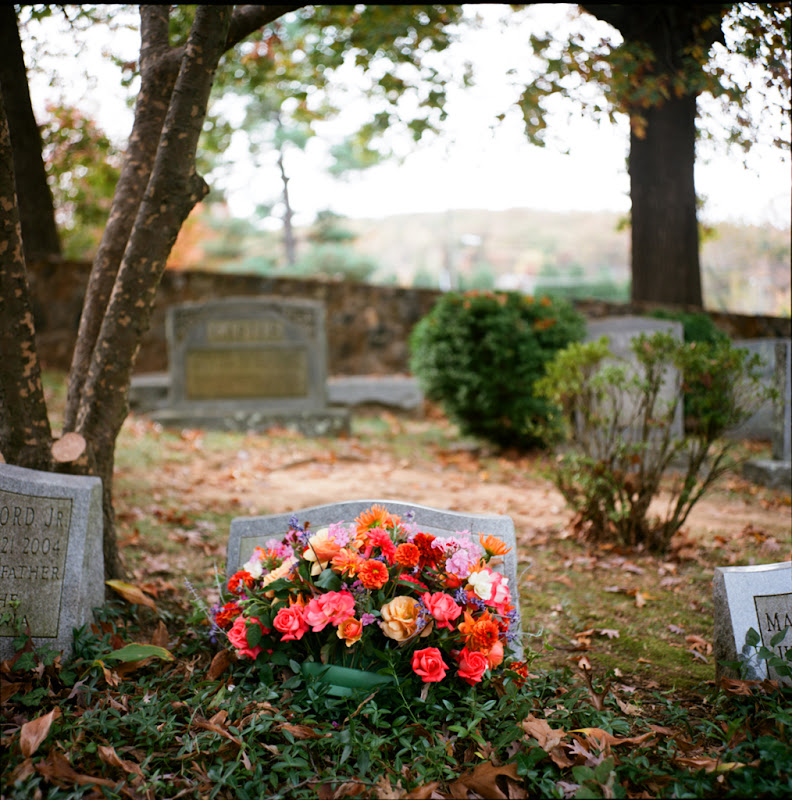
DSC_2295.jpg


DSC_0858.jpg


DSC_0484.jpg


DSC_0288.jpg


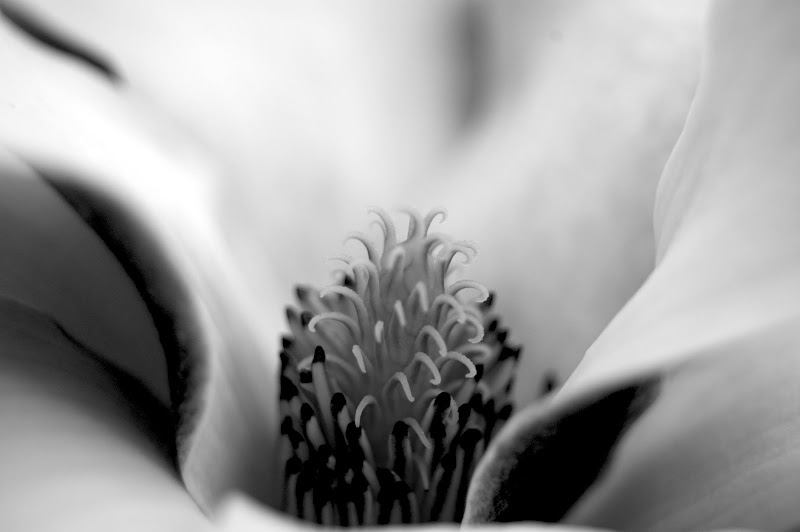
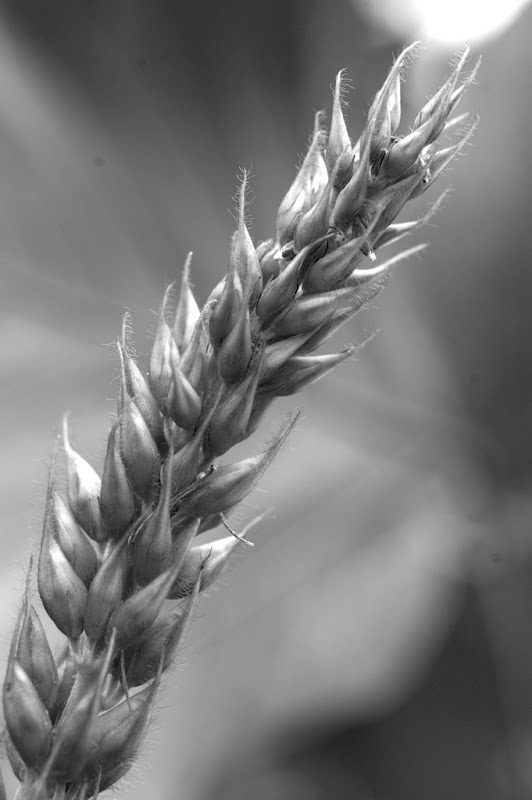
all photos from http://icouldbeahero.blogspot.com
 
I really like the R2R portrait; is that a Tandberg, perhaps? I am getting a Tandberg vibe.

P1020715.jpg

Yes, it is my Tandberg 74B made in 1964, A beautiful specimen that I found a couple of years ago still in its leather case. Sounds great! I have used the on-board amp and hooked it up to my Klipsch ForteII's and it is very surprising. 8 watts of smooth tube power.

Tandberg74B.jpg
 
Last edited:
I've also got an as-found Tandberg 64 (not shown) that I either need to restore or scavange the tubes from and send on its way :-)

Sorry for the thread diversion ;-)

DSC_9535.jpg
 
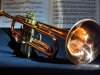
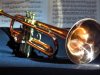
OK, so I've been playing around a bit, and here's an example of the kind of thing I'm working out. One photo has the focus point at the trumpet valves, with the rest of the scene slightly blurred. The other photo has the focus point on the bell towards the front of the scene, creating more blur going into the photo. My questions would be:

1. Which makes a stronger image?
2. Would a narrower DOF make more impact?
3. Do you guys just take lots of shots with different settings and choose one that makes the most impact later?
4. Other than using the widest aperture you can, what else can you I do to create a razor sharp focal plane like in Texun1's Tandberg photo?

I'm just trying to hear your perspectives, because some photos really reach out and grab you by the short hairs, while another of the same subject can put you to sleep. I want to learn to grab some short hairs!
 

Attachments

  • IMG_0088.jpg
    IMG_0088.jpg
    82.5 KB · Views: 17
  • IMG_0087.jpg
    IMG_0087.jpg
    74.3 KB · Views: 16
1. The 1st one makes a stronger image.
2. Yes if you tighten/crop into the image. No when you have to much image area out of focus.
3. I just take a couple. Do whatever works for you.
4. Get in closer with the lens.
 

Attachments

  • crop.jpg
    crop.jpg
    41.4 KB · Views: 16
  • IMG_0088.jpg
    IMG_0088.jpg
    80.2 KB · Views: 14
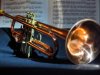
Onepixel's tighter crop is a vast improvement. My suggestion, for what it's worth, keep shooting, keep experimenting, and keep studying. Like learning an instrument, it takes time and practice. Eventually you will find what works for you, and you'll develop your own style.
 
Personally, I rarely take a lot of shots with different settings. I usually have predetermined the f-stop and DOF. What I do is take a lot of shots from different angels. I'll go high, low, walk or zoom in or out.
 
Back
Top Bottom