• The move to the new server is done. There are some software and database maintenance updates in process. This has us passing the hat around to help out. We appreciate any donations. Seriously, even a dollar helps. The payment page may be found here - https://www.audiokarma.org/support.html

DIY partially 3D printed Linear Tracking Tonearm!

Bill_0531

New Member
First post on here,

back story: Recently got a Sony PS-LX1 for cheap, which is a decent DD turntable, but the issue (and the reason why it's so cheap) is that the tone arm is broken. (somehow the metal tube is snap in half.)

I've always wanted a linear tracker, but those are not cheap. And then I realized... I can make one!

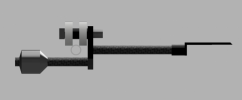
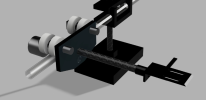
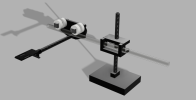
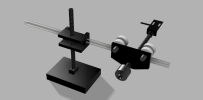
This is a design that I made recently, which had a lot of key ideas from previous DIY linear tracking tonearms, but some parts are 3d printed to minimize the cost.
1714438005498.png
1714438066234.png
(the base is just a place holder, I'm working on getter the accurate measurements to mount it properly.)

the rail is going to be a glass tube to minimize friction, and the tone arm is going to be carbon fiber.

this is the first time I'm doing something like this, so any constructive criticisms are welcome!

Bill
 
Register to hide this ad
What are you using for rollers, and I'm guessing this will just self-feed rather than having some sort of a motor and all that to pull it along?
 
If you haven't already, check the LT thread over at DIYAudio.com for some interesting ideas. One fellow was selling a version with 2 bearings and 2 rods, which I consider a better option as 2 bearings will have lower friction than 4, and 2 rods less resonant than 1. When I inquired how vertical compliance was achieved he said it was through bearing play, at which point I lost interest. A better option IMO would be a trolley supporting a knife bearing which will be stiffer yet offer much lower resistance to vertical motion. Ladegaard's air bearing arm is an example of this, but I'm sure something similar can be done with roller bearings.

As always, these experiments are a voyage of exploration and discovery. My advice is to build it with as many modular components as possible so changes can be made without starting over. And have fun!
 
the benefit of using 4 bearings instead of 2 is that it is much more stable vertically (in the simulation, at least).

this is just a cool experiment for me lol, and even if it failed completely (I doubt that) I wouldn't be too sad over it

this whole project is going to cost around $30
 
I can see a design flaw, or at least it looks like a design flaw to me.
As the headshell rises up and down, the point where the arm attaches to that vertical plate will move backwards/forwards. It needs to be able to pivot up/down at that point.
 
I can see a design flaw, or at least it looks like a design flaw to me.
As the headshell rises up and down, the point where the arm attaches to that vertical plate will move backwards/forwards. It needs to be able to pivot up/down at that point.
it is archived through the bearings slipping on the glass tube
 
it is archived through the bearings slipping on the glass tube
No, you misunderstand - that pivot point is in the wrong place.
There's an excellent article by Ed Villchur who designed the Acoustic Research turntable which would be useful to read. It's in the September and October editions of Audio from 1962.


It's about conventional rather than linear tracking tonearms, but it makes no difference as regards tracking in the vertical direction.
Let me explain it this way: imagine if that plate extended 12 inches below the horizontal bar and the tonearm was fixed to the bottom of it. As the headshell moved up and down the bottom of that plate would move backwards and forwards. That would be like a conventional tonearm's base/pivot moving forwards and backwards.
The pivot point needs to be in the same horizontal plane as the stylus.
 
No, you misunderstand - that pivot point is in the wrong place.
There's an excellent article by Ed Villchur who designed the Acoustic Research turntable which would be useful to read. It's in the September and October editions of Audio from 1962.


It's about conventional rather than linear tracking tonearms, but it makes no difference as regards tracking in the vertical direction.
Let me explain it this way: imagine if that plate extended 12 inches below the horizontal bar and the tonearm was fixed to the bottom of it. As the headshell moved up and down the bottom of that plate would move backwards and forwards. That would be like a conventional tonearm's base/pivot moving forwards and backwards.
The pivot point needs to be in the same horizontal plane as the stylus.
That's what was good about about Vic's (Trans-Fi) Terminator arm: the knife edge was suspended on a carriage below the sled, placing the pivot just above the record. Another was that the inverted Ladegaard design was self cleaning, unlike the original.

I nearly bought one from him, but the mechanics of fitting it to the Oracle Delphi TT I had at the time, plus those of arranging the pneumatics for a suspended deck was too much. It was a very good deal at the time, though, and probably would've sounded amazing.
 
That's what was good about about Vic's (Trans-Fi) Terminator arm: the knife edge was suspended on a carriage below the sled, placing the pivot just above the record. Another was that the inverted Ladegaard design was self cleaning, unlike the original.

I nearly bought one from him, but the mechanics of fitting it to the Oracle Delphi TT I had at the time, plus those of arranging the pneumatics for a suspended deck was too much. It was a very good deal at the time, though, and probably would've sounded amazing.

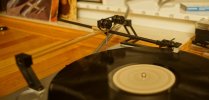
Been running mine for a long time, no complaints. Takes some getting used to setting it up. Had it off the table enough times now I have it down pretty good

IMG_20240501_121904782~2.jpg

OP: (Sorry to interrupt your DIY build BTW)
 
To anyone that is following this thread:

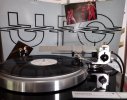
It's done! I have to alter the mounting method a little bit but I think it looks nicer! I still have to cut the end of the tone arm to make it lighter overall but It sounds really good so far (especially on inner tracks!) I decided to stay with the design with the tone arm below the pivot (sorry if I disappointed you). I made both and I actually like how this one sounds more than the other one.

Anyways, here it is! I will upload the 3d file after I clean it up.

1715143523873.jpeg

Just using a AT3600L here because I don't want to damage my better cartridges. Tracking force is exactly 3.5g
 
Back
Top Bottom