• The move to the new server is done. There are some software and database maintenance updates in process. This has us passing the hat around to help out. We appreciate any donations. Seriously, even a dollar helps. The payment page may be found here - https://www.audiokarma.org/support.html

DIY record cleaning machine (RCM) consolidation and resource thread

Thanks for the quick response.

After I got home from work I added a bit more dish soap (it's Dawn brand by the way) and recleaned the Gordon Lightfoot album. Listening to it now. I guess it sounds slightly better. Like the crackle is still in the same places, but it's slightly diminished. I think there's also a loud pop that's not there anymore in the second track.

I noticed this yesterday, and should have mentioned it. The crackle corresponds mostly whenever Gordon is singing. Not sure if that's significant of anything. And the crackle is more prominent on the inner grooves, though this may be because the paint pad had better contact with the middle/outer grooves.

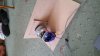
(See first photo)
This is the RCM. The fluid looks kind of soapy, probably because I just put some more Dawn into it and shook it up.

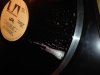
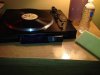
(Second photo)
After scrubbing, this is what it looks like before I vacuumed it off. Should it look like this if my fluid is proportioned properly?
 

Attachments
  • cleaning.jpg
    cleaning.jpg
    62.6 KB · Views: 90
  • record close up.jpg
    record close up.jpg
    44 KB · Views: 76
Last edited:
My gut reaction is that it looks a little too "sudsy" to me (based only on my own experience), though I have read that some "sudsiness" is actually desired as it helps lift/suspend particulates. Are you using a rinse cycle? Two? You may simply be leaving too much residue.

I sympathize with your frustration - this is an inexact science at best. I was very frustrated at first and finally had to resign myself to the reality that some of the records I was trying to improve were just too far gone. I've found that good record cleaning can make well-cared-for (but perhaps neglected) records sound superb; those that lived long (and perhaps hard) lives can only be improved so much.
 
What kind of vacuum are you using?

When I mix my cleaner, it is 500 ml and into that goes about 7-8 drops of rinse aid for surficant.

What is your turntable set up that you are playing records on? Is it possible the sylus is a bit dirty?
 
Are you using a rinse cycle? Two? You may simply be leaving too much residue.

I rinsed it once, before my last clean. But I just rinsed it again to try it out. I left it out to dry instead of vacuuming it. I'll check back on that in a little bit.

What kind of vacuum are you using?

What is your turntable set up that you are playing records on? Is it possible the sylus is a bit dirty?

My vacuum is a Shop Vac 1.5hp (I incorrectly stated it was 2hp earlier I believe. Turntable is a PROJECT/one, Empire 999 cartridge. I don't think the stylus is dirty, I wipe it off pretty frequently with my stylus brush. Also the last non-dirty sounding record I played yesterday sounded great.
 
It could just be the one record. Have you tried cleaning some more and doing a before and after listen?
 
It could just be the one record. Have you tried cleaning some more and doing a before and after listen?

I cleaned my mom's copy of Madman Across the Water, to little success. I figured it must have been her negligence and I didn't stress out over it. Maybe this GL album is the same case.
 
Cleaner Formula

I stopped using detergent and went with rinse aid - you can see the difference on application. It is a surfactant and causes the fluid to flow. It is possible that you are not getting the solution down into the grooves. I use a painter pad as the applicator and do three rotations to make sure it is forced into the grooves.

64 oz distilled water / 12 oz 91% isopropyl / 3 tsp dishwasher rinse aid

I also finish with three rotations under vacuum and a final dry (carbon fiber) brush before playing.

All that said, the RCM is not a miracle worker - you can't fix damage caused by previous owners poor equipment.

Good luck!
 
I stopped using detergent and went with rinse aid - you can see the difference on application.

I have found the same to be true. I also tried the Kodak Photoflo, but I honestly can't tell the difference. They both work great, but the rinse aid is cheaper and readily available.
 
Rinse Aid is used for dishes, but it's not technically a detergent? I should try this. Worst case scenario, I have more stuff to clean my dishes with.
 
Rinse Aid is used for dishes, but it's not technically a detergent? I should try this. Worst case scenario, I have more stuff to clean my dishes with.

Rinse aid is used to keep your dishes from spotting in the dishwasher. It makes water flow better (surfactant). It is amazing to see the difference in action in your solution!
 
SOFT TAP WATER (0-3 GPG)
PETRO 22 POWDER or NAXAN 221
MAKON NF-12 or MACOL LF-120
99% ISOPROPYL ALCOHOL (IPA 99%)
ELCACID PATENT BLUE DYE
75% PHOSPHORIC ACID

These are what is in Rinse Aid.
 
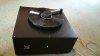
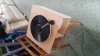
my record cleaning machine

My record cleaner it's manual turntable
but has a built in vacuum works well.
 

Attachments

  • 20150411_105955.jpg
    20150411_105955.jpg
    49.3 KB · Views: 122
  • 20150328_121952.jpg
    20150328_121952.jpg
    56.2 KB · Views: 113
  • 20150328_121925.jpg
    20150328_121925.jpg
    68.2 KB · Views: 119
  • 20150328_121845.jpg
    20150328_121845.jpg
    59.9 KB · Views: 95
  • 20150327_114028.jpg
    20150327_114028.jpg
    70.7 KB · Views: 109
Within the next month I will be converting a table like this (Nivico) with the arm removed into a RCM. Will be my first experience with a record cleaner of any kind! Will use a shop vac with wand attachment for now. Eventually I will build a housing for the vacuum motor and get a better attachment. Long term plans call for an ultrasonic cleaner as well, but don't have the money for that right now...moving in 6 months and Baby #2 on the way!

The Nivico has a nice looking plinth!

JN8.jpg
 
Has anyone used a carbon fiber brush to spread their cleaning fluid on the vinyl? I'm starting to think the paint pad I've been using isn't digging deep into the grooves, and instead is just sloshing the fluid around on the surface. I ask because my discs look very clean after I go through the RCM process, but the reduction in clicks/pops and surface noise is quite minimal.

I've experimented with distilled water, isopropyl alcohol, and cleaning detergent as well as what Kfleshman recommended: 64 oz distilled water / 12 oz 91% isopropyl / 3 tsp dishwasher rinse aid. They do look a little bit shinier with Kfleshman's solution! But the difference in sound quality between the two solutions is minimal or nonexistant, which leads me to believe the problem lies elsewhere (the brush).

Also, how do I know my Shop Vac with the crevice tool is doing a good job of sucking up liquids? It just seems like the velvet on the crevice tool is soaking up a lot of the fluid.
 
Fluid Application

I don't think the type of brush or applicator really matters. A record groove is 1/3 the size of a human hair - you won't be "reaching deep into the grooves" no matter what the advertisements say. The goal of the applicator is to force the fluid down into the groove.

I use a lot of pressure with the paint pad and three rotations on my machine. If they look really nasty I will even stop the platter and let it sit for a minute. Sometimes I even do slow manual rotations with a back and forth on the pad to "scrub" the surface and force fluid into the groove.

Most records come out playable using the simple approach but I find as I crank up the aggression I can salvage most - but not all - records.
 
I use a lot of pressure with the paint pad and three rotations on my machine. If they look really nasty I will even stop the platter and let it sit for a minute. Sometimes I even do slow manual rotations with a back and forth on the pad to "scrub" the surface and force fluid into the groove.

That's another thing I was wondering: how much pressure to use. As long as I can't put too much pressure on the record, then my mind is at ease.

I'm thinking I need to get some distilled water. I've been rinsing with tap water, which I thought in my area was clean. Maybe I'll do a scrub with distilled water after I use the cleaning fluid.
 
Never use tap water. Buy distilled water by the gallon (usually $1)

Avoid using the carbon fiber brush. They are not designed to be wet.

The paint pad works very well, with very minimal pressure. You are just spreading the cleaning solution over the record, not scrubbing down in the grooves. What IS very important is that you have a good surfactant, whether it be a rinse aid, dish soap or Kodak Photo-flo. This will ensure that the cleaning solution can break the surface tension and get down into the grooves.
 
Time will work better than force I am finding. I use Tergitol which is a fantastic detergent / surficant but use your own brew or whatever brew you like the real help I have found is to allow the solution to sit for 3-4 minutes and seep down into the groove. I use a very light application brush and then wait. Rinse, vac and play. This has been via a lot of trial and error.

Next for me I think is ultrasonic which I plan to make out of used dental cleaner box (>$200), a 1/4" rod and my BBQ rotisserie motor. And of course label protector.
 
Back
Top Bottom