

You are using an out of date browser. It may not display this or other websites correctly.
You should upgrade or use an alternative browser.
You should upgrade or use an alternative browser.
Do I really not need more than 1 watt?!?
- Thread starter MKG
- Start date


sqlsavior
Lunatic Member
Evidently, you do. Meaning that, according to the evidence, your longstanding assumptions are wrong, and you need to rethink them. So do maybe half of the posters on this site. Unused power in reserve contributes NOTHING to sound quality. There are stories here of people with a thousand watts on their Klipschorns. Regularly, some members insist that listeners need more power than they have, even when they do not listen loud. When confronting the fact that these listeners are satisfied, many of these members, in effect, insist that they should not be. Opinions like those are arrogant in the extreme, but that particular flavor of attitude is so ingrained in the hobby that more knowledgable members usually let it pass to keep the peace.Do I need to completely rethink my mindset of more watts is better?

Evidently, you do. Meaning that, according to the evidence, your longstanding assumptions are wrong, and you need to rethink them. So do maybe half of the posters on this site. Unused power in reserve contributes NOTHING to sound quality. There are stories here of people with a thousand watts on their Klipschorns. Regularly, some members insist that listeners need more power than they have, even when they do not listen loud. When confronting the fact that these listeners are satisfied, many of these members, in effect, insist that they should not be. Opinions like those are arrogant in the extreme, but that particular flavor of attitude is so ingrained in the hobby that more knowledgable members usually let it pass to keep the peace.
It makes me chuckle when people tell me that 100+db at my listening position with my little amp must be lacking but they have never heard it


illinoisteve
Super Member
Didn't all of the wattage figures for speakers and amps get inflated beyond reality about 40 years ago.
A mid-70s 5 watt per channel amp could get a lot of sound out of very efficient big speakers like Pioneer CS-77s
A mid-70s 35 watt per channel amp could get a lot of sound out of much less efficient medium-sized speakers like EPI 100s
An early 1960s 3-channel 2-3 watt tube amped Motorola console could put out a lot of sound through it's Left and Right tweeter and mid-range speaker pairs and its center-channel woofer.
In trying to match amps to speakers post-1980, it seems to me, most of the challenge is how to see through the pile of hype. Or you just try the combination you are interested in and see how it sounds.
A mid-70s 5 watt per channel amp could get a lot of sound out of very efficient big speakers like Pioneer CS-77s
A mid-70s 35 watt per channel amp could get a lot of sound out of much less efficient medium-sized speakers like EPI 100s
An early 1960s 3-channel 2-3 watt tube amped Motorola console could put out a lot of sound through it's Left and Right tweeter and mid-range speaker pairs and its center-channel woofer.
In trying to match amps to speakers post-1980, it seems to me, most of the challenge is how to see through the pile of hype. Or you just try the combination you are interested in and see how it sounds.

Nixxuz
Super Member
Because you can throw more watts at the less efficient speaker, thereby allowing a far larger pool of speakers to choose from. Most evident in setups including powered subwoofers, (which is still bi-amping).How ya conclude that?

During cocktails on Saturday night with the wife we barely grazed 1/8th of 1 watt according to the meters on the amp. It was certainly loud enough for listening while sitting across from the speakers.
There's a saying that "the first watt is the most important", or something like that. Maybe it was Nelson Pass who said it, I'm not sure. Anyway, I agree. Consider this: 1 watt will be dissipated by 2.83V into 8 ohms. For 1/8th watt you only need 1V. Many transistor amps of the most common design type have 100V between the positive and negative power rails, but the signal spends most of its time right in the middle and spans only a volt or two. That's right in the middle where crossover distortion occurs. Any distortion due to crossover may cover a range of 1 or 2 volts, so at moderate listening levels you're listening entirely within the crossover distortion zone. That's one reason why amplifier distortion is measured at full output where the extra 98 volts of swing mostly swamps the 2 volt distortion zone. Anyway, getting the first 1 or 2 volts right is what will give you good sound, so eliminating crossover distortion is crucial. Getting it low enough to it doesn't show up when swinging 100 volts is no substitute for getting it low enough when swinging only 1 or 2 volts.Unused power in reserve contributes NOTHING to sound quality.
Or more succinctly, the first watt is the most important.

@rothwellaudio said: "...the first watt is the most important." And that is why I spent a significant amount of money doing a complete restoration of that amp, to better than new condition, to get that all important first watt.
Except for my youth, when I would really crank it up, I have never given a damn about power ratings of any of the amps I've bought -- they've all been more than loud enough.
The only exception is my 13wpc tube amp with 90db speakers in a large room, which I can crank to full volume without distortion and I wish it had slightly more headroom -- but that is only for "experimental cranking" and not normal listening. I don't know if the amp is really being pushed, or if it would go much louder if I boosted the preamp signal higher, but it's just loud enough as is that I don't mess with it.
The other examples are tiny T-amps (like the Lepai LP2020TI, which is a surprisingly good sounding amp for what it is) that come with a 36-watt (3A - 12VDC) power supply. That power supply should support close to 18wpc, which should be more than enough for normal listening, but it is surprisingly easy to overdrive the amp. Upgrade the PS to a higher amperage 12v and it will go very loud, but it is surprising how limited it is with 3A/12v.
The only exception is my 13wpc tube amp with 90db speakers in a large room, which I can crank to full volume without distortion and I wish it had slightly more headroom -- but that is only for "experimental cranking" and not normal listening. I don't know if the amp is really being pushed, or if it would go much louder if I boosted the preamp signal higher, but it's just loud enough as is that I don't mess with it.
The other examples are tiny T-amps (like the Lepai LP2020TI, which is a surprisingly good sounding amp for what it is) that come with a 36-watt (3A - 12VDC) power supply. That power supply should support close to 18wpc, which should be more than enough for normal listening, but it is surprisingly easy to overdrive the amp. Upgrade the PS to a higher amperage 12v and it will go very loud, but it is surprising how limited it is with 3A/12v.
Last edited:
Interesting that I posted up this very same topic in September of last year and the thread went 21 pages before the mods closed it down.
https://audiokarma.org/forums/index.php?threads/one-watt.884740/page-21
Not sure where this one is headed. If you are an owner of inefficient speakers that require loads of power then this discussion is not for you. But this has already been discussed so frankly I was a bit surprised to see a clone thread pop up on it.
I never get close to using more than one watt because I live in an apartment and don't feel the need to just crank it for no reason at all. I did that once since I moved in and ended up blowing up an amp. Not smart. Now I think back and say "That was stupid"...
https://audiokarma.org/forums/index.php?threads/one-watt.884740/page-21
Not sure where this one is headed. If you are an owner of inefficient speakers that require loads of power then this discussion is not for you. But this has already been discussed so frankly I was a bit surprised to see a clone thread pop up on it.
I never get close to using more than one watt because I live in an apartment and don't feel the need to just crank it for no reason at all. I did that once since I moved in and ended up blowing up an amp. Not smart. Now I think back and say "That was stupid"...
illinoisteve
Super Member
Back in my college days, I remember guys hanging their speakers out of their dorm windows trying to play their albums to half of the campus. I never tried it with my little 4wpc component system. 

Didn't read this whole thing, so forgive me if it has been mentioned. Bob Carver once worked out that you need 20db of dynamic "headroom" to jive with what recording mediums could provide. He worked it out to 350 per channel. Theres a whole article about the justification for this if you care to find and read it.
that said I've gotten plenty of enjoyment out of amps that barely got into the double digits for power.
that said I've gotten plenty of enjoyment out of amps that barely got into the double digits for power.
I LOVE my F5. I'm getting ready to break it into monoblocks...
F5 turbo in the pipeline. Hopefully done before end of March. Stay tuned
I need to learn more about these F5/F5 Turbo/F6 amps -- have seen references to them, but know nothing about them. Where is the best place to get started to learn about them? Is it possible to buy them pre-built?
that said I've gotten plenty of enjoyment out of amps that barely got into the double digits for power.
I think that is often the point in these threads, owning both sides of the scale I know (because I am actually doing it) I am not missing anything with my single digit WPC amp. And everyone that has heard my set-up agrees.


I need to learn more about these F5/F5 Turbo/F6 amps -- have seen references to them, but know nothing about them. Where is the best place to get started to learn about them? Is it possible to buy them pre-built?
DIY audio has a huge thread on the F5 Turbo. And yes, you can buy one prebuilt, I did on AK.
Where is the best place to get started to learn about them?
Google is your friend

http://www.firstwatt.com/

whoaru99
Epic Member
Because you can throw more watts at the less efficient speaker, thereby allowing a far larger pool of speakers to choose from. Most evident in setups including powered subwoofers, (which is still bi-amping).
I see.
So you'd agree it is important to know sensitivity so you can plan the amplification accordingly.
You may need or want several hundreds watts to an 80-something sensitivity woofer or sub, but you don't need several hundred watts to the mid or high horns knowing they may be 100-something sensitivity.
Here it is...wait for it...
1 watt is enough until it isn't.
That’s why mine has 6


robert_kc
Super Member
A little off post but...
How does the modern performance of Mahler Symphony #2 compare with earlier
"versions". I was given a rough CD with a Rafael Kubelik/Bavarian radio symphony
and was blown away, these guys have serious anger management issues (in a nice way).
I'm not into classical but I've since been trying to find a higher quality
recording. Listened to a London Symphony "version", neutered! complete waste
of time...
The Blu-ray (audio/video) of the 2011 performance of Mahler Symphony 2 by Riccardo Chailly leading the Leipzig Gewandhaus Orchestra is my favorite Mahler 2 recording overall. This Blu-ray has excellent video quality, and excellent DTS-HD MA 5.1 audio. (At times I wonder if the percussion instruments are accentuated a bit, but without having been at the performance I can’t say. I know that in my local symphony hall I’m often amazed at the impact of the sound from the tympani and bass drum, and the power of the double bass and cellos. I’m inclined to believe that the explosive power of this recording is accurate.) If you have a hi-fi system capable of significant dynamics (preferably surround-sound, with a subwoofer or two), this recording will show-off its capabilities. And IMO it’s a very enjoyable performance.

I also enjoy the following Blu-ray of the 2003 performance of Mahler Symphony 2 by Claudio Abbado leading the Lucerne Festival Orchestra, which is part of a Blu-ray box set of Mahler Symphonies 1 – 7. I particularly like Anna Larrson’s (contralto) performance of “Urlicht”.
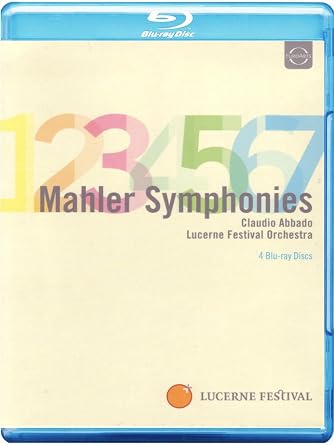
I also have a Blu-ray of a 2009 performance of Mahler Symphony 2 by Mariss Jansons which is enjoyable, but I don’t think the audio is as good as the Chailly or Abbado recordings.

I’m glad to own all three Blu-ray recordings of Mahler Symphony 2.
IMO, the experience of Blu-ray – seeing the conductor, orchestra members, and concert hall in high-definition video – and hearing the outstanding surround-sound audio quality by virtue of DTS-HD MA 5.1 – is much more enjoyable than the experience of listening to CDs. If I have a Blu-ray of the composition I want to listen to, I never pull a CD off the shelf.
My apologies to the OP if my comments are off-topic – but I think this speaks to the point that the dynamic range of the composition, and the dynamic range of the recording technology, are significant factors in determining the power requirement of an amplifier. In my listening rooms, for the large-scale classical music I like, with my Klipsch speakers (I own Palladium, and RF-7II) and subwoofers, I generally prefer push/pull tube amps in the 30wpc to 75wpc range. (My benchmark for the quality of sound from my hi-fi systems is live performances of classical music in a world-class symphony hall where no sound-reinforcement system is employed.) OTOH, if I’m listening to Eva Cassidy, or Ella, or Count Basie, or Tony Bennett, then my 8wpc single-ended tube amp has adequate power when driving Klipsch RF-7II (101 dB sensitivity).