• The move to the new server is done. There are some software and database maintenance updates in process. This has us passing the hat around to help out. We appreciate any donations. Seriously, even a dollar helps. The payment page may be found here - https://www.audiokarma.org/support.html

Does anyone like germanium-based receivers?

RonDollah

New Member
This weekend I picked up a nice, super clean, little Nikko STA-301 receiver, which I believe has germanium outputs. At low volumes through AR28s's (in my office), it sounds fantastic to me, and that has me wondering about my received notion that the "germanium era" was all bad / only a misstep in the evolution of solid state gear.

I know that the idea is out there that "germanium is what gave solid state a bad reputation," but is that really true? Do some people prefer it, at least in specific applications, etc.?

Mainly, I'm just curious, and I'm also wondering whether I'm somehow deluding myself about the quality of the sound in this unit. I do have a major sentimental connection, as my Dad's receiver was a Nikko STA-501, the bigger brother to this little guy. In some ways, my entire fascination with audio gear begins with that Nikko unit. Not the sound, per se :biggrin:
 
Register to hide this ad
I am not aware germanium sounded different from silicon based transistors.

A couple years ago @Powertech said this about germanium receivers:

A couple of issues with germanium SS amps that spring to mind.
Firstly, the transistors had nowhere near the noise, power and bandwidth capability of later silicon transistors and of course this was reflected in their audio capability.
Secondly, most of the designers had grown up with valves (myself included) and many amplifier designs mimicked valve amp topology. These were the early days of SS and everyone was on a learning curve. The amplifier topologies used later are completely different , and so they should be.


(original thread: https://www.audiokarma.org/forums/index.php?threads/germanium-amplifiers.938645/)​
 
I guess I'm wondering if, given the stated limitations of germanium (noise, power, bandwidth), and the tendency of earlier designers to model germanium-based topologies on tube-based topologies, germanium-based receivers sound best at lower volumes, and additionally whether they are more "tube like" (whatever that means) when listened to in this way...
 
Keep in mind that at the time geranium semiconductors were very expensive and this was reflected in the design. A typical power amp stage would use five transistors or so whereas more recent silicon amps used two-three times as many because prices dropped like a stone. So what you hear are the properties of a frugal design.
 
They do have a sound, but no small part of that sound is the noise they tend to make. I have an old germanium reel to reel, and looping that through the tape monitor does add some warmth to things. Adds static too though. Ge transistors are a thing in guitar effects pedals because of how they distort. Thats a land I don't fully get but apparently its different than Si.

part of the sound is probably the architecture too though. Early solid state was usually relatively low feedback and involved output coupling caps. Some had driver transformers too. Silicon in the late 60s was pretty much the same, and its also often considered warmer sounding than later solid state. I've had the same experience with tube amps though, fairly similar amps where one has much less feedback than the other tends to be warmer at the expense of detail.

early solid state parts were more fragile so I can believe they blew up often, giving stuff a bad name. Also consider at this point in time tubes were an extremely mature technology, it was well known how to make them reliable and everyone knew how to fix them. Solid state was new and involved a learning curve. There is always some amount of "its new, I don't understand it, therefore it is bad" way of thinking so of course you'll get the radio guy who had been servicing tube gear since 1948 cursing at this newfangled unreliable crap when it showed up on his bench in 1968.
 
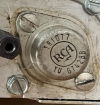
I had a 1968 Dodge Charger with a factory 8 track/AM radio installed. It used a single Germanium T03 output per channel. Not sure of the amp design with the single T03, but that deck "ROCKED"
 
@gadget73 , you are right on that about pedals, it is the sound of late 60's distorted guitars, which is difficult to simulate now. I believe that the American-built
Vox amps also used them, along with FETS, and these pieces are just about unrepairable now.

@Tom B I know EXACTLY what you are speaking of, a friend of my father had one...yee HAW!...was the tape deck a "Lear Jet" or am I thinking of something else?
 
Interesting @PE9ZZ. A bit more digging surfaced this thread, which suggests what I'm responding to positively may be distortion?
Could be. Distortion is usually hard to positively hear but it could be some sort of subliminal effect. I am sure research has been done on this topic but I am not aware of any.

<offtopic>
@Tom B: I've been working on a Delco with these transistors blown. I replaced them with hefty silicon PNPs and it did sound great. This was from a 1971 Caddy, the radio was a 15CMW1. To my chagrin it ended up on my workbench again. Someone else had gotten at it. This radio is an absolute bitch to work on...
</offtopic>
 
The lead guitarist for Queen played and still does I believe through a practice amp made out on an old discarded table radio that has Germanium transistors.
It how he achieved that signinure sound. The home made amp is turned all the way up with a mic connected to bigger amps placed in front of it. Germanium transistors are liked by some guitarists. I remember seeing the really early SS amps found in consoles that were point to point wired like a tube amp with germanium transistors. Inremeber seeing A small transformer for each channel.
I guess interstage transformers?
 
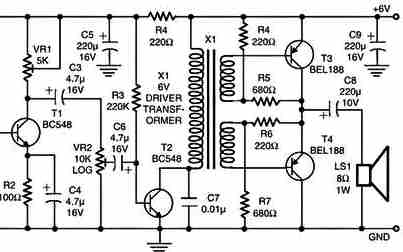
interstage / phase inverter transformers usually. random internet schematic, but this is usually the sort of arrangement you see. Instead of the inverter right at the input like most direct coupled amps, you got a single ended voltage amp stage right up to the transformer. This was also how you could generate the base current required to make the outputs go with weenie little transistors upstream. Sacrifice voltage swing for current in the transformer and away it goes.

chicagoexample2.jpg
 
Not sure of the amp design with the single T03, but that deck "ROCKED"

Hard to say how this relates to its rockability, but it would be a class A design. Not some marketeering definition of class A, either - real, honest to gosh, engineering definition, class A.
 
This weekend I picked up a nice, super clean, little Nikko STA-301 receiver, which I believe has germanium outputs.
That was a great era for Nikko. I have the 301, 501, 701, and concur with your opinion of their sound. They're good looking units as well.

Blame the overall sound on good design and engineering using the components and technology available at the time.
 
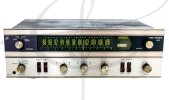
The most refined version, with the entire rear chassis acting as a heat sink; the four germanium transistors are directly on the same board, and the sound coming out of this beast is sublime. A pre-release model of The Fisher 200T, sold only in specialty stores in the USA.

220t2.jpg
200t2.webpCapture d’écran 2026-02-27 123913.png
 
The most refined version, with the entire rear chassis acting as a heat sink; the four germanium transistors are directly on the same board, and the sound coming out of this beast is sublime. A pre-release model of The Fisher 200T, sold only in specialty stores in the USA.

View attachment 3711889
View attachment 3711892View attachment 3711893
+1... Yours is a lot prettier than my 220T !
I have one of these as my shop sound,,,, 5 bux, from under a table, in the mud at a hamfest years ago,,,, It had one dead channel (preamp board) and was my first SS gear repair,,, Its from 1966/67 IIRC, and is one of the first SS Fisher receivers,,, very nice sounding 20+ W receiver.
I also have a Sansui 400 that was one of their first SS receivers,, got it mostly rebuilt now, but needs an alignment as MPX doesn't work well,,, another nice sounding Ge receiver,,,,,
Last is a 1965 HH Scott 348 rcvr,, that my buddy gave me,, its not working yet as I need a couple transistors,,,,
I do like the sound of these old Ge amps, even tho parts can be hard to find sometimes...
I guess they were designed to sound like tubes, as that's all they had to compare em to!!!!
 
Last edited:
I like the sound of my H/K 530. It's cap coupled and has the interstage transformers as mentioned by gadget.
 
Back
Top Bottom