
• The move to the new server is done. There are some software and database maintenance updates in process. This has us passing the hat around to help out. We appreciate any donations. Seriously, even a dollar helps. The payment page may be found here - https://www.audiokarma.org/support.html

Does this make sense?

Vlad Soare

Politically incorrect since 1976
Subscriber
Hi guys,

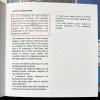
What do you think of this excerpt from the booklet of an SACD bundle? Particularly the framed section.
It looks like a boatload of bullshit to me. What do they mean, "typically"? They're always cut off, no exception. And what good is it to bring them back (actually not just bring them back, but make them up completely) if they aren't audible anyway? "Restore the original smoothness and reverberation in the hall" by fabricating some non-audible frequencies? Huh?!? o_O
The rest of the blurb also sounds dubious to me, though I'm not educated enough in matters of mastering techniques and processes to be really sure.

Am I right that this is nothing but horseshit? Or am I missing something and it does actually make (some) sense?

Thank you.
Untitled.jpg
 
Register to hide this ad
Thank ypu.

To be fair, the CDs (because I don't have an SACD player and I'm listening to the standard CD layer) do sound awesome, indeed. I have no complaints whatsoever about the mastering. They really are well made. But I'm sure it's not because of some imaginary ultrasonic smoothness. :biggrin:
I guess they just needed something to justify the SACD format and the higher price. :dunno:

It's this set.
 
Last edited:
Thank ypu.

To be fair, the CDs (because I don't have an SACD player and I'm listening to the standard CD layer) do sound awesome, indeed. I have no complains whatsoever about the mastering. They really are well made. But I'm sure it's not because of some imaginary ultrasonic smoothness. :biggrin:
I guess they just needed something to justify the SACD format and the higher price. :dunno:

It's this set.
At least your dog can appreciate the ultra high frequency smoothness. ;)
And whats wrong with having some utra sonic " head room"? :)
 
Last edited:
They can hear a kibble bag at 200 yards and many of them think their name is "NO, stop that"!

I'm in the BS camp. Not that I can hear 20 kHz; you'd have to be ten years old and not exposed to any loud music. I also don't buy the "but you can sense it" or "it interacts with other frequencies" arguments.
 
I doubt if my tired ears could even begin to tell the difference.
I have a Sony SACD player and a Cambridge Red Book. The specific disc and how it was mastered and produced seem to make more of a difference than the format. Good CDs have a more "vinyl sound," if that makes any sense. Bad CDs have this irritating "digital edge" and brightness.

The one thing I can say is SACDs are geared toward audiophiles. So they tend to be better produced and mastered.
 
Last edited:
This is extremely important to those listeners with ultrasonic tweeters that go up well past 40 kHz. If your tweeters don't go that high, you just can't appreciate the difference. :naughty:

Ha. Amateurs. The real audiophools go megasonic. I have a 1200w microwave mounted above each speaker. 300mhz is my top end. Literally will melt your (chocolate rabbit) ears. The fact that I can't hear much above 15k irrelevant...
 
I have a 1200w microwave mounted above each speaker. The fact that I can't hear much above 15k irrelevant...
However, the hot buttered Movie Time popcorn est sublime et magnifique!

0a2142e7-48da-45e4-a4bd-6e640b77b019.gif
 
Last edited:
Can't recreate stuff that isn't there, if the original master is a CD or CD-quality, thats all there is. Anything that is added would just be distortion. If its beyond human hearing then its inaudible noise and distortion.


if it does sound better though, thats more likely to be related to a better mastering process in the audible range than anything added in beyond where people can hear it.
In mathematics, specifically calculus, you have derivatives and integrals. The integral tries to back to what was there before the derivative was made. I won't get too specific, but when doing a derivative, you drop the constant. i.e 2x^2 + 6x + 2 would become 4x + 6. The integral is going back from 4x + 6 but we can't assume we know what the constant was so it becomes 2x^2 +6x + C, C is the constant.

I say this to reiterate your point that you can't recreate stuff that is no longer there.
 
Its probably a mix of truth and some marketing BS mixed in. Getting frequencies off a CD at 20K is mediocre at best. Even if you can do it, you are getting two samples to represent the sine wave. Not too good.

Wide band audio is pursued for a real purpose. Limited frequency response of 20-20k will provide 45 degrees of phase shift to the signal. This throws off timing queues.
If you look at many high end pieces they try to achieve a bandwidth of 10hz to 100k or more.

And nothing is mentioned of the clock signal. If high resolution is the goal, a highly accurate clock signal is required to prevent smearing in the time domain.
 
Back
Top Bottom