• The move to the new server is done. There are some software and database maintenance updates in process. This has us passing the hat around to help out. We appreciate any donations. Seriously, even a dollar helps. The payment page may be found here - https://www.audiokarma.org/support.html

Dual duo: 1245 and 1009

dyche01

"Buy high. Sell low"
Subscriber
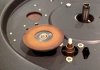
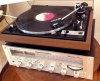
Some months back I picked up a Dual 1245 with a Shure M95xE cartridge for my mother-in-law so that she could make use of her extensive, but dusty, old record collection (which includes an original Columbia 6 eye pressing of Kind of Blue). I didn't expect much but after listening to it for a while I started to fall in love with this turntable. After I pulled it apart, lubed all of the moving parts and replaced the disintegrated 'steuerpimpel' it worked flawlessly and sounded great.
dual.jpg

Unfortunately the 1245 doesn't have a 78 RPM option and my M-I-L has lots of great old 78's from HER mother (my wife's grandmother) and so I stayed on the lookout for an inexpensive TT that would do 78 RPM. That way I could also steal back the 1245 for myself.

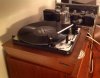
Last night I bought a beat-up old Dual 1009 for cheap and, after a bit of lube and clean up, found that it runs well and sounds remarkably good. It also looks fantastic, especially next to my old Fisher 500-B. Now I have a little bit of a dilemma. Do I keep the 1009 or swap it out for the 1245?
Dual_Fisher.jpg
 
Register to hide this ad
The 1009 has presented a bit of a learning curve. I thought there was a problem with the 'manual' start position on the control switch. I would turn the selector to 'manual' and then move the tone arm over the record. Once I dropped the tone arm, however, the selector spontaneously switched off and the turntable spooled down like HAL-9000 singing, "Daisyy, Daaiiiiissyyy..." After reading the manual, I realized that the mechanism is designed to work in a slightly counter-intuitive way. You have to position the tone arm above the record BEFORE you turn the selector to 'manual.' If you do that the turntable keeps spinning.

There are a still a few issues that appear to reflect real problems:
1. The signal occasionally drops out completely and sometimes drops down by ~20 dB. This issue has something to do with the tone arm/headshell. When the signal drops out it is replaced by a significant hum and moving the tone arm back and forth adds static on top of the hum. If you jiggle the tone arm just right the signal comes back. On another bulletin board I found a note about the 1009 saying that "Often it's necessary to bypass the crimps in the cartridge carrier (headshell), to cure persistent signal loss, even after the audio cables have been replaced." Does anybody here have any experience with this phenomenon?

2. The turntable itself makes a bit of noise. I assume that I just haven't gotten enough lube into all the right bearings. The service manual suggests oiling the bearings in the motor but does not show the exact oil port(s). There are four small holes on the bottom of the motor and I am a bit reluctant just dump oil down into all of them. Any advice?

3. With a strobe light and test pattern, the platter runs a hair slow. I don't notice anything sounding flat so the drop in pitch must be too small for me to hear. Still, I would like to get it dialed in. Even when I maxed out the pitch control the speed was just under what it should be. Could this be a lubrication issue? Or possibly a problem with the capacitor in the power supply/motor circuit?

Thanks!
 
You have run into the common issues on older Dual's. First, take off the headshell or sleigh as some call it. Look at the metal contacts. Take a small screw driver and gently press them. Are they loose? If so, that will cause a lot of your problem. Channels cutting out one or both. I use a dab of epoxy glue on each contact. Often after forty plus years, they get very loose. Let sit 24 hrs. Then I very slightly bend them out for a good contact. Also, I LIGHTLY sand the contacts. Second, remove the old grease from the gold gear underneath. I use a cotton swab. Then regrease, I like Lubriplate, but have used white lithium grease. A light dab with a cotton swab does it. After sitting a long time I take the motor apart,clean and oil. Just about every one will chatter if you don't do this. Some Dual's run a little slow until they warm up. Have only seen this once, on a 1015. The cap in the switch box is noise suppression, has nothing to do with speed. I also light sand the idler wheel after I have removed it, cleaned and oiled the shaft it rides on. There is a write up here on a 1229 an Aker serviced. It is very similar to the 1009.

The 1009 is a much sturdier turntable vs the 1245. The biggest problem is the headshell mentioned above. I redid the one on my 1010S, three years ago. It's been fine since. You can also buy a new one on Eprey for $45. Be VERY careful if you get. They fit VERY tightly!! I broke the chrome fastener on a 1015. Did not make me very happy. Keep the 1009.my. Two cents.

Eric
 
Watch the idler wheel go up or down when you play with the pitch control. This suggests that raising the motor pulley a bit will speed up the platter. So, loosen the fastening screw on side of pulley and give it a bit more height.
Those holes are rivets. You need to take the motor apart and soak the bushings with plain, non-detergent, non-synthetic engine oil.
And, the idler wheel needs a drop of the same oil on its bronze support bushing. And the idler might be soft, or might be hard, which causes rumble and slippage. The old girl can sound way superior to the newer unit. The capacitor is only for protecting the on/off switch from arcing.
 
You have run into the common issues on older Dual's. First, take off the headshell or sleigh as some call it. Look at the metal contacts. Take a small screw driver and gently press them. Are they loose? If so, that will cause a lot of your problem. Channels cutting out one or both. I use a dab of epoxy glue on each contact. Often after forty plus years, they get very loose. Let sit 24 hrs. Then I very slightly bend them out for a good contact. Also, I LIGHTLY sand the contacts. Second, remove the old grease from the gold gear underneath. I use a cotton swab. Then regrease, I like Lubriplate, but have used white lithium grease. A light dab with a cotton swab does it. After sitting a long time I take the motor apart,clean and oil. Just about every one will chatter if you don't do this. Some Dual's run a little slow until they warm up. Have only seen this once, on a 1015. The cap in the switch box is noise suppression, has nothing to do with speed. I also light sand the idler wheel after I have removed it, cleaned and oiled the shaft it rides on. There is a write up here on a 1229 an Aker serviced. It is very similar to the 1009.

The 1009 is a much sturdier turntable vs the 1245. The biggest problem is the headshell mentioned above. I redid the one on my 1010S, three years ago. It's been fine since. You can also buy a new one on Eprey for $45. Be VERY careful if you get. They fit VERY tightly!! I broke the chrome fastener on a 1015. Did not make me very happy. Keep the 1009.my. Two cents.

Eric

Thanks for the great response. I just took apart the headshell and did exactly what you suggested. The metal contact strips were visibly dirty and very loose so I cleaned them with deoxit; brightened them with emery cloth; and epoxied them to the body of the headshell.

I couldn't wait 24 hours so I used a fast-drying epoxy. The cartridge is now completely stable and the background noise at high volume has (almost) disappeared.
 
Watch the idler wheel go up or down when you play with the pitch control. This suggests that raising the motor pulley a bit will speed up the platter. So, loosen the fastening screw on side of pulley and give it a bit more height.
Those holes are rivets. You need to take the motor apart and soak the bushings with plain, non-detergent, non-synthetic engine oil.
And, the idler wheel needs a drop of the same oil on its bronze support bushing. And the idler might be soft, or might be hard, which causes rumble and slippage. The old girl can sound way superior to the newer unit. The capacitor is only for protecting the on/off switch from arcing.

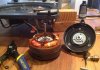
Thanks for the good advice. I pulled the deck from the plinth again tonight. I removed the platter but didn't have the tool at hand to remove the motor from the chassis so I lubricated the motor bearing by drizzling oil down the shaft. I also lubed the idler and platter bearings. The idler itself looked darkened with age but felt fine.

idler.jpg

I really want to remove the platter bearing and completely repack it but tonight was not the night for such an involved project so instead I used alcohol-doused Q-tips to clean up as much dried grease as possible and then shoved as much lithium grease into the bearing as I could using a sharpened wooden coffee stirrer.

The bearing noise is now gone when the table spins and I can get the speed stable at exactly 33.33 RPMs.
 
Last edited:
Here is the headshell fix. The contact strips, which were very loose, are now anchored fast to the cartridge carrier. I haven't checked out the stylus under the microscope but the old Stanton cartridge sounds pretty good.

headshell.jpg
 
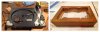
And here are the plinth and deck, pulled apart. I have to say that this turntable is, by far, the easiest to take apart that I have ever worked on. It is also built like a tank. I put a few additional coats of Danish Oil on the plinth and it is starting to shine.

I think I am falling in love with the Dual 1009. I will replace the interconnects with some newer, shielded cables. Are there any other mods that I should think about? What about grounding the tone arm? It is currently floating at somewhere near line voltage. Also, is it worth adding a little shielding to the point where the tone arm wiring is soldered to the RCA jacks?

dual_view_sm.jpg
 
That was the best looking base offered on the 1000 series Dual's. Have one on my 1010S. The nuts holding the motor on are 7 mm. I have a nut driver for them. You really need to drop the motor, take apart and clean and oil the lower bearing. That where the weight is. My 2 cents...

Eric
 
That sounds like a smart thing to do. Did you drill out the rivets holding the bottom bearing into body of the motor? If so, how did you re-attach it after you were done?

And do you ever use grease on these bearings or only synthetic motor oil? I am used to pulling apart and repacking wheel hubs and bottom brackets on bicycles. For these I would never use anything other than Phil Grease.

Finally, some people advocate soaking the idler wheel in olive oil to keep it pliable. What do the experts think?
 
NEVER, Never use grease on scintered bronze bearings. There is either cotton felt or foam around the bearings. Loosen the set screw on the pulley and gently lever it off. Remove the motor. Remove a motor shell, which ever one allows you to do so. Oil the two bearings.Soak them then oil again. Reassemble and enjoy. And I did say, and you quoted "Plain, non-detergent non-synthetic engine oil." You don't want to listen, then fine too. But be aware that once contaminated, these bearings cannot be cleaned out.
 
NEVER, Never use grease on scintered bronze bearings. There is either cotton felt or foam around the bearings. Loosen the set screw on the pulley and gently lever it off. Remove the motor. Remove a motor shell, which ever one allows you to do so. Oil the two bearings.Soak them then oil again. Reassemble and enjoy. And I did say, and you quoted "Plain, non-detergent non-synthetic engine oil." You don't want to listen, then fine too. But be aware that once contaminated, these bearings cannot be cleaned out.

You mean a bicycle bottom bracket isn't the same thing as a vintage turntable? Shocking.

Anyway, thanks again for all the advice. I do listen but I also sometimes ask questions. Annoying habit, I know.
 
Here is my beloved old Raleigh. I built her up from a frame I found in the trash.

Unfortunately she was stolen a couple of years ago. She weighed a ton, but she was a super smooth ride.

Not a day goes by that I don't miss her.

raleigh.jpg
 
I own a Raleigh Super Course with Reynolds 531 tapered [high-carbon] steel tubing. That is the stuff that should have kept Raleigh in business. Honestly, it weighs very little for something of that vintage. Besides, I weigh enough for the weight of a bike to not matter one bit.
 
Wow. It turns out to be surprisingly difficult to find non-detergent motor oil in San Francisco. I hit two gas stations and two auto parts stores on the way home from work and nada. I ended up going with an oil from the hardware store that was suggested for electric motors.

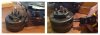
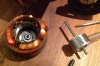
This evening I dropped the motor and pulled it apart. I cleaned the shaft with a tiny bit of chrome cleaner and then filled the top and bottom cups with oil. I also adjusted the pulley height so that putting the pitch control smack in the middle gave exactly 33.3 RPM's.

Thanks to everyone for the kibbitzing.

pulling_motor.jpg
popped_shell.jpg
pulled_motor.jpg
 
Last edited:
Now the only issue is a bit of 60 Hz hum. I only notice it when the volume is turned up pretty loud but I would love to get rid of it.

Any suggestions? What about case grounding the tone arm?

EDIT: Well, it turns out the hum has nothing to do with the turntable. It's somewhere in the phono stage of my old Fisher 500-B, which is a bummer because I just put in a pair of low noise 7025 tubes.
 
Last edited:
Try the old tubes. Who knows.............
If you are the adventurous type, then consider getting an old oscilloscope, a vintage H.P sine wave generator that adjusts from D.C. to at least 100,000 Hz, a H.V. probe, and a book on how to use your new toys. This is how you can find the A.C. leak. Probably something easy like a power supply capacitor.
 
Back
Top Bottom