

You are using an out of date browser. It may not display this or other websites correctly.
You should upgrade or use an alternative browser.
You should upgrade or use an alternative browser.
EL 34 Red Plating - What to do?
- Thread starter Perkri
- Start date

Register to hide this ad

The Fuxtor
Addicted Member
you have replaced the tube and it occurred again?
Yes, sadly. Had Psvane Phillips replicas - 2 sets - that have gone "south". Now, looks like the Gold Lions I have in there have just started to show issues. Its always tube #2 from the left... Noticed it this time because there was noise coming from the left channel - faint cracking sound. Think I'm going to replace 5U4G's with 5AR4's... But, something aint as it should be...
The Fuxtor
Addicted Member
not sure about the circuit but ive had tubes Chernobyl because the tubes were not closely enough matched.... I believe a cathode biased amp should have closely matched sets for each channel or the weaker tube will pull more current trying to keep up with the stronger partner ( or something like that??) Hopefully someone can elaborate on that more , or correct??


DON'T replace 5U4 with 5AR4, you will only exacerbate the problem with more plate voltage.
The Fuxtor
Addicted Member
Well, if you replaced the whole quad and had the same tube go, then surely something is bad. Dont replace and kill another one! Have you looked internally to see any obvious signs? burnt resistors etc??Thanks again! They were a matched quad? Actually, they all were matched quads
Happy to take measurements to check bias, but will need someone to explain where to measure from...
DON'T replace 5U4 with 5AR4, you will only exacerbate the problem with more plate voltage.
Thanks, only thinking of that as the folks at Cary said the tube was a direct replacement???
Well, if you replaced the whole quad and had the same tube go, then surely something is bad. Dont replace and kill another one! Have you looked internally to see any obvious signs? burnt resistors etc??
And amp is open now. Nothing looks to be out of place???
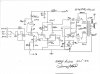
Opened it so I could draw a complete schematic of what is actually there.
I did a complete re-cap of the amp, and was very meticulous in making sure they were hooked up as the originals were. One cap at a time...

Pio1980
AK Member
"Loose" G1? Check resistance at socket from #5 to #8, check tension of socket contacts.Well, if you replaced the whole quad and had the same tube go, then surely something is bad. Dont replace and kill another one! Have you looked internally to see any obvious signs? burnt resistors etc??
The Fuxtor
Addicted Member
try cleaning the sockets with deoxit too"Loose" G1? Check resistance at socket from #5 to #8, check tension of socket contacts.
"Loose" G1? Check resistance at socket from #5 to #8, check tension of socket contacts.
Will do, thanks!
try cleaning the sockets with deoxit too
Going to order some ASAP! (Unless I can find some locally here in Toronto...)

Pio1980
AK Member
WD-40 or naphtha lighter fluid on a pipe cleaner will do.try cleaning the sockets with deoxit too
"Loose" G1? Check resistance at socket from #5 to #8, check tension of socket contacts.
So, I'm getting .6 Mohm on the "problem tube" (#2) and .5 Mohm on (#3)
Socket tension seems OK?
WD-40 or naphtha lighter fluid on a pipe cleaner will do.
Just gave them a light emery cloth /contact cleaner once over.

audio3000
Active Member
Red plating is mostly caused by over-powering the tube, high current, high voltage or both. In your case, the plate voltage is fixed, therefore, high current is likely the issue. What could have caused high current:
1. Bad cathode bias resistor. So power down, remove the output tube and check the 10 ohms cathode resistors. Compare their values between the two output tube.
2. Bad grid resistors. The 1K or the 220K grid resistor might be open circuit or drift to very high value. Power off. Tube removed. Check their values.
3. Leaky .22 grid coupling cap. Removed the tubes, power it up and no input. Compare the junction voltage of the 1K and 220K grid resistor. Are they the same between the two tube? Should be zero.
4. Different grid bias voltage. Power on. Tube in. Compare the cathode voltages.
Also, you can check if there is a potential short on the output transformer even very unlikely. Power off and wait for the center tap B+ is down. Tube removed. Compare the DC resistance between 1) B+ and screen tap; 2) B+ and Plate tap for both tube.
Pio1980
AK Member
Seems close enough, except for the tolerance range of modern metal film resistors. I'd check them directly under the deck against stated values.So, I'm getting .6 Mohm on the "problem tube" (#2) and .5 Mohm on (#3)
Socket tension seems OK?
Seems close enough, except for the tolerance range of modern metal film resistors. I'd check them directly under the deck against stated values.
Thanks. I have the amp open and measured from pin to pin inside...

That's too much. Replace those resistors with 270kSo, I'm getting .6 Mohm on the "problem tube" (#2) and .5 Mohm on (#3)
Socket tension seems OK?
Also get a new matched pair of EL34, ( matched at working voltages) they must be equal for the amp
to function well. Any tube that has redplated should be junked.
Red plating is mostly caused by over-powering the tube, high current, high voltage or both. In your case, the plate voltage is fixed, therefore, high current is likely the issue. What could have caused high current:
1. Bad cathode bias resistor. So power down, remove the output tube and check the 10 ohms cathode resistors. Compare their values between the two output tube.
2. Bad grid resistors. The 1K or the 220K grid resistor might be open circuit or drift to very high value. Power off. Tube removed. Check their values.
3. Leaky .22 grid coupling cap. Removed the tubes, power it up and no input. Compare the junction voltage of the 1K and 220K grid resistor. Are they the same between the two tube? Should be zero.
4. Different grid bias voltage. Power on. Tube in. Compare the cathode voltages.
Also, you can check if there is a potential short on the output transformer even very unlikely. Power off and wait for the center tap B+ is down. Tube removed. Compare the DC resistance between 1) B+ and screen tap; 2) B+ and Plate tap for both tube.
Thanks!
OK, here is what I found:
1. They are both 9.99ohm
2. The 1K and 220K are both measuring right
3. Where do I connect meter to check junction voltage? Will check tomorrow
4. Where do I connect meter to check cathode voltages? Will check tomorrow
That's too much. Replace those resistors with 270k
Also get a new matched pair of EL34, ( matched at working voltages) they must be equal for the amp
to function well. Any tube that has redplated should be junked.
Ooooops. My bad. They are reading 227K...