• The move to the new server is done. There are some software and database maintenance updates in process. This has us passing the hat around to help out. We appreciate any donations. Seriously, even a dollar helps. The payment page may be found here - https://www.audiokarma.org/support.html

Fisher X202B, TA-800, 600, 1800 shootout under way!

RS Steve

Tube Junkie
Subscriber
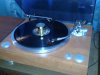
Now that all of these Fisher songbirds are restored and have some play time on them I thought I would see how they compare. I decided to use my Dennon turntable as the source for all the music, and my Klipsch Belle speakers to finish the connection.

Today I am giving the 1800 the workout by spinning some Doobie Brothers (minute by minute album), and Bachman/ Turner Overdrive (4 wheel drive album). So far I would say that the 1800 has no weakness, it has a very solid and powerful tube sound. I really like the loudness switch on at lower listening levels, it allows the bass to be at a more even level with the horns. The phono section is really good, I'm running a Ortofon red cartridge in the Dennon, seems to be a great combination. The FM section of the 1800 is really amazing, the sound quality, and tuning strength is 2nd to none in my receiver collection. This Fisher 1800 is going to be hard to beat, more to follow.
 

Attachments

  • 003.jpg
    003.jpg
    59 KB · Views: 55
  • 001.jpg
    001.jpg
    59.9 KB · Views: 36
Register to hide this ad
This should be fun! A lot of variables though. Any chance you have sorted out the tube sets to get the most out of each one before comparing them? Or, will you be switching the compatible ones from unit to unit?
 
This should be fun! A lot of variables though. Any chance you have sorted out the tube sets to get the most out of each one before comparing them? Or, will you be switching the compatible ones from unit to unit?

All have very fresh tubes, the X202B having the original Fisher branded ones. The TA 800 and 600 have been modded slightly by sony6060, so it most certainly is not a real world accurate shootout, but I'll know in the end which of my Fisher's sound best to my ears. So far I feel that the TA 800, and 600 have better detail to the highs, and overall the best sound, but I say that with very limited time comparing them so far.
 
Is the 1800 the same as the 800c?

Yes, very small changes to a few things besides its looks, but should match the 800-C in everything else. The 1800 was built to be used overseas and was supplied with a multivoltage option transformer.
 
:ntwrthy: D.G. restored Fisher 1800

UGHHH!

I'm ready to sell off the other Fishers already, no need to even listen to them! :D

Having today off, I have been running through a bunch of vinyl all day, the more the 1800 warms up, the better it sounds. It's got enough power to push the Belle's to a very high level while being just shy of 1/2 volume.

I have also hooked my CD player to the 1800 to get a little digital listening in. The sound was a little bright for me, but nothing a decrease in treble adjustment didn't help. This source had even more volume to it, this receiver has plenty of power paired with these speakers. Bass was really very real sounding, no color to it, and you could feel it.

I'll listen to it with my wife more this evening, time for some jazz to really get some good clean tracks played.
 
My wife joined me for about 2-1/2 hours of jazz music last night to finish up listening to the 1800. The much better recordings really showed just how good the Belle's match up with the Fisher sound.

Next up was the TA-800, I was able to get almost 2 hours of listening in before I started to fade. Right from the start I notice quite a difference, the TA-800 has very detailed highs that seem to really bring out instruments like piano, horns, and cymbals better. Bass seems to have less drone to it, and sounds more punchy. I ran the bass and treble straight up and loved it, on the 1800 I had to adjust quite a bit to find a sweet spot. Now this makes it sound like the 1800 is lacking, but I can tell you I had no complaints, and it sounds very good. The TA-800 just takes things to a more dynamic, detailed, and warmer sound.

Switching over to FM (mono on the TA-800), even though it is not in stereo, sounds very good. It doesn't quite seem to be as good as the 1800 for pulling in weaker stations, but I still consider it to be a very good tuner.

Playing CD's brought out razor blade highs, if ever there was a unit to prove to the world the difference between digital and vinyl, the TA-800 would be it.

So for pure sound playing vinyl, the TA-800 has the edge over the 1800, but for the overall package, the 1800 gets the edge since it can do better for FM, and digital tracks. It's possible tube rolling could improve the 1800's phono section, and get it closer to the TA-800, but before hearing the TA-800I had no complaints :scratch2:. The TA-800's phono section has to be the best my ears have ever listened to, but I know the TA-600 is yet to come.

A few more hours on the TA-800 today, then on to the X202B.


attachment.php
 
Great thread Steve!

Looking forward to the rest of your observations from the shootout. Just picked up an unrestored TA-600 and look forward to that especially. Think it might just edge out my restored 800C and 500C in most categories and I was surprised by that. I put it down to tube rectification in the 600 and 800.

I listen to AM talk shows and the performance of the 600 is ridiculously good. No other receiver modern or vintage that I have had does AM close to the Fisher.

Keep up the good work :thmbsp:
 
Fairlane. Only the TA-600 is Tube Rectified. All the others are SS rectified.
 
Thanks Larry, I stand corrected :o

They look so similar... but I am still just a Grasshopper :thmbsp:
 
Larry -- did the TA-800 have the two versions of phase inverters with one using a 7199 and the other a dual triode?

Steve -- Does your 600 use a 7199 or dual triode in that position? If the TA-800 had the two different versions, which is yours?

Dave
 
Steve -- Your TA-800 does in fact have the 7199 driver tube -- although it is now apparently running 6GH8A tubes with an adapter.

This type of driver circuit would in fact give a more detailed presentation (better HF response) when the volume control is at typical normal operating positions. The common dual triode design as used in the 400/500C/800C/1800 is at a disadvantage in this regard. Both circuits will have similar response characteristics with the volume control at maximum -- but then who listens to any of these receivers with the volume control in that position?

One thing you might try -- if you have the capability -- is to use an external CD player (or other source) that has its own level control on it. Turn the volume control on your 1800 up full, but back the level control on the CD player down to achieve a normal sound level. You will likely find more detail present in that scenario.

This is one of the things I address in my "Improving the Fisher 400" thread, where I design/install a small SS buffer to address the concerns that the volume control has on frequency response with the stock design. As a result, the sound of the modified receiver is more detailed at typical volume control settings.

Another observation -- I don't know this for a fact, as I don't have a TA-800 service manual, but based on what I can see in the pics, it's possible that your TA-800 unit enjoys the same basic tone/volume control circuit "guts" as used in the 400C/400CX(2)/X-202/X202B/X-1000 Fisher pieces. As opposed to those circuits in your 1800 which are of a passive design, the units mentioned above use a more complex active tone control design which will mix things up as well. Since your X-202B uses the same guts, it will be interesting to see how it falls into this mix.

Great thread! Thanks for sharing your observations!

Dave

Thanks Dave for all that great information, it helps people like me with very limited knowledge understand things a little better.

Here is the build for my TA-600 incase your curious.

http://www.audiokarma.org/forums/showthread.php?t=561095
 
Dave, just out of curiosity, would the TA-600 with the 7247 inverters fare any better than the others which used a 12AX7 ? The grid to cathode capacitance is a bit lower on the section used for input on the 600, 1.6pf vs 9.8 pf. Grid to plate capacitance is up a smidge though, 1.7pf vs 1.4 pf.

Just curious as the owner of a 7247-driven TA-600.
 
The heart of the problem is where Fisher placed the volume control -- right at the input of the power amplifier section. The huge advantage of such topology is that at low or minimum volume settings, any low level noise is almost non-existent. However if the input to the power amplifier section is a triode, then the downside of this configuration is that the variable impedance that the volume control represents causes the the HF response of the input stage to vary with the setting of the control.

This is because triodes suffer from Miller Effect -- where high frequency signals at the plate of the tube can be fed back to the grid by way of the internal capacitance that exists between the plate and grid within the tube. But its not just by the amount of the static capacitance value that you quoted; it's by that amount TIMES the amplification factor of the stage. Therefore, the signal is not being fed back through a 1.7 pF capacitance, but by an amount that is about X60 that value, or about a 100 pF cap. That's significant.

One approach for resolve is to keep the driving impedance at the grid very low, so that even with an effective 100 pF cap in place, the impedance it is trying to drive into at the grid is so low as to have little effect. But if the source is a 500K volume control, keeping the source impedance low is almost impossible -- particularly at the mid rotation settings of the control. Now Miller runs wild.

Fisher wisely used the HF roll off created by Miller to help stabilize the HF response of the circuit under feedback conditions, which helps significantly. But against that, in those designs that use a 7199 driver tube, the input stage is a pentode. Pentodes don't suffer from Miller to any significant extent, as the screen grid acts as an electrostatic shield between the plate and grid within the tube. But then, that starts the pentode versus triode wars.......I'm outta here!

Back to the shoot out!

Dave
 
Back
Top Bottom