• The move to the new server is done. There are some software and database maintenance updates in process. This has us passing the hat around to help out. We appreciate any donations. Seriously, even a dollar helps. The payment page may be found here - https://www.audiokarma.org/support.html

For the Love of Lab 80

Quadaptor!

Active Member
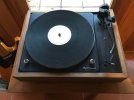
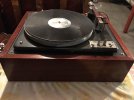
This post has to do with the Garrard Lab 80, to which I have a strange addiction. Over the last couple years, I've been upgrading my Lab 80 by installing a new drive wheel, replacing the spindle bearing with a new unit (and I'm amazed at how well the spindle freewheels with a slight flick of the hand), and placing it on a DIY isolation base. However, I have read where improvements can be made to the plinth by making it more solid. I have acquired an extra factory plinth and have been contemplating filling the void with sequential sheets of birch plywood that have been cut out to fit the base and drive mechanism of the table. I only use my Lab 80 for single play as the thought of stacking and dropping records has never set well with me, especially in this day of 40-plus-dollar LPs. I am curious if anyone on the forum has made major modifications to their Lab 80 plinths such as I described and what the results were. Also, at the danger of opening up a new rabbit hole of hifi addiction, it looks to me that the Duel 1019 and 1219 tables were the Lab 80s direct competitors in the market for idler drives, with the former likely being more in line with the Garard's period of production. How do the Duels compare with the Lab 80? Many thanks in advance for your comments.
 
Register to hide this ad
Did you find a new idler wheel made a big difference? I have two and both struggle to return the arm after end of record. Fully disassembled and cleaned.
I'm considering ordering new wheel and bearing from audiovault for about $100 but I really doubt I would use it as I have too many as it is.
My main spinners are a Dual 1229Q and Garrard 301. I did make a plinth for the 301 out of solid cherry but I don't think my hearing is good enough to notice a difference.

 
Did you find a new idler wheel made a big difference? I have two and both struggle to return the arm after end of record. Fully disassembled and cleaned.
I'm considering ordering new wheel and bearing from audiovault for about $100 but I really doubt I would use it as I have too many as it is.
My main spinners are a Dual 1229Q and Garrard 301. I did make a plinth for the 301 out of solid cherry but I don't think my hearing is good enough to notice a difference.

I found changing the idler wheel to be just "good maintenance." You have to figure the original wheel has got to be something like 60-years old and by now most likely has lost some of its original grip and likely has a flat spot or spots from having been stored with pressure up against the platter. Some people spin their old wheels in a drill and lightly sand the edge to regain grip lost from hardened rubber, but I have concerns with that. Since the diameter of idler wheel defines a "gear ratio" with the platter it runs against, sanding may cause an ill effect with the speed. in other words, 33 1/3 may be something else with a change in the diameter to the idler wheel that sanding would cause. Anyway, new wheels are available so why not use one? To answer your question, any difference or improvement is going to be dependent on the condition of your wheel. if yours is okay then the difference will be minimal and visa versa. Additionally, if you are going to use your Lab 80, I highly recommend changing the bearing. The new bearing is just a better piece of mechanical gear than the original. And that's got to account for an improvement to a mechanical device such as a turn table.
 
will you be bolting the steel chassis to the plinth or will you continue to use the factory spring suspension?
Right now I have the factory spring suspension tightened down as it seems to work better that way. And that's my plan for the modified plinth.
 
We sold maybe a dozen LAD 80's way back when. Being an SME- Thorens guy back then I thought the entire concept was kind of flaky. To much internal friction and resonant arm problems for me. You had to keep them away
from big speakers with bass output as they would feed back quite easily. They did not track that well with light weight tracking cartridges either. But then we didn't have all the prooven knowledge we have to day. So good luck with your challenges. I prefer to KISS.
 
I am curious if anyone on the forum has made major modifications to their Lab 80 plinths such as I described and what the results were. Also, at the danger of opening up a new rabbit hole of hifi addiction, it looks to me that the Dual 1019 and 1219 tables were the Lab 80s direct competitors in the market for idler drives, with the former likely being more in line with the Garrard's period of production. How do the Duels compare with the Lab 80? Many thanks in advance for your comments.
1735918856718.jpeg

I have done radical reconstruction of the Lab 80, Dual 1229, Elac 10 and BIC 960 changers.

This is involves removing ALL changer functions and mounting what is left to a multi-layer plinth, ala the Lenco.

I did this because:
1) I have never liked changers (my first table was a Pioneer PL10, all manuals since then)
2) I wanted to use a better tonearm
3) All these tables had something wrong with the changer mech that made it very difficult to get working consistently. The BIC worked but I wanted a different tonearm, so...
4) I was curious how much noise the platter bearings (all using captured ball bearings in a race that goes around the spindle) actually added
5) I have a lot of wood, a table saw, and too much time on my hands.

This all started with the mods I did to a Lenco L75 several years ago, and got me thinking how other, more easily found idlers might respond to the same treatment

What I've learned is that the bearing is really not a significant source of noise, provided good bearings (I used ceramic ball bearings) and proper lubrication.
What is a source of noise is idler and poor isolation of the motor from the top plate for the idler tables. There are several methods to isolate the motor, including springs and silicone 'mushrooms'. If the idler is at all suspect, just get it rebuilt! The BIC (a belt drive unit) was already pretty quiet so I just rebuilt the motor and cut the top plate to absolute minimum and bolted it down to the plinth.

All of these decks are very quiet after the mods, although I cannot quantify that as I have no way to measure rumble and frankly I don't care as long as I don't hear any...

I've had to get creative to get them to work this way. On the Garrard pictured above the left Telecaster volume knob engages the idler and the right one turns on power to the motor. I did this because I didn't want to leave the idler engaged when the table is off as this can leave a flat spot in the rubber. You may notice that the top plate is now close to square; this was done but cutting it down with a metal blade (my neighbors probably hate me by now as that is very noisy) and using JB Weld and spare sheet metal to put it back together, Bondo, etc. I did the same for all decks so I could use different armboards/materials.

This table currently has a MMT tonearm mounted, but I have armboards cut for the MMT, Rega RB300, and ADC LMF tonearms for all of my idlers (Thorens 124, Lenco L75, Garrard Lab 80, ELAC 10, Dual 1229) and the BIC.

Really I could live with any of these decks but I only have room for one turntable and currently that is the Thorens. Before that it was the ELAC for a year or so and before that the BIC. All sounded good; I didn't swap them due to sonic reasons, but just to test out the next one. It's not trivial to change TTs in my setup and these are all pretty heavy due to the 7 layer plinth/hardwood trim and heavy platters on all of them. They are all mounted on various isolation feet and my TT setup includes a DIY wall-mounted shelf based upon the Target TT-5.

 
Last edited:
View attachment 3388758

I have done radical reconstruction of the Lab 80, Dual 1229, Elac 10 and BIC 960 changers.

This is involves removing ALL changer functions and mounting what is left to a multi-layer plinth, ala the Lenco.

I did this because:
1) I have never liked changers (my first table was a Pioneer PL10, all manuals since then)
2) I wanted to use a better tonearm
3) All these tables had something wrong with the changer mech that made it very difficult to get working consistently. The BIC worked but I wanted a different tonearm, so...
4) I was curious how much noise the platter bearings (all using captured ball bearings in a race that goes around the spindle) actually added

This all started with the mods I did to a Lenco L75 several years ago, and got me thinking how other, more easily found idlers might respond to the same treatment

What I've learned is that the bearing is really not a significant source of noise, provided good bearings (I used ceramic ball bearings) and proper lubrication.
What is a source of noise is idler and poor isolation of the motor from the top plate for the idler tables. There are several methods to isolate the motor, including springs and silicone 'mushrooms'. If the idler is at all suspect, just get it rebuilt! The BIC (a belt drive unit) was already pretty quiet so I just rebuilt the motor and cut the top plate to absolute minimum and bolted it down to the plinth.

All of these decks are very quiet after the mods, although I cannot quantify that as I have no way to measure rumble and frankly I don't care if I don't hear any...

I've had to get creative to get them to work this way. On the Garrard pictured above the left Telecaster volume knob engages the idler and the right one turns on power to the motor. I did this because I didn't want to leave the idler engaged when the table is off as this can leave a flat spot in the rubber.

This table currently has a MMT tonearm mounted, but I have armboards cut for the MMT, Rega RB300, and ADC LMF tonearms for all of my idlers (Thorens 124, Lenco L75, Garrard Lab 80, ELAC 10, Dual 1229) and the BIC.

Really I could live with any of these decks but I only have room for one turntable and currently that is the Thorens. Before that it was the ELAC for a year or so and before that the BIC. All sounded good; I didn't swap them due to sonic reasons, but just to test out the next one. It's not trivial to change TTs in my setup and these are all pretty heavy due to the 7 layer plinth/hardwood trim and heavy platters on all of them. They are all mounted on various isolation feet and my TT setup includes a DIY wall-mounted shelf based upon the Target TT-5.
Thanks and very interesting. Especially your observations on the on the source of noise primarily coming from the motor and not the spindle bearing. Any advice on improving motor isolation on the Lab 80? I've heard talk of silicon replacement motor mounts, but I haven't found any place where they might be obtained. It sounds like your "7 layer plinth/hardwood trim" modification is consistent with my thoughts. Thanks again.
 
Any advice on improving motor isolation on the Lab 80?
My Lab 80 has no issues with motor noise. With the exception of the platter spindle bearings, it is entirely stock, including the plinth.

Garrard knew how to design a turntable, and my Lab 80 is one of the best sounding turntables I own.

Restore it to it's original condition and it will serve you well.
 
Thanks and very interesting. Especially your observations on the on the source of noise primarily coming from the motor and not the spindle bearing. Any advice on improving motor isolation on the Lab 80? I've heard talk of silicon replacement motor mounts, but I haven't found any place where they might be obtained. It sounds like your "7 layer plinth/hardwood trim" modification is consistent with my thoughts. Thanks again.
You may not find silicon mounts that are advertised to be for the the LAB 80, but you can find them for Thorens and Garrard 301/401. Also I've had luck looking for parts that are not advertised as being for audio at all. For example, some lab equipment has very exacting isolation requirements and material used for that may be adapted for other purposes.

Finding that stuff is half the fun!
 
I found changing the idler wheel to be just "good maintenance." You have to figure the original wheel has got to be something like 60-years old and by now most likely has lost some of its original grip and likely has a flat spot or spots from having been stored with pressure up against the platter. Some people spin their old wheels in a drill and lightly sand the edge to regain grip lost from hardened rubber, but I have concerns with that. Since the diameter of idler wheel defines a "gear ratio" with the platter it runs against, sanding may cause an ill effect with the speed. in other words, 33 1/3 may be something else with a change in the diameter to the idler wheel that sanding would cause. Anyway, new wheels are available so why not use one? To answer your question, any difference or improvement is going to be dependent on the condition of your wheel. if yours is okay then the difference will be minimal and visa versa. Additionally, if you are going to use your Lab 80, I highly recommend changing the bearing. The new bearing is just a better piece of mechanical gear than the original. And that's got to account for an improvement to a mechanical device such as a turn table.
Changing the idler diameter within reason won't affect the speed of the platter. If you make the idler so small it no longer touches you will affect the speed of course. Short of that the speed controlling factors are the diameter of the platter surface driven and the driving surface of the motor pulley.
 
Changing the idler diameter within reason won't affect the speed of the platter. If you make the idler so small it no longer touches you will affect the speed of course. Short of that the speed controlling factors are the diameter of the platter surface driven and the driving surface of the motor pulley.
Thanks. I've always wondered about that.
 
There is a "Sticky" for the Lab 80 that most of us owners post to: "My Lab 80 Obsession". You may want to ask a Mod to move your post there where more of us Lab 80 peeps would see it. I refurbished mine about 10 years ago (I think) and cleaned and re-lubed. Had my idler wheel refurbished with new rubber and made a nice, heavy new plinth with old Mahogany-veneered Oak wood from an old antique piano that I am reclaiming wood from. I am running a Shure M75 cart on her. Sounds great.
 
Just a thought but if the idea is to add a lot of mass to the plinth, I'm not sure there is a lot of point in starting with the stock one and modding that. The original Garrard piece is truly nothing special. I think I'd be inclined to just start from raw material and make the cutout what it needs to be in order to let all the bits under there clear.
 
There is a "Sticky" for the Lab 80 that most of us owners post to: "My Lab 80 Obsession". You may want to ask a Mod to move your post there where more of us Lab 80 peeps would see it. I refurbished mine about 10 years ago (I think) and cleaned and re-lubed. Had my idler wheel refurbished with new rubber and made a nice, heavy new plinth with old Mahogany-veneered Oak wood from an old antique piano that I am reclaiming wood from. I am running a Shure M75 cart on her. Sounds great.
Yeah, I'm familiar with that. However, you need a search function
And btw a good replacement idler can work wonders. I use dual 1229s and both have aftermarket idlers
I did the replacement idler.
 
Just a thought but if the idea is to add a lot of mass to the plinth, I'm not sure there is a lot of point in starting with the stock one and modding that. The original Garrard piece is truly nothing special. I think I'd be inclined to just start from raw material and make the cutout what it needs to be in order to let all the bits under there clear.
The reason is purely aesthetics. I really like the looks and size of the original plinth and have the factory cover. I'm not shooting for the stars with this project, only to make some reasonable improvements. I've been happy with the changes I already made and was interested in other folk's experiences with the Lab 80. And I'm also interested in how I might adapt some of those to my situation. The Lab 80 is a fun table to work with.

How about cartridges? I'm using a Shure M44-7, but I have a M91ED that's got me wondering how it might work. What cartridges do you all prefer and why? Also, has anyone found a phono preamp that's a good match. I'm currently using a Schiit Mani.
 
Back
Top Bottom