

You are using an out of date browser. It may not display this or other websites correctly.
You should upgrade or use an alternative browser.
You should upgrade or use an alternative browser.
Fostex BK-16 Horn project
- Thread starter Dan ʕ•ᴥ•ʔ
- Start date


mhardy6647
Lunatic Member
Very interesting... Fostex seems to like that slightly "tizzy" sound... I would opine, though, that the FE-207E (see my avatar) is less objectionable in that regard than some of the Fostexes.

... Using a fresh X-Acto knife, I split the aluminum cap across into four sections and then very carefully went in at an angle against the epoxy bead and slowly removed each quarter...
Holy cow. You've got more guts than I do!

Dan ʕ•ᴥ•ʔ
Peanut Head
Once the first incision was made, there wasn't any looking back! I'm glad I did it though...they not only sound better, they look better! (It helps that I used to be a watchmaker.)Holy cow. You've got more guts than I do!

Last edited:

Dan ʕ•ᴥ•ʔ
Peanut Head
Thought I'd give this old thread an update. Although the thin frames on the Fostex drivers passed my "thump" test for basket ringing, I pulled both drivers and cut strips of thick door seal material made of dense foam rubber and fabric. (Actually used as cabinet gaskets in Ampeg B-15's. ) I added a strip on each spoke of the basket, figuring that it'd help to damp the basket and the odd shape and thickness of the material would help to break up any standing waves. It may be nothing more than wishful thinking, but I do believe it made a good sounding speaker even better! 

) I added a strip on each spoke of the basket, figuring that it'd help to damp the basket and the odd shape and thickness of the material would help to break up any standing waves. It may be nothing more than wishful thinking, but I do believe it made a good sounding speaker even better! Attachments


Thanks to Celt, these are now happily residing in Casa de Urizen.
It took a bit of listening and placement to get used to them, but what they do with vocals, bass, drums, and solo instruments is astounding. The fit and finish are equally nice.
Thanks, Dan!
It took a bit of listening and placement to get used to them, but what they do with vocals, bass, drums, and solo instruments is astounding. The fit and finish are equally nice.
Thanks, Dan!
Attachments
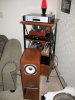
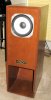
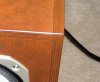

marqueemoon
Gimme indie rock!
Sorry if it's bad form to bump this old thread.
I'm going to be pulling the trigger on a pair of these in about a week. Just wondering how everyone is feeling about the height issue. At 29" these seem to be kind of an awkward height for optimal placement. Anyone using the Madisound stands (or any stands)?
Also, is the quality of the plywood sufficient for a natural-type finish? I'm thinking about clear shellac (more of an amber color really).
I'm going to be pulling the trigger on a pair of these in about a week. Just wondering how everyone is feeling about the height issue. At 29" these seem to be kind of an awkward height for optimal placement. Anyone using the Madisound stands (or any stands)?
Also, is the quality of the plywood sufficient for a natural-type finish? I'm thinking about clear shellac (more of an amber color really).
Anyone using the Madisound stands (or any stands)?
Also, is the quality of the plywood sufficient for a natural-type finish? I'm thinking about clear shellac (more of an amber color really).
I'm using Lovan Jazz 6" stands which enable me to slightly angle them backwards so the drivers point towards my head from the listening spot. The finish on these was done by Celt and consists of two coats of Zar 'Natural Teak' (fogged), four coats of nitro-celluose lacquer (sprayed) and two applications of carnuba wax. They turned out very nice, IMO.

Last edited:

drknstrmyknight
Addicted Member
Most don't listen to single-driver speakers for a real listening session, usually just background noise.
Au contraire, Batman, I listen to their big brothers every day.

marqueemoon
Gimme indie rock!
I'm using Lovan Jazz 6" stands which enable me to slightly angle them backwards so the drivers point towards my head from the listening spot. The finish on these was done by Celt and consists of two coats of Zar 'Natural Teak' (fogged), four coats of nitro-celluose lacquer (sprayed) and two applications of carnuba wax. They turned out very nice, IMO.
Nice. Those stands look perfect. Sand-fillable, right? The finish is a great match with your rack too.
I'm thinking about thinned shellac and just doing a lot of coats and trying to be patient. The patience part is usually my downfall. My friend is lending me his router too, so I might hit the edges of the cabinets with a roundover bit before finishing.
I also had another question. Anyone fill the hollow triangular voids in the cabinet before assembly? If so, what did you use?

marqueemoon
Gimme indie rock!
Go with the Madisound stands. You can finish them just like your speakers. It will look like part of the speaker.
I hear what you're saying. However, due to the extreme uneveness of the (basement) floor I'm leaning towards something like those Lovans with adjustable spikes.
Sand-fillable, right?
Yes. The tubes are short on these so I didn't fill them. I also have the 18" version of these stands which I shot-filled.


AmadeusMozart
Well-Known Member
Can anyone tell me if there is damping material (and where / how much) in these cabinets before I buy these enclosures? (I like to know as it gives me a bit of an indication on what to expect during the build).
Many thanks in advance, AM.
Many thanks in advance, AM.
marqueemoon
Gimme indie rock!
Can anyone tell me if there is damping material (and where / how much) in these cabinets before I buy these enclosures? (I like to know as it gives me a bit of an indication on what to expect during the build).
Many thanks in advance, AM.
IIRC the build instructions recommend 3 oz of Acousti-stuff in the upper chamber. I used this amount of plain-ol fiberfill.
Not called for in the instructions, but I also used fiberfill to stuff the interior voids in the cabinet. I didn't weigh it, just stuffed it in as tight as I could before final glue-up.
AmadeusMozart
Well-Known Member
IIRC the build instructions recommend 3 oz of Acousti-stuff in the upper chamber. I used this amount of plain-ol fiberfill.
Not called for in the instructions, but I also used fiberfill to stuff the interior voids in the cabinet. I didn't weigh it, just stuffed it in as tight as I could before final glue-up.
Many thanks for this information. Had read some suggestions about doing some damping in the upper chamber required but no details. Would hate to have these shipped out all the way to New Zealand (not cheap) and then discovering no details on damping and having to do lots of experimenting.
Regarding voids: one effective way is to use this expanding foam for filling cavities (designed for use around the home). Simplay ensure to have a hole in the wall in the right location and after completing insert the nozzle and let it doe its work. Then after it has hardened fill it up with a wooden plug. Unfortunately this is only going to work if you veneer it afterwards (or if you make special wooden plugs for "blind plugging" which have the grain in the same direction, often used in boat building but still visible).
marqueemoon
Gimme indie rock!
Many thanks for this information. Had read some suggestions about doing some damping in the upper chamber required but no details. Would hate to have these shipped out all the way to New Zealand (not cheap) and then discovering no details on damping and having to do lots of experimenting.
Regarding voids: one effective way is to use this expanding foam for filling cavities (designed for use around the home). Simplay ensure to have a hole in the wall in the right location and after completing insert the nozzle and let it doe its work. Then after it has hardened fill it up with a wooden plug. Unfortunately this is only going to work if you veneer it afterwards (or if you make special wooden plugs for "blind plugging" which have the grain in the same direction, often used in boat building but still visible).
I considered expanding foam for filling the voids, but ultimately nixed it as being too messy. I also didn't want something that could vibrate or leak out, so the fiberfill ended up being the choice.