• The move to the new server is done. There are some software and database maintenance updates in process. This has us passing the hat around to help out. We appreciate any donations. Seriously, even a dollar helps. The payment page may be found here - https://www.audiokarma.org/support.html

Garrard 301/401 owners club!

Hi all,

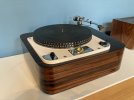
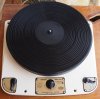
I finally got around in finishing my 301 (oil bearing) properly and wanted to share this with you because frankly I’m very proud how it turned out :-)

I got this turntable from an estate and don’t know much about it’s history except that is was build around ‘63.

She was (and is) in very good condition. However the motor was a bit noisy and the orginal plinth nor the arm/cartridge did her justice.

I’ve build a new plinth myself from layers of baltic ply, finished with veneer and a french lacquer. The lacquer was very labour intensive but for an amateur it turned out fine. The plinth weighs 12kgs.

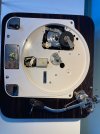
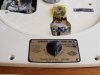
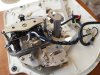
I opened the motor to clean and lube the lower bearing, cleaned and lubed the spindle bearing (no wear on any bushes). There was some play on the idler so I’ve replaced the upper bushes. The original speed knob was missing which was replaced but should be painted black still. All parts came from CTC

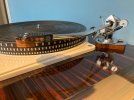
I chose to pair it with an SME3009 series II which was salvaged from a Thorens TD125. I was planning to combine it with a Shure V15 but had a Grado Reference Master laying around so installed this first. I’ve had this cartridge for 10 years and tried it in several set-ups but it never sounded any good. It lacked bass and the treble was too much in your face, if this makes any sence. I expected even worse in this very light tonearm but I’m very very surprised how good it sounds! The sound is very detailed and rhytmic. It is hard to describe but it is really engaging and addictive!

However the reason I’m posting is because I have some questions.
  1. I lost the circlip that keeps the spindle in the bearing. Is this a problem besides being annoying when removing the platter?
  2. I’ve replaced only the upper bushes of the idler mechanism. The lower bushes have play on them as well but I’d rather not disassemble the table too much… of should I replace both at the same time?
  3. The motor before cleaning and oiling kept on spinning for 25 seconds after powering off (but noisy!). After cleaning and oiling the motor is silent but stops spinning after 14 seconds… is this acceptable? Should I try to re-allign? I tried to loosen the bolts on the underside of the motor but without resultIMG_0937.jpeg
 

Attachments

  • IMG_0956.jpeg
    IMG_0956.jpeg
    194.3 KB · Views: 26
  • IMG_0976.jpeg
    IMG_0976.jpeg
    176.3 KB · Views: 25
Last edited:
Hi all,

I finally got around in finishing my 301 (oil bearing) properly and wanted to share this with you because frankly I’m very proud how it turned out :-)

I got this turntable from an estate and don’t know much about it’s history except that is was build around ‘63.

She was (and is) in very good condition. However the motor was a bit noisy and the orginal plinth nor the arm/cartridge did her justice.

I’ve build a new plinth myself from layers of baltic ply, finished with veneer and a french lacquer. The lacquer was very labour intensive but for an amateur it turned out fine. The plinth weighs 12kgs.

I opened the motor to clean and lube the lower bearing, cleaned and lubed the spindle bearing (no wear on any bushes). There was some play on the idler so I’ve replaced the upper bushes. The original speed knob was missing which was replaced but should be painted black still. All parts came from CTC

I chose to pair it with an SME3009 series II which was salvaged from a Thorens TD125. I was planning to combine it with a Shure V15 but had a Grado Reference Master laying around so installed this first. I’ve had this cartridge for 10 years and tried it in several set-ups but it never sounded any good. It lacked bass and the treble was too much in your face, if this makes any sence. I expected even worse in this very light tonearm but I’m very very surprised how good it sounds! The sound is very detailed and rhytmic. It is hard to describe but it is really engaging and addictive!

However the reason I’m posting is because I have some questions.
  1. I lost the circlip that keeps the spindle in the bearing. Is this a problem besides being annoying when removing the platter?
  2. I’ve replaced only the upper bushes of the idler mechanism. The lower bushes have play on them as well but I’d rather not disassemble the table too much… of should I replace both at the same time?
  3. The motor before cleaning and oiling kept on spinning for 25 seconds after powering off (but noisy!). After cleaning and oiling the motor is silent but stops spinning after 14 seconds… is this acceptable? Should I try to re-allign? I tried to loosen the bolts on the underside of the motor but without resultView attachment 3703627
Beautiful table, nice work :thumbsup:

Contact Classic Turntable Company and get a new clip
Ditto for idler bushings at some point
Don’t worry about how long the motor spins if it’s quite and doesn’t vibrate

VR

Andy
 
Hi all,

I finally got around in finishing my 301 (oil bearing) properly and wanted to share this with you because frankly I’m very proud how it turned out :-)

I got this turntable from an estate and don’t know much about it’s history except that is was build around ‘63.

She was (and is) in very good condition. However the motor was a bit noisy and the orginal plinth nor the arm/cartridge did her justice.

I’ve build a new plinth myself from layers of baltic ply, finished with veneer and a french lacquer. The lacquer was very labour intensive but for an amateur it turned out fine. The plinth weighs 12kgs.

I opened the motor to clean and lube the lower bearing, cleaned and lubed the spindle bearing (no wear on any bushes). There was some play on the idler so I’ve replaced the upper bushes. The original speed knob was missing which was replaced but should be painted black still. All parts came from CTC

I chose to pair it with an SME3009 series II which was salvaged from a Thorens TD125. I was planning to combine it with a Shure V15 but had a Grado Reference Master laying around so installed this first. I’ve had this cartridge for 10 years and tried it in several set-ups but it never sounded any good. It lacked bass and the treble was too much in your face, if this makes any sence. I expected even worse in this very light tonearm but I’m very very surprised how good it sounds! The sound is very detailed and rhytmic. It is hard to describe but it is really engaging and addictive!

However the reason I’m posting is because I have some questions.
  1. I lost the circlip that keeps the spindle in the bearing. Is this a problem besides being annoying when removing the platter?
  2. I’ve replaced only the upper bushes of the idler mechanism. The lower bushes have play on them as well but I’d rather not disassemble the table too much… of should I replace both at the same time?
  3. The motor before cleaning and oiling kept on spinning for 25 seconds after powering off (but noisy!). After cleaning and oiling the motor is silent but stops spinning after 14 seconds… is this acceptable? Should I try to re-allign? I tried to loosen the bolts on the underside of the motor but without resultView attachment 3703627
Just wanted to say great job on the restoration. The plinth looks fantastic
 
When you turn it off it should stop fairly quickly due to the felt brake pad
I meant the spintime without the platter on, sorry for not clarifying. With the platter on it stops quickly as it should.

I do have the replacement lower bushings for the idler so no need to order it. To replace it I however need to drill out 2 small rivets and I’m not too comfortable doing this. Anybody with experience on this?

So I just miss the circlip for the spindle and if it is not necessary I’d prefer not have it shipped with import duties etc etc.

Thank you for the responses on the plinth. I’m really proud how it turned out, especially with the veneer wrapping around! The only regret I have is not countersinking the table - maybe next time … :-)
 

Attachments

  • IMG_0926.jpeg
    IMG_0926.jpeg
    148 KB · Views: 24
I meant the spintime without the platter on, sorry for not clarifying. With the platter on it stops quickly as it should.

I do have the replacement lower bushings for the idler so no need to order it. To replace it I however need to drill out 2 small rivets and I’m not too comfortable doing this. Anybody with experience on this?

So I just miss the circlip for the spindle and if it is not necessary I’d prefer not have it shipped with import duties etc etc.

Thank you for the responses on the plinth. I’m really proud how it turned out, especially with the veneer wrapping around! The only regret I have is not countersinking the table - maybe next time … :-)
I would ask myself the question why the designer thought a circlip was needed.??
 
Last edited:
Yeah, I’ll say again, replace the clip…

Multiple posts on doing the rivets it’s not difficult, just replace with machine screws/nuts.

Understood you were talking about just the motor spin down time, that’s just not a critical aspect, vibration/nose is the main concern…..

VR
Andy
 
The motor will stop spinning reasonably quickly when switched off, due to the presence of the magnetic brake that varies the turntable speed.
 
The motor will stop spinning reasonably quickly when switched off, due to the presence of the magnetic brake that varies the turntable speed.
He’s talking about the motor alone, in other words, no platter— not sure if he had the eddy brake on or off…..
 
He’s talking about the motor alone, in other words, no platter— not sure if he had the eddy brake on or off…..
I know. The eddy current brake is on the motor and, assuming the speed is set correctly then the brake will need to be partially engaged for this.
This will impact the slowing down of the motor, regardless of whether the platter is on or off.
 
I know. The eddy current brake is on the motor and, assuming the speed is set correctly then the brake will need to be partially engaged for this.
This will impact the slowing down of the motor, regardless of whether the platter is on or off.
Yeah agreed about the eddy brake, but the motor would never have continued spinning for 25 seconds with the eddy brake on, so I’m assuming he was just testing the motor alone…or he has a very weak eddy brake ;)
 
I understand how the eddy brake works, it was off when timing every time. But I understand this is not too important, the motor runs freely and vibration is kept to a minimum.

I'll order the circlip and contemplate on replacing the lower bushes of the idler mechanism but in the meantime I'll just enjoy her!
 
I last posted in this thread back in 2019 shortly after I had this 301 worked on by Jim Campbell.

Well, it took me a little while to save the money to send the SME 3009 Series 1 to SME tone arms in Canada. But even after that, the stuff just sat in Box for almost 7 years.

Finally got my woodworking buddy to build me a stacked Baltic Birch plinth. I am still trying to dial in the Tone Arm/ Cartridge. But I am finally getting to enjoy it. I couldn't get
the cart aligned with the SME headshell, so I went out to a local store and bought this one. It is a lot better but I'm not convinced it is as good as it can be.

I'm using a Denon 103R Going through a Hafler DH-101 with the DH-102 MC headamp I also tried a homebuilt Step-UP transformer using Transformers from a Shure Mic preamp But the 102 sounds better
image0.jpegimage1.jpeg
 
I last posted in this thread back in 2019 shortly after I had this 301 worked on by Jim Campbell.

Well, it took me a little while to save the money to send the SME 3009 Series 1 to SME tone arms in Canada. But even after that, the stuff just sat in Box for almost 7 years.

Finally got my woodworking buddy to build me a stacked Baltic Birch plinth. I am still trying to dial in the Tone Arm/ Cartridge. But I am finally getting to enjoy it. I couldn't get
the cart aligned with the SME headshell, so I went out to a local store and bought this one. It is a lot better but I'm not convinced it is as good as it can be.

I'm using a Denon 103R Going through a Hafler DH-101 with the DH-102 MC headamp I also tried a homebuilt Step-UP transformer using Transformers from a Shure Mic preamp But the 102 sounds better
View attachment 3744872View attachment 3744873
Beautiful. Congrats. Hopefully you’ll get it perfectly dialed in soon. Godspeed!
 
I’m in the market for a refurbished 301: Talking to a few people who refurbish them and looking at a few refurbished units up for sale. It’s getting daunting.

I don’t plan on rethinking it after the purchase—Except maybe improving the cartridge. There are several options at several price points. I also want a plug-and-play unit. The days of tinkering are behind me.

My first big questions: Oil or grease? Which tonearm? SME 3009 or 3012 or something else entirely? Does length matter? Does it need to be 12”; or is 9” okay? (I’m settling on only one stereo arm.) Strobe or no strobe?

I’m not investing a fortune. But I want to trust that the combination of table, arm, and plinth is very good. I don’t want to purchase one combo and discover in six months that I didn’t think this through and that I have to start over. This is my last TT.

Any sage advice from 301 owners is very much appreciated.

Thanks—in advance.
 
Last edited:
I recently added a 1960 301. I have had a few tonearms on it.
As far as the grease/oil thing goes, I wouldn't sweat it. The grease tables are earlier and sell for more money. Since this is an end game table for you, collectibility isn't important. Personally, I'd rather deal with oiling rather than greasing. It's easier and obviously Garrard though it was an improvement.

A 12"arm has some technical advantages that you won't hear. A 9" - 9.5" arm is fine. Build a plinth large enough to accommodate a 12" arm (get some extra arm boards) so you can try a 12" if you want later down the road.
I tried one of those inexpensive 12" arms from Latvia (eBay) and it worked/sounded fine but it was definitely fiddly. It's not a good match for heavier cartridges (without fiddling!).
Then I tried the Sorane SA 1.2 (a bit over 9") and it was also fine but since I had an SA 1.2 on two other tables I wanted something different.
I found a 9.6" Schick and that's my favorite. Unless you find one used, you (being in the states) may have to wait 6 months to get one.
I had an SME 3009 seies II unimproved with my Thorens TD 124. Even after resto by the Canadian SME experts, I still thought it was too fiddly and delicate. And the cueing isn't that great.

I think a 60 cycle platter will be really hard to find. I have read (for what that's worth) that most of the platters with the strobe marks are for 50 cycles.

There is an excellent article/review of a classic restored 301 by Paul Seydor of The Absolute Sound but I just can't find the link to it now.Maybe you'll have better luck. It covers most of your questions.
Good luck, they are really nice turntables.
 
I’m in the market for a refurbished 301: Talking to a few people who refurbish them and looking at a few refurbished units up for sale. It’s getting daunting.

I don’t plan on rethinking it after the purchase—Except maybe improving the cartridge. There are several options at several price points. I also want a plug-and-play unit. The days of tinkering are behind me.

My first big questions: Oil or grease?Which tonearm? SME 3009 or 3012 or something else entirely? Does length matter? Does it need to be 12”; or is 9” okay? (I’m settling on only one stereo arm.) Strobe or no strobe?

I’m not investing a fortune. But I want to trust that the combination of table, arm, and plinth is very good. I don’t want to purchase one combo and discover in six months that I didn’t think this through and that I have to start over. This is my last TT.

Any sage advice from 301 owners is very much appreciated.

Thanks—in advance.
I've been thinking of getting a 301/401. I've never had one - but I've restored two Thorens 124's.

My understanding about these decks is that the desire is to make them as smooth running as possible. If you think about the contact/friction points you're going to want them to be clean and straight and smooth so that the turntables have the best chance of achieving speed stability and rumble suppression.

With modern oils and idler wheels this is easily achievable.

I understand there are degrees of this, but at the same time a lot of the allure of these mechanical decks is the repairability/restorability for a mechanically minded person.

I like the strobe because the motor will drift a little bit with the mains but it isn't really essential if you check the speed regularly with a phone app to get a feel for what time of day the electrical is drifting a bit. In my house on the 124 it ends up being something like .01 drift so it's not audible but it sure is nice to glance at the strobe and make the necessary adjustment.

If you don't want to do it yourself then I would recommend the following (For budget/sound/overall quality)

An Oil bearing 301
a Victor UA-7045 Tonearm (Rebuild it or have someone rebuild it - very easy to fix the droopy counterweight issue if present) this is a 9/10" arm. The 12" arms are cool but the plinths always have to be goofy large to accomodate them. You can find these for ~$300-400 and they're amazing.
A plinth from Acoustand (UK - but they ship to the US) or Made In Bobland. Make sure to purchase one that can have different arm boards so you can change your mind on the arm or want to try another.
A rebuild from Jim Campbell (US Based) He's a great guy with reasonable pricing.

Then you can look at things like aftermarket platters the bracing etc etc - bolt on "mods" that aren't essential to the running but can improve the deck overall.

For doing it yourself: (Of course there's more nuance but this is an outline)
Rebuild the motor with a kit from Audio Silente
Get a new Idler wheel from Audio Silente
Clean and replace all moving/running parts
Have a plinth made
 
Back
Top Bottom