• The move to the new server is done. There are some software and database maintenance updates in process. This has us passing the hat around to help out. We appreciate any donations. Seriously, even a dollar helps. The payment page may be found here - https://www.audiokarma.org/support.html

GRADO Vs Audio Technica

If I knew how to do an online database, I would, but I don't.:dunno: It's in an MS Access file at the moment.

One option would be to copy the data in an excel file. As long as it has headers, it should be pretty clear to us. I'm curious if there's a correlation between tip mass (hence stylus material) and tracking ability. And if that has more impact than the actual type of 'cut' of the diamond.
 
Agree, serious arm/cart issues regarding ponderous bass. rolled off treble can be as well, but I'm betting that is based on "base reference source" mostly. The highest pitch instruments aren't always front center stage, nor should they move there just because their volume suddenly increased. The cymbals should be with the drum kit. Betting Roy Buchanon wasn't walking towards the mike as he ran up the neck and then up over the pick-ups, and than walked backwards as he ran down the scale to bottom E.

I'm a Grado fan. A little of subject, back in the late 60's to mid 70's I went to quits a few concerts. Roy Buchanan totally blew me away, and I'm a trumpet player. I have a Grado Gold1 with a Gold1 stylus. I also have a Grado cartridges that the body is silver and the front is black with a G on it. Top says GRADO. I got it with no stylus so I stuck a new Blue1 stylus on it. I thought the G stood for Grado but is it actually a model designation?
 
I'm a Grado fan. A little of subject, back in the late 60's to mid 70's I went to quits a few concerts. Roy Buchanan totally blew me away, and I'm a trumpet player. I have a Grado Gold1 with a Gold1 stylus. I also have a Grado cartridges that the body is silver and the front is black with a G on it. Top says GRADO. I got it with no stylus so I stuck a new Blue1 stylus on it. I thought the G stood for Grado but is it actually a model designation?
depending on the date of manufacture. There was a G model, which was above (a touch) the GF-1, and below (a touch) of the G1+ and G2+. If the manu date is from the 90s or later it is a prestige body of Black through Red. The original G body would be 700 ohms and be the longer body with two mounting ears, the prestige body is shorter (starting with the M series) and the mounting is a little triangular. X, Z, Prestige should measure 470 ohm range.
 
I'm a Grado fan. A little of subject, back in the late 60's to mid 70's I went to quits a few concerts. Roy Buchanan totally blew me away, and I'm a trumpet player. I have a Grado Gold1 with a Gold1 stylus. I also have a Grado cartridges that the body is silver and the front is black with a G on it. Top says GRADO. I got it with no stylus so I stuck a new Blue1 stylus on it. I thought the G stood for Grado but is it actually a model designation?
I'm a guitar player. Grados give the most accurate guitar sound (to my ears of course). :-)
 
About 7 months ago MarcMorin set me up with a Grado X1+ body, and I bought a MCZ stylus for it. This is my first Grado cart. As Beatcomber said "they can be fussy". This personality nearly had me putting my Shure M91 back on the Traveler.

A few things that have helped.

I have found that proper VTA is essential if you want the proper balance of High and Low frequencies. The MCZ opened up and really started singing when I nearly eliminated the anti-skate.(hard to determine on a VPI) Probably not recommended but really helped my SQ, was to raise the VTF to 1.8g and the sound is more "solid" IME. My early problems with sibilance have nearly vanished as well with these adjustments.

To stay on topic, I used a AT440mla for about 14 months. Mine was setup with proper capacitance and was not harsh or thin, but lacked the Grado's lush midrange, which along with the speed of my Magnepan speakers, creates many sonic images that just jump out at you. Both track like a bloodhound when set up right. .

And as always, YMMV
________________
Dan
 
Last edited:
About 7 months ago MarcMorin set me up with a Grado X1+ body, and I bought a MCZ stylus for it. This is my first Grado cart. As Beatcomber said "they can be fussy". This personality nearly had me putting my Shure M91 back on the Traveler.

A few things that have helped.

I have found that proper VTA is essential if you want the proper balance of High and Low frequencies. The MCZ opened up and really started singing when I nearly eliminated the anti-skate.(hard to determine on a VPI) Probably not recommended but really helped my SQ, was to raise the VTF to 1.8g and the sound is more "solid" IME. My early problems with sibilance have nearly vanished as well with these adjustments.

To stay on topic, I used a AT440mla for about 14 months. Mine was setup with proper capacitance and was not harsh or thin, but lacked the Grado's lush midrange, which along with the speed of my Magnepan speakers, creates many sonic images that just jump out at you. Both track like a bloodhound when set up right. .

And as always, YMMV
________________
Dan
The easy way to check bias (antiskate) is to set the tracking force as low as you can to where the stylus just wants to set down. put a smooth sheet of plastic on the platter and set the stylus down in the run-out groove distance and watch how fast the arm wants to swing to the outside. Compare that speed with a zero floated arm and antiskate set.......should give you a "relative" number. Not that the numbers on an antiskate dial really mean anything. But it will give you an idea of how much outward force is set on the arm.
 
No arm mismatch at all, unless the Technics arm, an Akito, an RB300 and an SME are all mismatches :). Rolled off treble gives you a lusher sound as, obviously, midrange is therefore pushed forward. As to the bass, one person's laid back is another person's ponderous.

I don't dislike Grados, in fact for folky, Buchanany type stuff they're fine, but for hard driving rock and for full on classical they lose because of their balance. Exciting, bright and lean are usually products of flat frequency response or slightly lifted treble, much as in the current Ortofon 2m series. I agree some ATs can verge towards the bright, but the AT95 and the 440, which I've just put on my new toy, seem pretty neutral in my Harbeth system.

Anyway, digression over.

At one time I thought my Grado Green -- mounted in a Technics arm and with a Van Alstine Longhorn bar -- sounded a bit laid-back on classical music. Then I did a three-way comparison using the Reiner/Chicago Scheherazade (RCA LSC-2446, from a mint 1970s 21S/18S pressing) as test music. I compared the Technics/Grado combination to the Living Stereo CD reissue to my AR XA-91 with an Ortofon OM-20. The Ortofon was extended and detailed in the treble, but noticeably too lean in the bass. The Grado matched the CD quite closely for tonal balance, gave up a bit of detail to the silver disc, and outpointed the CD on sweetness. Long story made short, the Grado kicked the OM-20 to the curb on classical music in my system, and it got even better when I replaced the bonded elliptical Green stylus with an 8MZ.

I love the sound I'm getting from my Gold cart, UNTIL the final 2-3 minutes of an album side. Then I get sad :( ...

Replace that bonded elliptical Gold stylus with an 8MZ. That will put the smile back on your face.
 
Hi,

If you had called this thread AT versus Grado your replies would have been different. Still
given the original question, IMO a $25 AT92ECD is a far better option than a $50 grado stylus.

YMMV but is my book a Grado Green gets nowhere near an OM20 in performance.

Me I like most AT's generally. I think Grado charge way too much for different model bodies
that are barely different, (the stylus should never be half the cost of a cartridge), but at
least they do offer the 8MZ stylus as an upgrade path for the enthusiasts.

Still here the AT92ECD can be upgraded with this :
http://www.lpgear.com/product/ATN3472VL.html

rgds, sreten.
 
At one time I thought my Grado Green -- mounted in a Technics arm and with a Van Alstine Longhorn bar -- sounded a bit laid-back on classical music. Then I did a three-way comparison using the Reiner/Chicago Scheherazade (RCA LSC-2446, from a mint 1970s 21S/18S pressing) as test music. I compared the Technics/Grado combination to the Living Stereo CD reissue to my AR XA-91 with an Ortofon OM-20. The Ortofon was extended and detailed in the treble, but noticeably too lean in the bass. The Grado matched the CD quite closely for tonal balance, gave up a bit of detail to the silver disc, and outpointed the CD on sweetness. Long story made short, the Grado kicked the OM-20 to the curb on classical music in my system, and it got even better when I replaced the bonded elliptical Green stylus with an 8MZ.


Replace that bonded elliptical Gold stylus with an 8MZ. That will put the smile back on your face.
Are you sure the masters were the same? It rarely is for digital vs vinyl, which tends (unhelpfully) to invalidate most tests.
 
One option would be to copy the data in an excel file. As long as it has headers, it should be pretty clear to us. I'm curious if there's a correlation between tip mass (hence stylus material) and tracking ability. And if that has more impact than the actual type of 'cut' of the diamond.

There is a correlation between eff tip mass and TA. There is also a correlation between a needle cut, more similar to how the groove is cut, and to TA.
But TA is normally stated at 315Hz only, so the whole matter is much more complex.
 
... YMMV but is my book a Grado Green gets nowhere near an OM20 in performance.

That's what I expected given the difference in retail price, so I was very surprised when my ears led me to the opposite conclusion. The OM20 is more detailed than the stock Green, but I now have trouble listening past its deficiencies in octave balance to hear the things that it does well.

Me I like most AT's generally. I think Grado charge way too much for different model bodies
that are barely different, (the stylus should never be half the cost of a cartridge), but at
least they do offer the 8MZ stylus as an upgrade path for the enthusiasts.

Still here the AT92ECD can be upgraded with this :
http://www.lpgear.com/product/ATN3472VL.html

rgds, sreten.

I've never been a huge AT fan. Most of the ones I've heard, going all the way back to the Shibata-equipped models of the late 1970s, just seemed too bright and "hi-fi" to me -- not enough like the real acoustic instruments I hear when I play a band or orchestra rehearsal. IMO the Grado Prestige line nails the octave balance at the expense of some detail, and fitting one of them with an 8MZ stylus neatly addresses the detail issue. I can't understand why Grado uses a bushing-mounted elliptical stylus in the Silver and Gold cartridges when most competitors at that price point use a nude mount and/or a more advanced tip shape.

Are you sure the masters were the same? It rarely is for digital vs vinyl, which tends (unhelpfully) to invalidate most tests.

BMG claimed that they went back to the original Golden Age master tapes for the Living Stereo CD reissue series. On the ones that I've compared to vinyl, the resemblance is extremely close.
 
That's what I expected given the difference in retail price, so I was very surprised when my ears led me to the opposite conclusion. The OM20
is more detailed than the stock Green, but I now have trouble listening past its deficiencies in octave balance to hear the things that it does well.

I've never been a huge AT fan. Most of the ones I've heard, going all the way back to the Shibata-equipped models of the late 1970s, just seemed
too bright and "hi-fi" to me -- not enough like the real acoustic instruments I hear when I play a band or orchestra rehearsal. IMO the Grado Prestige
line nails the octave balance at the expense of some detail, and fitting one of them with an 8MZ stylus neatly addresses the detail issue.
I can't understand why Grado uses a bushing-mounted elliptical stylus in the Silver and Gold cartridges
when most competitors at that price point use a nude mount and/or a more advanced tip shape.

BMG claimed that they went back to the original Golden Age master tapes for the Living Stereo CD reissue series.
On the ones that I've compared to vinyl, the resemblance is extremely close.

Hi,

As they say YMMV. IME the Prestige series simply don't cut the mustard. I built a turntable for a friend
and fitted a Grado Black expecting great things, only to be disappointed with the sound. Not bad, in
fact very nice, with great bass and and a warm midrange, but no real treble detail or extension.
In the end I fitted an Ortofon 510, which was simply more precise and well balanced to me.
Overall a far better cartridge, though the Black could exceedingly suit a different system.

For sure a system that suits Grado's won't like AT's and the other way round.
The question is which is right ? I'd say if it doesn't like Ortofons then it is the
system that isn't quite right, and it won't sound that great on good CD's.

rgds, sreten.
 
... For sure a system that suits Grado's won't like AT's and the other way round.
The question is which is right ? I'd say if it doesn't like Ortofons then it is the
system that isn't quite right, and it won't sound that great on good CD's.

rgds, sreten.

When I set my main system up, I was listening to CDs much more than LPs. My CD hardware used multi-bit DAC chips and didn't have a soft top end. I started with a modified Magnavox CDB-650 (TDA 1541 DAC, 4x oversampling filter) and later used the '650 as a transport with a Parasound D/AC-1100HD D/A converter (2 PCM-63K chips per channel in push-pull, 8x oversampling filter). With both digital front ends, the system's octave balance sounded right to me on well-recorded classical CDs -- neither too soft nor too aggressive on top. In that same system, the Ortofon OM-20 sounded thin. I initially thought it was tipped-up in the treble, but eventually realized that the midrange and treble were in proper proportion to each other and the bass was lacking. The system was right and the Ortofon cartridge was wrong. The Grado Green isn't the ultimate phono cartridge, even with the 8MZ stylus, but it does enough things right that I find myself listening to vinyl much more than I used to.
 
depending on the date of manufacture. There was a G model, which was above (a touch) the GF-1, and below (a touch) of the G1+ and G2+. If the manu date is from the 90s or later it is a prestige body of Black through Red. The original G body would be 700 ohms and be the longer body with two mounting ears, the prestige body is shorter (starting with the M series) and the mounting is a little triangular. X, Z, Prestige should measure 470 ohm range.

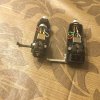
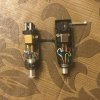
Hey Marc. Both Grados are built exactly the same other than markings. I know the Gold1 is in fact a Gold1 as I bought it new from a dealer a few years ago. The other body I got used with no stylus so I bought a Blue1 stylus for it. Gold1 measures 460 Ohms, the other body measures 435 Ohms. I've attached photos for identification purposes.

image.jpeg image.jpeg
 
Hi,

As they say YMMV. IME the Prestige series simply don't cut the mustard. I built a turntable for a friend
and fitted a Grado Black expecting great things, only to be disappointed with the sound. Not bad, in
fact very nice, with great bass and and a warm midrange, but no real treble detail or extension.
In the end I fitted an Ortofon 510, which was simply more precise and well balanced to me.
Overall a far better cartridge, though the Black could exceedingly suit a different system.

You're basing the overall quality of the Prestige Series on the very lowest model in the product range? The stylus alone for the Ortofon 510 costs about the same as an entire Grado Black.
 
Hey Marc. Both Grados are built exactly the same other than markings. I know the Gold1 is in fact a Gold1 as I bought it new from a dealer a few years ago. The other body I got used with no stylus so I bought a Blue1 stylus for it. Gold1 measures 460 Ohms, the other body measures 435 Ohms. I've attached photos for identification purposes.

View attachment 787450 View attachment 787451

The "G" body pictured is a prestige body. it could be anything from a Black to Red body. the Silver and Gold bodies have the gold coil cover. Models preceding the Prestige series had the model type printed in the front plate.
 
As an engineer, I don't agree that it always means that.

In fact, my experience, as someone with a database of approximately 250 tonearm/cartridge resonance combinations, is that Grado cartridges invariably have the largest resonance of any cartridge brand, which is why I'm not surprised they have problems with mistracking. Of the four Grado cartridges I've got resonance peak measurements for, all of them are above the average resonance, and three are by far the worst (17dB, 17dB and 21dB. That's terrible, and all three were more than twice as bad as the average. That's why they track terribly on un-damped tonearms on less-than-perfect records. Now, as you know, an average has to be made up of high and low samples, but the Grado cartridges stand out in my database as the only brand which is consistently bad, and worse than average (the ideal resonance is zero, for the best tracking).

One of those measured was a current-model Grado measured within the last year, while the others were measured in the 1980's, but they seem to still have the same problem of a very undamped cantilever. Perhaps it may produce exciting sound to some ears, but it also causes problems with tracking and.less-than-perfect fidelity, as the cantilever isn't being controlled properly by what's on the record.:crazy:

I've had three Grados over the years and have yet to experience mistracking. The first was the original Signature 8 with a Souther, next was a Promethean Super Green on an MDC 800 and now a Sonata riding a Dual 1219. An un-damped TA in each case. I've also had MMs and MCs and prefer MM to MI or MC.
 
You're basing the overall quality of the Prestige Series on the very lowest model in the product range?
The stylus alone for the Ortofon 510 costs about the same as an entire Grado Black.

Hi, At the time I think the Black (in the UK) was more expensive than the 510, times have changed, rgds, sreten.

I can quite categorically state a Grado Green (a selected Black allegedly) is nowhere
near as good as an OM20 (520) full stop. It just isn't. It is not as good. Not even close.
(I'm joining the dots of my experiences .... not a direct comparison.)

My advice to the OP's original question completely stands as far as I'm concerned.
 
Hi, At the time I think the Black (in the UK) was more expensive than the 510, times have changed, rgds, sreten.

I can quite categorically state a Grado Green (a selected Black allegedly) is nowhere
near as good as an OM20 (520) full stop. It just isn't. It is not as good. Not even close.
(I'm joining the dots of my experiences .... not a direct comparison.)

My advice to the OP's original question completely stands as far as I'm concerned.

Again, a Black and Green are at the very bottom of the product line, and can't be regarded as representative.
 
Back
Top Bottom