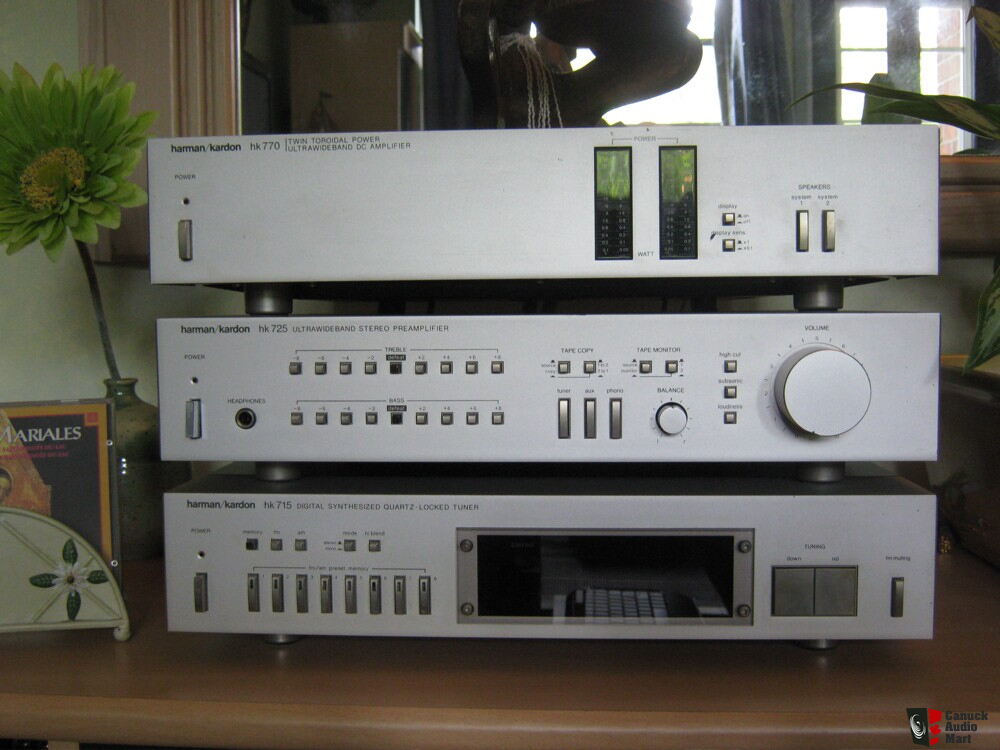
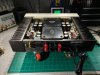
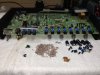
Ever since restoring and listening to the Harman Kardon hk770, I have been an extremely avid proponent of them. I can't recommend them enough to people looking for a relatively cheap power amplifier that can drive efficient tower speakers, bookshelf speakers, and even headphones with ease.
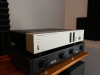
The HK770 was one of Harman Kardon's highest end consumer models in the early to mid 80's. Being designed by Matti Otala, it's design was based around his findings on T.I.M. and I.I.M. distortion.
More info can be found here:
http://www.thevintageknob.org/harman_kardon-hk770.html
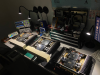
I have restored a few of these amplifiers so far, and have somehow managed to convince enough friends to buy them that I currently have 3 more on my workbench for a full restoration.
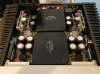
These amplifiers are DC coupled, ultra high bandwidth, use minimal NFB, are fully discrete from end to end, dual mono, have high slew rate (150v/μs!), minimal THD/TIM/IIM, protection circuit out of the signal path... Not to mention a breeze to work on, and they fly very low under the radar, often selling for less than $200!
Here is a 100hz square wave with the amplifier loaded down into 8 ohms:
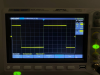
Pretty impressive if you ask me.
If you are looking for a bill of materials for restoration, I have one here which includes new output relays, electrolytic caps, as well as the film caps for the input coupling modification:

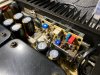
One of the main issues with the HK770 (as well as most other amplifiers from Harman Kardon of this era) is bad soldering. This is one of many broken solder joints on the (very hot) driver boards of the amplifiers:
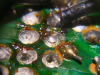
This is easily remedied by reflowing all of the joints on the driver boards.
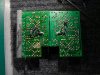
Here is a before and after view of the reflow:
As for the sound, the HK770's are extremely dynamic (even given their conservative 60WPC power rating)
They lay out a very precise and believable stage with great imaging, crystal clear and non-fatiguing highs, liquidy midrange and very fast and authoritative bass. They aren't the last word in absolute resolution, but they are much more than enough for most people looking for a sub $500 amplifier all-in.
I have also personally used HK770's to power high end headphones very successfully, as the noise floor is almost non-existent. They especially work well with power hungry planar headphones. Even electrostatic headphones with a transformer based energizer sound exceptional on the HK770.

The hk770 is an extremely versatile amplifier. It has no issues running down into 4 ohms, and have had multiple speakers which dip closer to 2 ohms that run perfectly as well. The hk770 is a class AB amplifier which has an idle current of around 24mV. This means that the amplifier while being able to run in class A for the first few watts, actually runs cool until pushed. I’ve noticed the hk770 is very revealing of the signal chain and is very dependent on which preamplifier you have hooked to it. If you’re using the power amplifier with a passive preamp or plugged directly into your source (DAC, CD player, etc…), you will not get as good of a performance as you will with a preamplifier that has an active buffer and gain stage.
Here is a quick demo of a 700 series set I restored recently:
Alright, rant over. Hopefully I have convinced at least one person to give an HK770 a shot if they're in the market for a very cheap and very competent "High end" amplifier
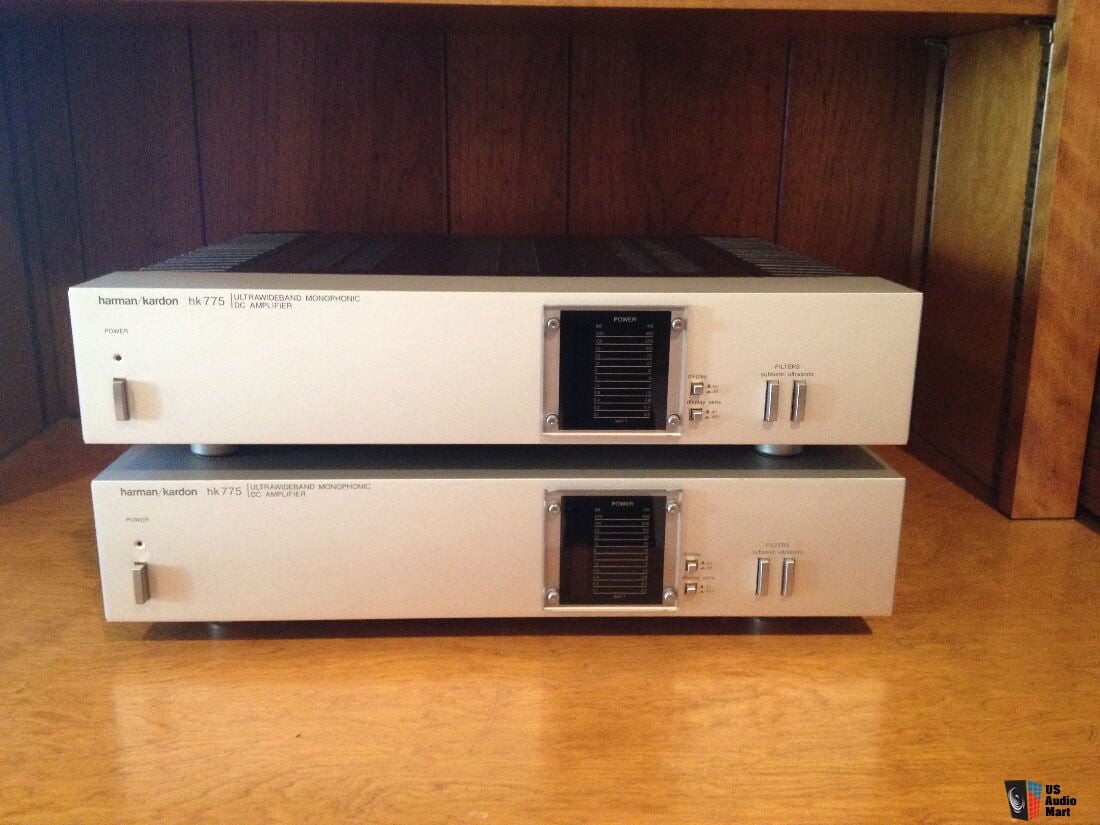
Anyone else have experience with the HK770's (or 775's)?
I have since started offering my restoration services for the hk770 (and any other amplifier for that matter) for people looking to have theirs restored the right way. Shoot me a PM if you’d like me to take a look at yours.
The HK770 was one of Harman Kardon's highest end consumer models in the early to mid 80's. Being designed by Matti Otala, it's design was based around his findings on T.I.M. and I.I.M. distortion.
More info can be found here:
http://www.thevintageknob.org/harman_kardon-hk770.html
I have restored a few of these amplifiers so far, and have somehow managed to convince enough friends to buy them that I currently have 3 more on my workbench for a full restoration.
These amplifiers are DC coupled, ultra high bandwidth, use minimal NFB, are fully discrete from end to end, dual mono, have high slew rate (150v/μs!), minimal THD/TIM/IIM, protection circuit out of the signal path... Not to mention a breeze to work on, and they fly very low under the radar, often selling for less than $200!
Here is a 100hz square wave with the amplifier loaded down into 8 ohms:
Pretty impressive if you ask me.
If you are looking for a bill of materials for restoration, I have one here which includes new output relays, electrolytic caps, as well as the film caps for the input coupling modification:
One of the main issues with the HK770 (as well as most other amplifiers from Harman Kardon of this era) is bad soldering. This is one of many broken solder joints on the (very hot) driver boards of the amplifiers:
This is easily remedied by reflowing all of the joints on the driver boards.
Here is a before and after view of the reflow:
As for the sound, the HK770's are extremely dynamic (even given their conservative 60WPC power rating)
They lay out a very precise and believable stage with great imaging, crystal clear and non-fatiguing highs, liquidy midrange and very fast and authoritative bass. They aren't the last word in absolute resolution, but they are much more than enough for most people looking for a sub $500 amplifier all-in.
I have also personally used HK770's to power high end headphones very successfully, as the noise floor is almost non-existent. They especially work well with power hungry planar headphones. Even electrostatic headphones with a transformer based energizer sound exceptional on the HK770.
The hk770 is an extremely versatile amplifier. It has no issues running down into 4 ohms, and have had multiple speakers which dip closer to 2 ohms that run perfectly as well. The hk770 is a class AB amplifier which has an idle current of around 24mV. This means that the amplifier while being able to run in class A for the first few watts, actually runs cool until pushed. I’ve noticed the hk770 is very revealing of the signal chain and is very dependent on which preamplifier you have hooked to it. If you’re using the power amplifier with a passive preamp or plugged directly into your source (DAC, CD player, etc…), you will not get as good of a performance as you will with a preamplifier that has an active buffer and gain stage.
Here is a quick demo of a 700 series set I restored recently:
Alright, rant over. Hopefully I have convinced at least one person to give an HK770 a shot if they're in the market for a very cheap and very competent "High end" amplifier
Anyone else have experience with the HK770's (or 775's)?
I have since started offering my restoration services for the hk770 (and any other amplifier for that matter) for people looking to have theirs restored the right way. Shoot me a PM if you’d like me to take a look at yours.
Last edited:

 DSC_9173