

You are using an out of date browser. It may not display this or other websites correctly.
You should upgrade or use an alternative browser.
You should upgrade or use an alternative browser.
Harman Kardon PM640, what is this burnt thing?
- Thread starter Sir.Byrd
- Start date

ecluser
Super Member
I don't think H/K has faults with these burning... Did I mention it still works and sounds good?
Well, I don't want to be a "trouble maker" in this thread. I have a few HK's of this period (680i, 380i, PM640 among others) and I appreciate them.
I have nothing against the HK philosophy to built amplifier stage with no current limiter circuits, as long as the minimalist protection components (fuses and/or circuit breakers) trig off before the power amplifier stages blow out in your face... and in some circumstances blow out the speakers also...
There is numerous threads on AK about blown output stages in HK amplifiers and receivers. They just didn't had the "second chance" you have with your unit.
In some threads, I suspected that the drivers were the major failure cause in them. In many amp stages, the power transistors fail in first, and after they failed the drivers may fail also. This "domino like" destruction is so fast that it is not easy to prove wich stage failed in first. Circuit analysis and transistor's data sheets are your best indications for this.
In the HK, the drivers are the weakest point in the chain. They get so hot that HK chosed to mount the Vbe multiplier transistor on the driver's heat sink instead of the power transistor's heat sink, like it is in many amps. There is a very small power dissipated by the Vbe transistor, and this one was cooked by the power generated by the overheated drivers.
I said this thread is interresting because your pictures show that the drivers were very hot, enough to burn the pc board...
I thank you very much for your nice pictures, especially the first one.
Do you think it is a normal operating condition for a transistor?
Do you want to rebuilt your amp as strong/weak as the original, or do you want to improve the reliability of your amp?

Sir.Byrd
Lunatic Member
I thank you very much for your nice pictures, especially the first one.
Do you think it is a normal operating condition for a transistor?
Do you want to rebuilt your amp as strong/weak as the original, or do you want to improve the reliability of your amp?
Well when I do fix it, it will not be pushed very hard, or at least not driving four speakers at a very high (party) volume.
I DO like to listen to music loud, but my room makes this easier to do because its small and I'm close to the speakers.

terra1
Addicted Member
Well when I do fix it, it will not be pushed very hard, or at least not driving four speakers at a very high (party) volume.
I DO like to listen to music loud, but my room makes this easier to do because its small and I'm close to the speakers.
I think it sounds great at moderate volume levels. In fact I think it sounds a smidge better than the 330i that you have below it which is a great velvety sounding receiver in its own right.
I think the PM640 has a bit more detail and less color which I prefer. If it sounds a little bright I just back off on the treble a bit.
Sir.Byrd
Lunatic Member
I think it sounds great at moderate volume levels. In fact I think it sounds a smidge better than the 330i that you have below it which is a great velvety sounding receiver in its own right.
I think the PM640 has a bit more detail and less color which I prefer. If it sounds a little bright I just back off on the treble a bit.
I need to get rid of stuff, unfortunately its hard to sell stuff, especially to sell it on craigslist and NOT lose money.
terra1
Addicted Member
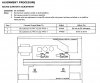
I just opened up my PM640 to adjust the Idle Current per the service manual link provided.
Noticed the same dark char across the top of those silver cylinders. Not as bad as yours but char nonetheless. Could just be some coating that charred, but as you notice, the music doesn't seem to be affected much.
Anyway when I opened up the case and let it run for about 20 minutes, the long heat sink fins were burning down the house hot.
I adjusted VR401 and VR402 to about 33mV. And they now cooled down noticeably to touchable.
Originally Left test points were reading 60+ mV, right was reading 70+ mV
Note that the test points and adjustments are counter intuitive or mirror-like.
Left
On VR401 you turn clockwise to increase mV readings.
Test point 1 is connected to + meter probe
Test point 2 is connected to - meter probe
Right
On VR402 you turn clockwise to decrease mV readings.
Test point 3 is connected to + meter probe
Test point 4 is connected to - meter probe
It may be psychological, but after an adjustment I usually think I notice a little cleaner, fuller, more 3D-like stereo. At least it's not as hot. That is indisputable.
In the SM I only saw the Idle Current alignment procedure. On some gear you may see both Bias and DC offset.
Noticed the same dark char across the top of those silver cylinders. Not as bad as yours but char nonetheless. Could just be some coating that charred, but as you notice, the music doesn't seem to be affected much.
Anyway when I opened up the case and let it run for about 20 minutes, the long heat sink fins were burning down the house hot.
I adjusted VR401 and VR402 to about 33mV. And they now cooled down noticeably to touchable.
Originally Left test points were reading 60+ mV, right was reading 70+ mV
Note that the test points and adjustments are counter intuitive or mirror-like.
Left
On VR401 you turn clockwise to increase mV readings.
Test point 1 is connected to + meter probe
Test point 2 is connected to - meter probe
Right
On VR402 you turn clockwise to decrease mV readings.
Test point 3 is connected to + meter probe
Test point 4 is connected to - meter probe
It may be psychological, but after an adjustment I usually think I notice a little cleaner, fuller, more 3D-like stereo. At least it's not as hot. That is indisputable.
In the SM I only saw the Idle Current alignment procedure. On some gear you may see both Bias and DC offset.
Attachments
terra1
Addicted Member
I wonder if what is charred is just some coating rather than an explosion of guts. Maybe the plastic shell?
The amp certainly sounds fine as is.
And the Idle Current it is adjustable: The VR401 and VR402 adjusters are the ones with the metal X slots.
Interested to hear what really needs to be replaced as far as critical vs improve reliability.
Here's are pix of my Char-B-Qs.
The amp certainly sounds fine as is.
And the Idle Current it is adjustable: The VR401 and VR402 adjusters are the ones with the metal X slots.
Interested to hear what really needs to be replaced as far as critical vs improve reliability.
Here's are pix of my Char-B-Qs.
Attachments


Sir.Byrd
Lunatic Member
I wonder if what is charred is just some coating rather than an explosion of guts. Maybe the plastic shell?
The amp certainly sounds fine as is.
And the Idle Current it is adjustable: The VR401 and VR402 adjusters are the ones with the metal X slots.
Interested to hear what really needs to be replaced as far as critical vs improve reliability.
Here's are pix of my Char-B-Qs.
Weird.
ecluser
Super Member
Anyway when I opened up the case and let it run for about 20 minutes, the long heat sink fins were burning down the house hot.
/QUOTE]
Did you touch the driver's heat sink?
The black stuff is the same as the white stuff under the power transistors, except that it get so hot on that small heat sink that is is black now...
terra1
Addicted Member
Anyway when I opened up the case and let it run for about 20 minutes, the long heat sink fins were burning down the house hot.
Did you touch the driver's heat sink?
The black stuff is the same as the white stuff under the power transistors, except that it get so hot on that small heat sink that is is black now...
If that's the silver metal sheets that are holstering those charred transistors ... yes. Couldn't hold the them between my fingertips for more than a second. Ouch!
If we replace these transistors what is the appropriate replacement white stuff to dab on them?
Sir.Byrd
Lunatic Member
If that's the silver metal sheets that are holstering those charred transistors ... yes. Couldn't hold the them between my fingertips for more than a second. Ouch!
If we replace these transistors what is the appropriate replacement white stuff to dab on them?
Thermal putty for CPUs?
ecluser
Super Member
The problem is much more serious than a transistor replacement.
Whatever the transistor you will put there, the actual heat sink is too small for the power dissipated by the driver transistors. At standby, each driver must dissipate approximately 3/4 Watt. This is very close to the maximum power for them.
http://www.datasheetarchive.com/pdf-datasheets/Datasheets-39/DSA-767031.pdf
If you can't keep your fingers in contact with the heat sink more than a second, the transistor temperature is probably 70 degree C or more.
Fortunately for me, my PM640 is used only with headphone. I will take a closer look at this and propose a modification to improve reliability. This will certainly imply a new heat sink and higher power package.
Whatever the transistor you will put there, the actual heat sink is too small for the power dissipated by the driver transistors. At standby, each driver must dissipate approximately 3/4 Watt. This is very close to the maximum power for them.
http://www.datasheetarchive.com/pdf-datasheets/Datasheets-39/DSA-767031.pdf
If you can't keep your fingers in contact with the heat sink more than a second, the transistor temperature is probably 70 degree C or more.
Fortunately for me, my PM640 is used only with headphone. I will take a closer look at this and propose a modification to improve reliability. This will certainly imply a new heat sink and higher power package.
Sir.Byrd
Lunatic Member
The problem is much more serious than a transistor replacement.
Whatever the transistor you will put there, the actual heat sink is too small for the power dissipated by the driver transistors. At standby, each driver must dissipate approximately 3/4 Watt. This is very close to the maximum power for them.
http://www.datasheetarchive.com/pdf-datasheets/Datasheets-39/DSA-767031.pdf
If you can't keep your fingers in contact with the heat sink more than a second, the transistor temperature is probably 70 degree C or more.
Fortunately for me, my PM640 is used only with headphone. I will take a closer look at this and propose a modification to improve reliability. This will certainly imply a new heat sink and higher power package.
The heatsink seems fairly simple, could it be improved by increasing the size of the flat piece of aluminum?
ecluser
Super Member
The heatsink seems fairly simple, could it be improved by increasing the size of the flat piece of aluminum?
The aluminium is very thin between the transistors, heat transfer from the transistor to the fin will never be very good. Yes it would help but it is so easy to make a larger heat sink from a thicker aluminium plate, and mount TO-126 or TO-220 transistors on them.
Sir.Byrd
Lunatic Member
The aluminium is very thin between the transistors, heat transfer from the transistor to the fin will never be very good. Yes it would help but it is so easy to make a larger heat sink from a thicker aluminium plate, and mount TO-126 or TO-220 transistors on them.
So increase the surface area and the thickness of the aluminum??? Sounds like a plan.
rockin1150
Super Member
Why not smack the people at HK in the heads for not heatsinking those little guys properly... lets see, ummm, like every other amp manufacturer I've seen! :sigh: My hk was always a room heater when idling, and I just blame it on poor design. They had the same thing going on in a newer 5.1 receiver, just those little power reg's all tied up to a tiny heatsink, and right next to them was the big huge main heatsink for the outputs.. I mean, c'mon HK follow the beat and path sometime huh? IMO / Just my 2 cents worth. (Check out a yamaha receiver sometime and asses what is going to fail over time becasue of poor design.... nada!
ecluser
Super Member
So increase the surface area and the thickness of the aluminum??? Sounds like a plan.
More easy to say than to implement. Did you see how the drivers are mounted (clamped) on the original heat sink?
Anyway, the power dissipated by the drivers is close to their limit at stanby, and you must consider the base current to the power transistors with an audio signal.