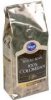
I'm no coffee expert (Although I like the smell, I mostly avoid coffee, since it often gives me "the runs," and sometimes headaches!), BUT a few things are worth saying:
1. Almost all large-scale food processing companies are regularly looking for ways to cut costs, and thus earn higher profits. As someone with celiac/gluten-intolerance, I end up being forced to track changes in ingredients in a lot of foods, and I've seen this happening over and over and over again, to MANY, MANY packaged or processed foods, even relatively simple and "natural" ones like coffee. What used to be made with one or two or three basic, natural ingredients is increasingly being made from a list of chemical e-numbers --artificial flavorings, colorants, texturizers, preservatives, humectants, acidity regulators, stabilizers, etc...-- instead. If a company can create a cheaper, more stable (longer lifespan) product that consumers will still "accept" --that is, that won't cost them more in lost sales from dis-satisfied customers than they make from the cost trimmings-- the company will change the formula.
2. If the company can use cheaper "extenders" to reduce ingredient costs, without most consumers noticing, or caring enough to stop buying, they will. For example, soy sauce used to be made from soybeans, until someone figured out it was much cheaper to use less soy and more wheat. The taste is quite similar, but the cheaper wheat "extends" the more expensive soy, resulting in a product that tastes very similar, but costs less to produce. It wouldn't be surprising at all if the company found that adding some other plant (or even artificial) material to the expensive coffee beans saves them money, and the "100 percent Columbian" allows them to get away with this, while giving careless readers the impression that it remains "100 percent coffee." I'm not saying they've done this, but it wouldn't be at all surprising if they had; there are many precedent examples of it.
...Your water should always be precisely just at the boil and the brewing time is exactly 4 minutes. ...
One of the cool things about water is that it boils at a given temperature (100 degrees Celcius). If you keep heating it past that point, the temperature of the water does NOT keep going up. Instead, the water boils more and more vigorously as additional heat energy enters the system. That is, the increased heat being added comes out pretty much instantaneously in the form of a more vigorous boiling action and greater evaporation. without appreciably raising the temperature of the water. The difference between a light simmering boil and a vigorous rolling boil is NOT the temperature of the water, but rather how quickly the energy is being passed through it (i.e., used to transmute it from liquid to gaseous state).
So as long as your water is "at a boil" it should be fine.
Of course, brewing time DOES make a difference, as with any natural infusion.