• The move to the new server is done. There are some software and database maintenance updates in process. This has us passing the hat around to help out. We appreciate any donations. Seriously, even a dollar helps. The payment page may be found here - https://www.audiokarma.org/support.html

Head gaskets and much more

That poor engine has seen some abuse. It was run hot quite a bit. For the most part Toyotas are at the top of the heap for dependability. That's a nice looking truck. I'd definitly put the money into it to keep it on the road. I've had several Toyotas and all were trouble free. I still kick myself for giving my Lexus to my son but he loves it.
 
I have seen 600,000 mile Toyota V8 engines with original hone marks that look the same.

Toyota's engine metallurgy has been pretty first-rate, for the most part. Unless you absolutely screw up the maintenance- with few exceptions, their engines will just go on and on and on...

I mean, come on- a 2JZ can do, what, like close to 1000HP on a stock block and crank? That's insanely over-built, in many ways.

Regards,
Gordon.
 
That poor engine has seen some abuse. It was run hot quite a bit. For the most part Toyotas are at the top of the heap for dependability. That's a nice looking truck. I'd definitly put the money into it to keep it on the road. I've had several Toyotas and all were trouble free. I still kick myself for giving my Lexus to my son but he loves it.
Yes sir.

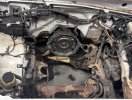
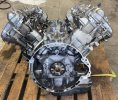
My plan has always been to not let it become a Roadkill vehicle, and I'm sticking to the plan. The new engine will be delivered the week if the 15th... we will bore-scope the cylinders and proceed with preventative maintenance including new spark plugs, PCV valve, a new rear main seal, a thorough inspection of the timing chains, install new chain tensioners, a new starter, alternator, water pump, belt, belt tensioner, hoses, thermostat, radiator and other small items. After all of that, it should be good to go for a very long time.


IMG_0928.JPG
 
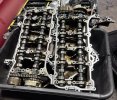
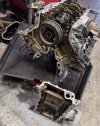
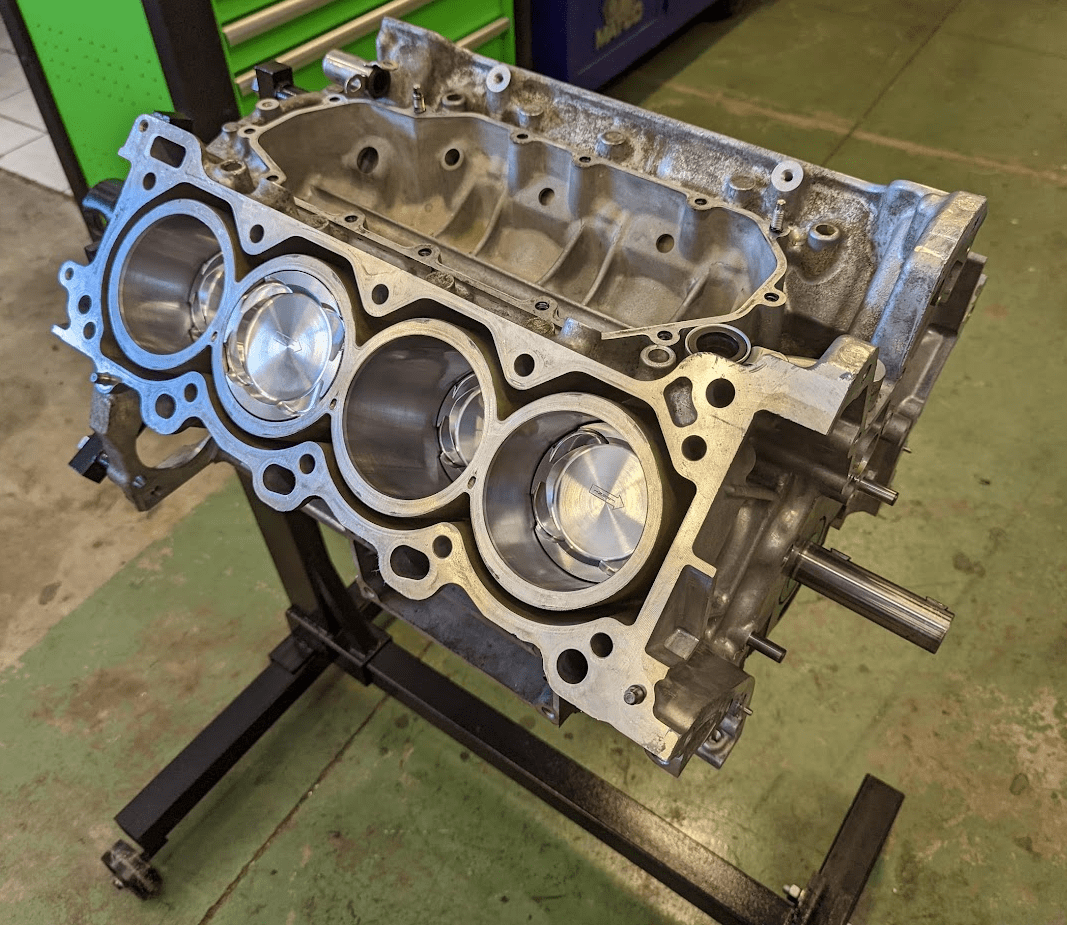
The replacement engine passed the leak-down test with ease, but it does have small weeping oil leaks at the cam cradles and timing chain cover - pretty common for these engines during the first couple years of production. Everything else looks as it should. The work involved to seal those little oil leaks brings you very close to what's involved to replace the head gaskets, so we will replace those while the engine is on a stand... cheap insurance.

This engine had a Whipple supercharger on it for about 20,000 miles, it was a daily driver test mule for the Tundra kit that is available now. It wasn't raced, it was strictly testing the fitment, durability and reliability of the kit. I have no plans to install the kit, but if someone gifted me $8k I would do it in a heartbeat.

 

Attachments

  • IMG_1445.JPG
    IMG_1445.JPG
    197.3 KB · Views: 14
  • IMG_1444.JPG
    IMG_1444.JPG
    196.3 KB · Views: 14
  • IMG_1438.JPG
    IMG_1438.JPG
    209.5 KB · Views: 14
  • IMG_1434.JPG
    IMG_1434.JPG
    187.5 KB · Views: 14
I have many reasons for putting money into this truck and keeping it roadworthy, great street performance in just one of the reasons.

The RCSB is the smallest full-size Tundra that Toyota ever made, and the 4X2 5.7L has the best power to weight ratio with 381 hp / 401 lb-ft in a truck that weighs a little less than 5,000 pounds. 0 to 60 performance with a 4.30 rear gear ratio and 6 speed automatic (4 speeds with 2 overdrives) is consistently 6 seconds. My ECU has a mild tune that boots hp and tq as well as eliminating the speed limiter... the rev limiter is fully functional.

Gear ratios.png

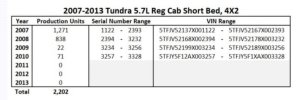
Another reason for me putting money into this particular Toyota truck is it's Unicorn like rarity.

rcsbproduction.jpg

Mine is not a race truck nor is it a show truck, mine is a daily driven sport truck that is a lot of fun to drive.
 
The replacement engine passed the leak-down test with ease, but it does have small weeping oil leaks at the cam cradles and timing chain cover - pretty common for these engines during the first couple years of production. Everything else looks as it should. The work involved to seal those little oil leaks brings you very close to what's involved to replace the head gaskets, so we will replace those while the engine is on a stand... cheap insurance.

This engine had a Whipple supercharger on it for about 20,000 miles, it was a daily driver test mule for the Tundra kit that is available now. It wasn't raced, it was strictly testing the fitment, durability and reliability of the kit. I have no plans to install the kit, but if someone gifted me $8k I would do it in a heartbeat.
You'd have to be nuts to get rid of this 5.7l, the new Tundra 6 cylinders with twin turbos are eating rods like crazy. Buddy is on his 3rd warranty motor with 48K. Speaking of gaskets I've discovered many manufacturers aren't even using gaskets anymore, just RTV sealant (i.e. Subaru and Honda (V6's)).
 
Do you know why it was pulled?

The testing was successful and the owner wanted more than 570 hp so he order a purpose built Toyota V8 capable of about 800 hp using the same blower, or the revised kit.
 
Last edited:
We pulled the heads off of the new engine this evening and all cylinders look awesome, but we did notice that the original head gasket on this engine was beginning to fail in the exact same area (cylinder #7) as mine did... failure was not immanent, but it would eventually happen and that's something for others to consider.
 
Last edited:
You'd have to be nuts to get rid of this 5.7l, the new Tundra 6 cylinders with twin turbos are eating rods like crazy. Buddy is on his 3rd warranty motor with 48K. Speaking of gaskets I've discovered many manufacturers aren't even using gaskets anymore, just RTV sealant (i.e. Subaru and Honda (V6's)).
Yes sir, that special RTV speeds up factory assembly but it's not so wonderful on the repair side of the equation. We are using all OEM gaskets and Toyota RTV in the few places it is specified.
 
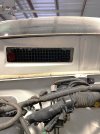
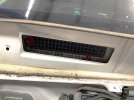
I took full advantage of the situation of my engine being out of the truck and blocked off the critter entrance / air intake into where my cabin filter sits. I taped a flat piece of wire mesh over the opening, and then sealed the edges with silicone. I then shoved a larger half pipe shaped piece of the same wire mesh inside the cavity, opening it up and using spring tension to hold everything in place. I didn't really need the silicone, but what the hell ~ it was my first time. Outside air can flow freely, but the critters will have to work very hard to gain entrance.

IMG_2280.JPGIMG_2281.JPG
 
Back
Top Bottom