• The move to the new server is done. There are some software and database maintenance updates in process. This has us passing the hat around to help out. We appreciate any donations. Seriously, even a dollar helps. The payment page may be found here - https://www.audiokarma.org/support.html

HEIL AMT DATA THREAD

OK, the peakiness was being caused by the interaction of the 2251J and the Heil overlapping and reinforcing each other creating a peak. This is not the 10kHz peak, but down around 4-5kHz. The choke is on the 2251J and provides more roll-off so that this interaction is reduced/alleviated. The 2.37 ohm resistor changes this slope a bit (reduces this roll-off) smoothing it out and may be changed a bit/eliminated without much audible difference.

ScreenHunter_264_Sep_08_12_18.jpg
 
Last edited:
@Stepwise I'm using a pair of those "L'il Heils" now. They sound better than the Great Heils, though more limited. In fact, I was using G Heils until two weeks ago, when I got these — swapped them to test, and never went back. Best tweeters I've heard, plus very sensitive (±95dB). Also, the Great Heils get "screechy" above a certain point, and these remain sharp as a knife but never cutting.
PS, it someone has a way to "tame" the screechiness of the Great Heils, please share.

That was more than I hoped for! They will be strong candidates when I take music to the next level.
To the second floor of my house to be precise where some combination of vintage stuff will fill
the lack of music there. They are small and self-contained and now I know they can do the job
thanks to you who could identify and characterise them.
 
OK, the peakiness was being caused by the interaction of the JBL 2251J and the Heil overlapping and reinforcing each other creating a peak.
No, that doesn't explain it Todd. The Great Heil screeches. Period. VanAm heard it and added it's just "ignored by the majority of users". I've had G-Heils idle in my closet for years, then put a pair into use 3-4 weeks ago, and the screech irritated the hell out of me.

That's what I was referring to when I asked about the choke; but apparently it only applies to the G-Heil/2251J pairing.

You say the "wedge" will solve it... but I'm not sure we're talking about the same "screech". I know the smaller, Not-Great Heil is screechless.
 
Again, no wedge:
DSC_00184.JPG


With wedge. Takes ~3 dB out of the peak while boosting the lower end ~1 dB.
DSC_00215.JPG


Also note that the wedge could certainly be improved upon if one had a 3-d printer to try various shapes. Most of the dip smooths out with distance/room absorption. This is at ~1 foot, and the signal needs some space to integrate back together.
 
piecing it all together. mounted the 1 amp fuse protection and bananna plug inputs on the separate wired control panel. ref post #4

ESS Elite DIY 3.JPG
 
Also note that the wedge could certainly be improved upon if one had a 3-d printer to try various shapes.
I take your point about the 3-D printer. Have you tried a round "wedge"? Rods and dowels are available in many materials (plastic, metal, wood) and diameters; if a round profile works, finding the right size is much easier.
 
Never tried round. Have tried several angles and lenghts of wedges though.
Yes, and they each took you careful work, and time, to make. It makes it hard to find the motivation to experiment with other angles and shapes.

Round is fast and easy to try, and to evaluate. Plus, I think different diameters could have notable effects on dispersion.

Also, the different materials available could be very desirable aesthetically. A dowel made of an exotic wood, or polished metal, could be very attractive, a subtle "accent point".
 
Interested in some details you could provide on the set-up with the big heils bimasta. The "screechy" sound you observed was no doubt a peak or two in the diaphragm(s) frequency response. My setup uses a 15" woofer (15PR400) and the heil ... a basic 2-way. The best crossover I've found is a 2nd order Bessel filter with an Fc around 1.2khz. I use a DSP for processing and that requires a bit of a spread in frequencies to align phase. I use this formula to arrive at those frequencies for 2nd order Bessel:

Your chosen Fc *1.272 gives you the tweeter value.
Your chosen Fc *0.786 gives you the woofer value.

So, in my case my Fc was around 1.2khz.
1200 * 1.272 = 1520hz tweeter (closest to my DSP frequency divisions)
1200 * 0.786 = 940hz woofer (closest to the DSP frequency divisions)
The only thing I add to the woofer is a lo-shelving filter with a gain of 4db at 104hz, 1st order. It's like a faux "LinkwitzTransform" and handles BSC just great.
Back of the tweeter is totally blocked so it acts a bit like a CD/horn. For my room the dispersion is just right. Minimal reflections. The woofer begins to beam a bit and matches the 90* directivity of the heil pretty well. The blend is smooth.

The Bessel alignment closely matches a LR12 alignment with a bit more rise in response around Fc. Both have a nice, gradual knee. The above formula gives about 4-4.5db down at Fc whereas the LR12 will be 6db down. The heils natural roll off needs a little help here and that 2db or so rise that the Bessel provides does the trick for vocals. LR12 is a little too laid back for me.

Both of my diaphragms had a peak around 7.4khz. One was pretty big until I worked over the diaphragm a bit. Got them both close to each other as a result and pulled 2-3 db out with a Q of around 3.0. That same diaphragm also wanted a 1db reduction around 2.5khz but I gave that up to respect phase alignment. Don't really notice it that much anyway. Before I worked that diaphragm it would have been an issue because it was a 4db peak right there (2.5khz). If you don't have DSP you'd be looking to build a resonance circuit to kill those peaks. So, you have to measure. You'll also be looking to lower the SPL of the tweeter to better match up with the other drivers. 1-2db below the woofer/mids SPL is pretty close to ideal.
 
Doing a quick health check on my little Heil's and they seemed to be OK.
5.9 Ω and 8.3 μH on one and the other was 6.5 Ω and 6.6 μH. The inductance
is very small and part of it is from the test leads. The same(ish) resistance
in both makes me think they are fully functional. My LCR-meter is autoranging
and you could hear it pulsing the low level 1 kHz test signal on and off.
Nothing changes at 10 kHz, still a purely resistive load.
 
I did the spectrum for the "Medium Heil". These are in ESS "CLASSIC CS3" speakers with a ported 10" woofer with a rubber edge. The crossovers are a simple choke on the woofer and a variable resistor followed by a 10 mfd, 75 volt NP electrolytic cap. I used a 10 mfd, 220 volt Sprague for the test/picture. The Heil is ~7.9-8.0 ohms dcr. Mic is at ~1".

Assuming the tweeter is functioning properly, these are virtually the opposite of the Great Heils as you will see.

DSC_00173.JPG
DSC_00193.JPG
 
Years ago, driving home late on a Saturday night, I spotted an impressive set of speakers at a thrift store’s dumpster. No idea (at that time) what an ESS AMT 1B was, but they were too cool to not bring home for a look. Turned out to be FUBAR but I saved the massive tweeters for future experimentation.
Recently found that box when cleaning out the garage; was thinking I would just list them on theBay, but given the enthusiasm these Heils garner, I may end up regretting that.
Anything I should know before testing them?
 
Nuts, don't have the xo's, will have to pop the tweeter out of something else and test off that signal, then figure out if these bricks get squirrell-ed away for a future project.
The older I get, the more I'm appreciating good high-end
 
GREAT DISCOVERY!

I'm using the LS-8 "power ring" small tweeters now. I took one diaphragm out two weeks ago because I saw dust/debris in there. When I tried to put it back in the magnet-housing, I destroyed it. The pleats were all bent at sharp angles and mangled against each, and the foil on the side was ripped. I was BUMMED because it was my fault, Oh the guilt!

I'd have to buy a replacement, and they say the new ones suck.

Today, calmer, I glued the torn side-foil back down. The pleats are still messed up and look horrible, but the wire leads are intact. I put it back in the housing, connected it to the LS-8 xover — and it plays just like the other one, the good one I didn't mess with.

When the pleats are all mashed and bent zig-zag — IT DOESN'T MATTER. They don't rub against each other, or buzz, or anything nasty. THEY WORK. Crystal-clear treble from 2200Hz and up.
 
Last edited:
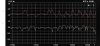
Just tossing this up as I have a function generator now and figured I'd runs some tones through the Heil AMT1 I got from Simply Speakers. This is 3V, measured with Spectroid, with a Dayton Imm6 connected to my phone, from one meter. I think it puts paid to the idea that the AMT1 falls off after 14khz... red line was the peaks as I went up in frequencies.
Edit: Do note that this was frequency jumps of 1000khz. That's why it peaks in waves. It's not a continuous rising frequency. I just wanted to see if there was marked rolloff after 14khz.
Screenshot_20201129-235203_Spectroid.jpg
 
Last edited:
@Nixxuz When you say it's an AMT1 from Simply Speakers, do you mean it's a new replacement diaphragm, in an old magnet structure, or did you get the whole thing?

Also, do you know if the diaphragm is old stock, or current production? I ask because I called ESS a couple years ago about replacements for a smaller tweeter — they said "Sure, we can make any size, give us a couple weeks. But if it was the big one, we have tons of those." The SS site says: "Original Silver Mylar pleated ribbon. This is NOT the generic mylar version that others sell." Does "original" mean original-manufacture, or "just like" the original?

It'd be reassuring to know the new ones are identical — they'd match an old one
 
Unfortunately that has been the problem with the big Heil tweeters I have tried for diy projects....the differing diaphragms do different things as far as frequency responses and outputs....just too much work to get right and require a lot of $ in crossover components.
 
@Nixxuz When you say it's an AMT1 from Simply Speakers, do you mean it's a new replacement diaphragm, in an old magnet structure, or did you get the whole thing?

Also, do you know if the diaphragm is old stock, or current production? I ask because I called ESS a couple years ago about replacements for a smaller tweeter — they said "Sure, we can make any size, give us a couple weeks. But if it was the big one, we have tons of those." The SS site says: "Original Silver Mylar pleated ribbon. This is NOT the generic mylar version that others sell." Does "original" mean original-manufacture, or "just like" the original?

It'd be reassuring to know the new ones are identical — they'd match an old one
Bought complete new units. New official boxes and dust bags, with a certificate for each unit. As far as any of your other questions, you know exactly as much as I do. You'd have to contact Simply Speakers and/or ESS to get their take. I have a feeling SS just used unfortunate wording to differentiate some sites selling generic drop in diaphragms, as opposed to official ESS manufactured diaphragms. Not SS having a bunch of NOS diaphragms, or ESS having the same.
 
Back
Top Bottom