

You are using an out of date browser. It may not display this or other websites correctly.
You should upgrade or use an alternative browser.
You should upgrade or use an alternative browser.
HEIL AMT DATA THREAD
- Thread starter bimasta
- Start date

Robbie_uC
Member
 Hello!
maybe someone here who’s been collecting these speakers for a long time can help me…
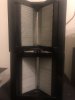
I have original ESS AMT 1s. I also have some new Heil AMTs (just the tweeters). I noticed that the design of the Heil’s on the original ESS speakers are different than the newer Heil’s that I own - the metal wave guide section is arranged differently. It also seems that the newer Heil’s are much louder when used with the ESS speakers, compared to the originals. Has this something to do with physical design change? All diaphragms are around the same DC resistance (9 ohms), none are damaged in any way that I can tell.
I attached an image for reference. On top is the newer(louder) Heil. Bottom is the original which is quite noticeably quieter.
rob
Hmmm, I've heard of some 8ohm diaphragms ... 4ohm is typical and they usually measure 3.5ohm DC resistance.
You sure you're reading 9ohm DC? Maybe the diaphragm is pooched ... ribbon strips touching someplace?
I've been wanting to get a hold of the different housings to test differences, w/same diaphragm, but haven't yet. If you look up Oskar Heils' patent on the original housing you can see the changes. The original focus plates (narrow opening) acts like a throat similar to a compression driver. The alternating plate(s) are angled toward the narrow opening and the angle starts behind the plate taking up the full width of the diaphragm. So, it's like an angled "V" that you can't see from the front.
I'm just assuming that the narrow opening type would display higher sensitivity because of the way the sound wave is compressed.
The newer type(s), like you have above and those in current production, allow the diaphragm to emit without any "compression". I'd expect those housings to have a bit lower sensitivity.
Question is, would the frequency response match up or be better/worse with either housing type. You have both. Are you set up to measure speaker drivers ... laptop/PC, mic, Room EQ Wizard (free software)? If yes, it would be nice to see measurements on both housings using the same diaphragm.
You sure you're reading 9ohm DC? Maybe the diaphragm is pooched ... ribbon strips touching someplace?
I've been wanting to get a hold of the different housings to test differences, w/same diaphragm, but haven't yet. If you look up Oskar Heils' patent on the original housing you can see the changes. The original focus plates (narrow opening) acts like a throat similar to a compression driver. The alternating plate(s) are angled toward the narrow opening and the angle starts behind the plate taking up the full width of the diaphragm. So, it's like an angled "V" that you can't see from the front.
I'm just assuming that the narrow opening type would display higher sensitivity because of the way the sound wave is compressed.
The newer type(s), like you have above and those in current production, allow the diaphragm to emit without any "compression". I'd expect those housings to have a bit lower sensitivity.
Question is, would the frequency response match up or be better/worse with either housing type. You have both. Are you set up to measure speaker drivers ... laptop/PC, mic, Room EQ Wizard (free software)? If yes, it would be nice to see measurements on both housings using the same diaphragm.
Robbie_uC
Member
Thank you, @puppet , for that information.
Yes, all 4 diaphragms did measure about 9 ohms on a calibrated multimeter I took home from work. I’ll bring another one home to verify results.
I also have a calibrated sound meter at work I can bring home for the tests you speak of - I’ll try and get those measurements on Monday. Last night, I simply used a pink noise generator and a lousy spectrum analyzer app on my phone. Hardly accurate, but I did notice that the old Heil enclosures roll off higher frequencies (16kHz on up) more dramatically compared to the newer enclosure, which is pretty even all the way up to 20kHz. FYI, I swapped the diaphragms around and got the same results.
rob
Yes, all 4 diaphragms did measure about 9 ohms on a calibrated multimeter I took home from work. I’ll bring another one home to verify results.
I also have a calibrated sound meter at work I can bring home for the tests you speak of - I’ll try and get those measurements on Monday. Last night, I simply used a pink noise generator and a lousy spectrum analyzer app on my phone. Hardly accurate, but I did notice that the old Heil enclosures roll off higher frequencies (16kHz on up) more dramatically compared to the newer enclosure, which is pretty even all the way up to 20kHz. FYI, I swapped the diaphragms around and got the same results.
rob

jcidave
Well-Known Member
I have measured a number of diaphragms over the years and nothing ever hit 9 on my VOM. If you have 4 that do, and probably from different eras, that has got to be extremely rare. I know the AMT 3 should have an 8 ohm diaphragm. I think technically, the AMT 1 and AMT 1 Tower should also. The highest I have measured has been between 6 and 7 on the VOM. Those were considered 8 ohm diaphragms. 8 ohm diaphragms are not being made today from any source I know to fit these Heil cores. So your additional findings will be interesting.Yes, all 4 diaphragms did measure about 9 ohms on a calibrated multimeter I took home from work. I’ll bring another one home to verify results.