• The move to the new server is done. There are some software and database maintenance updates in process. This has us passing the hat around to help out. We appreciate any donations. Seriously, even a dollar helps. The payment page may be found here - https://www.audiokarma.org/support.html

Help identifying crossover resistor

Rod B

AK Subscriber
Subscriber
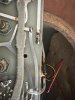
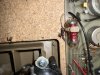
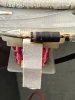
I'm wanting to do my first speaker recap. The speakers are Bic Venturi Formula 5's. Can anyone help identify the crossover resistor in the following pictures? I can't find a schematic for these. The crossover part is identified as BIC CC51 Control Center. Thanks in advance for any help.
 

Attachments

  • IMG_9033.jpg
    IMG_9033.jpg
    83.5 KB · Views: 81
  • IMG_9031.jpg
    IMG_9031.jpg
    94.3 KB · Views: 75
  • IMG_9028.jpg
    IMG_9028.jpg
    101.8 KB · Views: 78
Register to hide this ad
Is the same resistor damaged in both cabinets? Or, can the value be read from the other one in the other speaker?

Regards,
Gordon.
 
I just tried the other speaker. It looks like it might be smaller physically, but the same condition unfortunately
 

Attachments

  • IMG_9099.jpg
    IMG_9099.jpg
    121.5 KB · Views: 39
It is well and truly scorched, I don't think it can be identified by the color bands anymore.
Have you tried measuring it with a multimeter?
But it also looks like someone added it as an afterthought. Maye they were modified before you got them?
Are these powered speakers? it looks like a diode and some transistors in that last photo.
 
I purchased them from the original owner almost 40 years ago, so no mods/repairs. They aren't powered, but the Bic Formula 5's has 3 pots for fine-tuning 2 circuit breakers, one for the woofer and one for the tweeter and 3 led's for the breakers and for indicating clipping. If it didn't have all that I would just consider new crossovers.
 
I haven’t measured them with a volt ohm meter. At this point wouldn’t they be zero resistance?
 
Usually their resistance increases from their rating until they finally go open. So if you check them with an ohm meter, it's pretty likely you'll get a reading higher than they were. Failing shorted (zero resistance) would be pretty unusual. Since that happened, you probably want to put higher wattage resistors in there as replacements.
 
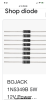
Like these. Shape and markings are similar, not exact, but close than any resistor I have.
 

Attachments

  • 801DBC58-0874-4A07-A193-816340E901A9.png
    801DBC58-0874-4A07-A193-816340E901A9.png
    106.6 KB · Views: 16
I'm wanting to do my first speaker recap. The speakers are Bic Venturi Formula 5's. Can anyone help identify the crossover resistor in the following pictures? I can't find a schematic for these. The crossover part is identified as BIC CC51 Control Center. Thanks in advance for any help.
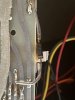
The part in those 3 photos look like a diode. If you're VOM has a diode check function it will bias in one diection. It's best to test them out of circuit.
 
Burnt resistor. No use for diodes in normal speaker crossovers. If it is a diode, it won't be in signal path.
 
I just tried the other speaker. It looks like it might be smaller physically, but the same condition unfortunately
That one looks like a resistor though. I'd still check it out of circuit with a diode checker to make sure. The silver band is misleading from all the heat the part saw. Has that cathode band look. Someone was really rockin & rollin those, lol. Never thought I'd use the words crossover & diode in the same sentence until I saw that photo. Unique piece.
 
Last edited:
A simple check would be if it were a diode, the normal failure mode would be a short, while a resistor would be open or increased value.
IME Diodes don't usually bake like that when they go bad.
 
It does look like a diode and they definitely can cook. No idea what it's doing in a crossover though.
 
has 3 pots for fine-tuning 2 circuit breakers, one for the woofer and one for the tweeter and 3 led's for the breakers and for indicating clipping. If it didn't have all that I would just consider new crossovers
I think all the extra features & circuitry in those are why there are semiconductors in the crossover network


I'm wanting to do my first speaker recap
Normally, crossovers are great learner pieces and pretty basic. That looks challenging.

Welcome aboard Rod
 
The stripe on one end of a diode usually starts at the very end. These burned devices show a band not all the way to the end.

If you look at the most recent pic, that circuit board has a diode on it as well as transistors which are generally not seen in crossovers in a speaker unless it is an active speaker.

Measurement necessary, it seems
 
Back
Top Bottom