• The move to the new server is done. There are some software and database maintenance updates in process. This has us passing the hat around to help out. We appreciate any donations. Seriously, even a dollar helps. The payment page may be found here - https://www.audiokarma.org/support.html

Help identifying Fisher console.

John Neuens

New Member
Hi,
This weekend I'll be picking up a Fisher console I won at auction (uncontested). Until then, could anyone help me understand what I've gotten myself into?

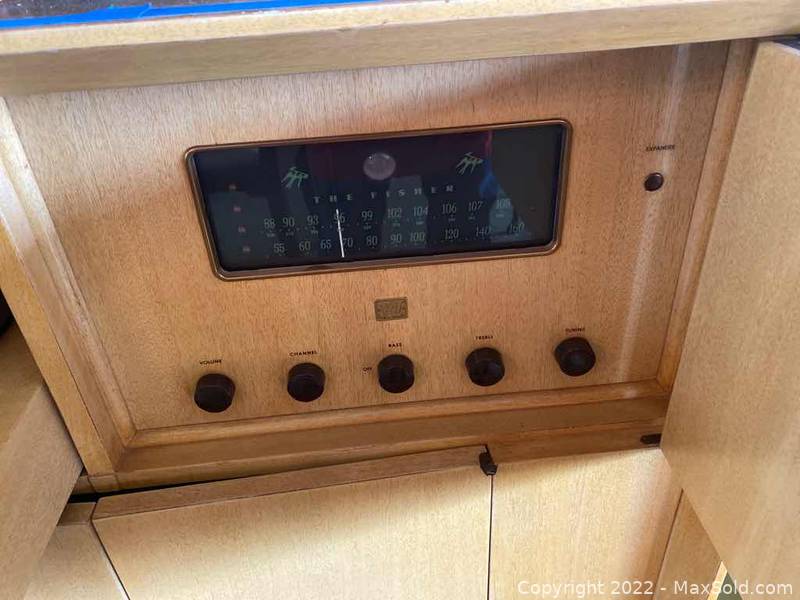
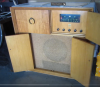
After reading through many posts on this site, I believe it to be a "The Fisher Coronet in Allegro Console".


Aside from the insulation, the cabinet seems to be in great condition. Unfortunately the seller did not post pictures of the inside.
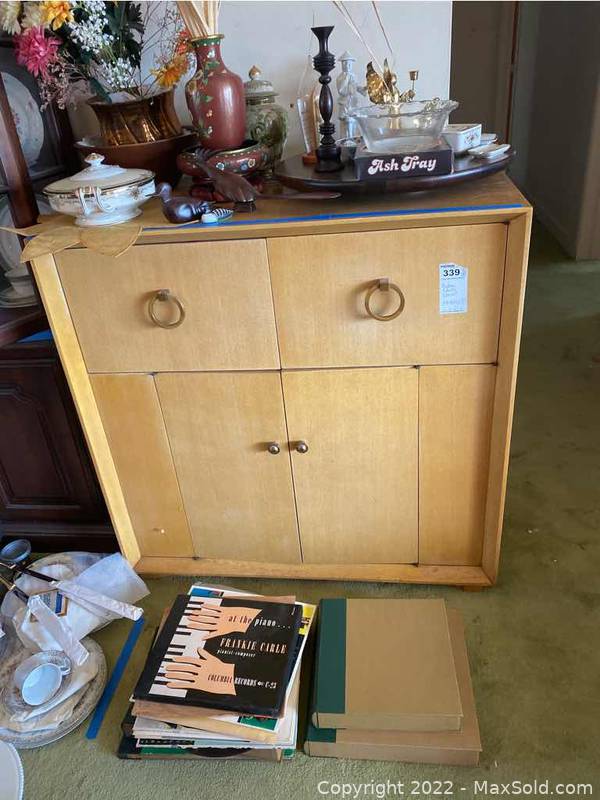
wvintage-the-fisher-stereo-cabinet-c-339-1.jpeg

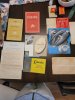
wvintage-the-fisher-stereo-cabinet-c-339-5.jpeg

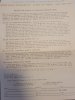
wvintage-the-fisher-stereo-cabinet-c-339-6.jpeg

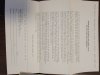
wvintage-the-fisher-stereo-cabinet-c-339-4.jpeg


I will be able to provide more details/pics after I pick it up.

Appreciate any help!
-John
 
Register to hide this ad
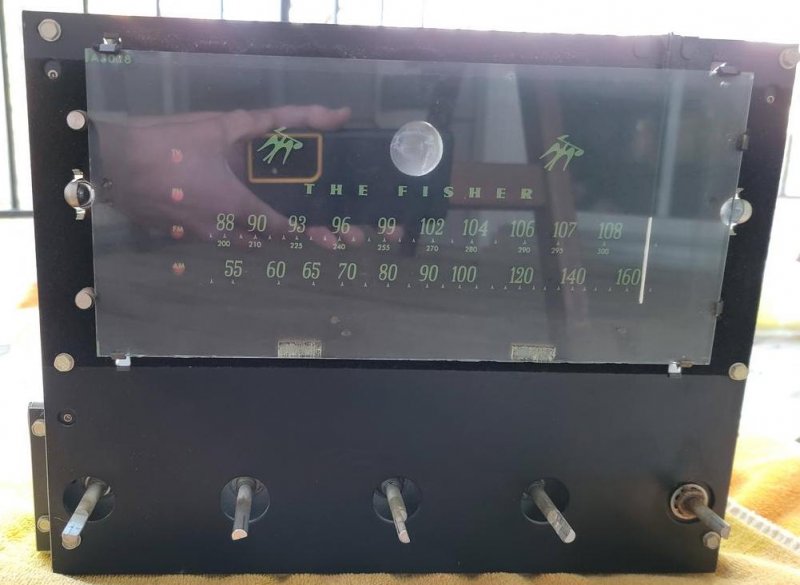
Early to mid 1950s Coronet in the Allegro cabinet - a beautiful blond one, you lucky dog. The brass medallion beneath the tuning dial should be the crown (coronet) logo. Chassis is probably an R-3 and if that's a control missing a knob to the right of the tuning dial then it likely has either the Dynamic Noise Suppressor or the Volume Expander option. Speaker looks to be the standard 15" Jensen co-axial. You can get a rough idea of the year of manufacture from the date code stamped on the rim of the speaker basket. One of our early record changer experts will hopefully chime in to identify the model which will also help narrow down the year. Amazingly it still has the original changer - that is somewhat uncommon.

The Allegro cabinet was available from the Fisher Radio Company's reboot in 1946 continuously through the Fisher Radio Corporation's golden era in the mid 1950s with only minor hardware, finish and dimensional changes. So they can be tricky to date. The distinctive R-1/R-2/R-3 tuning dial and Coronet medallion mark this as a later model. Probably sold new for around $800 assuming it has the optional DNS or Expander. These are among my favorite Fisher consoles. I have long been wishing for a Custom Sixty Allegro with the Ebony finish to fall into my lap.
 
Early to mid 1950s Coronet in the Allegro cabinet - a beautiful blond one, you lucky dog. The brass medallion beneath the tuning dial should be the crown (coronet) logo. Chassis is probably an R-3 and if that's a control missing a knob to the right of the tuning dial then it likely has either the Dynamic Noise Suppressor or the Volume Expander option. Speaker looks to be the standard 15" Jensen co-axial. You can get a rough idea of the year of manufacture from the date code stamped on the rim of the speaker basket. One of our early record changer experts will hopefully chime in to identify the model which will also help narrow down the year. Amazingly it still has the original changer - that is somewhat uncommon.

The Allegro cabinet was available from the Fisher Radio Company's reboot in 1946 continuously through the Fisher Radio Corporation's golden era in the mid 1950s with only minor hardware, finish and dimensional changes. So they can be tricky to date. The distinctive R-1/R-2/R-3 tuning dial and Coronet medallion mark this as a later model. Probably sold new for around $800 assuming it has the optional DNS or Expander. These are among my favorite Fisher consoles. I have long been wishing for a Custom Sixty Allegro with the Ebony finish to fall into my lap.

Thanks for the info! The label above the missing knob says "Expander" from what I can make out. I assume this is the dynamic range expander option I saw on an old order form posted in another thread?

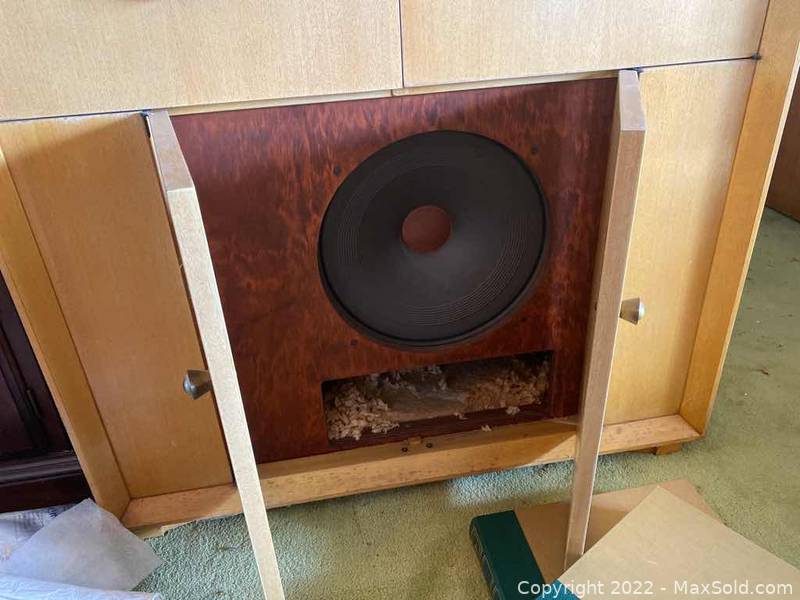
The seller says that it looks like something may have been removed from the space below. Should there be anything besides insulation at the bottom of the case?
Here is a closer look into the front port. It's hard for me tell where the light inside is coming from.
upload_2022-3-31_8-28-38.jpeg

Is the dark red finish around the speaker standard? Most of the pictures I've seen have a grill.
upload_2022-3-31_8-37-22.png The Fisher Coronet R-3 Console Webster Chicago changer - YouTube (for instance)
 
The hole at the bottom is the speaker enclosure port - that was factory. The red stain is likely also original; done so as to not show through the grill cloth . . . which is missing. The insulation is probably also original although it looks to have been re-purposed as rodent bedding. Hopefully it will be a simple matter to remove the old acoustic insulation; clean the interior and reinstall new insulation.

You are correct in your assumption as to the enpander.

I'm not sure what the seller might be seeing as light coming from inside: light leaking in through the back panel or perhaps a power light which were often installed along the bottom of consoles of this era. (I'm not sure if the Allegro should have one.) If it's an incandescent or neon power light . . . and it is on . . . that would be an indication that the unit is plugged in and powered up . . . which it should not be.
 
Cat's LOVE speaker grille cloth as a scratching post. With the port, they may have gone inside and torn up the insulation, or mice may have done it. My '51 Coronet Warwick now has top-bottom-both sides in 1/2" fiberglass ceiling 2'x4' panels cut to fit. It WAS rockwool that was torn to shreds from the previous owners kid pulling out the speaker baffle (with the Jensen Coax attached.) New baffle and 1956 Jensen Co-Ax installed.
 
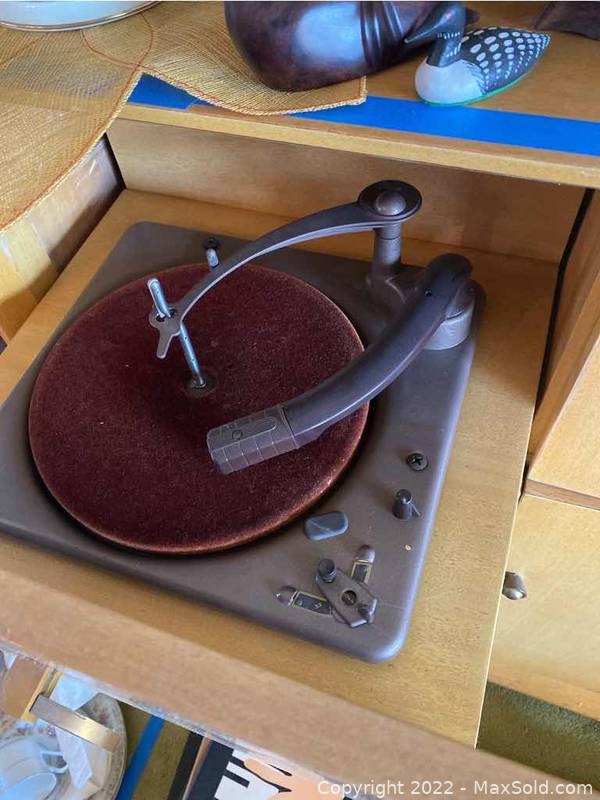
The record changer is a Webster-Chicago, from around 1953, something like model 100 or 121.
It uses plug in head shells and it looks like it may have a GE RPX or RPJ "Triple Play" cartridge installed. That just means it would play
all three speeds from that time, 78,45 & 33. It appears to be missing the red knob on top which allows you select
the Microgroove or 78 stylus.
 
And then you have the threads where the cats are the main item in the pic, the stereo is an afterthought. Good thing I can close the doors on the Executive's speaker enclosure. I caught my 18 week old Sheltie sniffing them last week. Oh HELL NO!! He gets barricaded in the rear entryway now when I have it running!

EDIT: The phono is a Webster Model 127. It's identical to the one in my '51 Coronet.
 
Last edited:
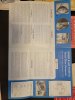
Wow - what a bonanza of documentation! You have both the gold 1951 copyright and the red 1952 Coronet brochures. I believe those are for the 1952 and 1953 model years, respectively. Looks like the dealer threw in just about every piece of Fisher literature from that era except the Custom Sixty brochures. Avery Fisher would have been pleased. This was from back when he was personally involved in every aspect of marketing. His professional background was in publishing; hi-fi was just a hobby that got a bit out of hand.
 
^ Nice trove of information you have here, are the tubes Fisher branded originals?

I'm not sure, I brought it to a friend's house temporarily because our condo is on the third floor and I severely underestimated how heavy it would be.

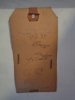
I did get a picture of the plate and a tag that was saved.

20220402_193046_01.jpg

20220402_193302.jpg
 
Mainly improvements in the RF/IF circuits, power supplies and some other minor improvements. The R1, R2, R3 share the same service manual with Bulletins showing changes for the R2 and again for the R3. And they all came out between 1950 and 1952, so it wasn't really a different model it was upgrading the original R1 to R3 spec. The manual for the 1950 Coronet is actually for the R-1, R-2, & R-3 with the applicable changes on page 3. And that manual carried thru 1952-53.

I've STILL got the lowest Serial #'ed R-3 here. 6981 Mine has been ID'ed as a 1951 model. So it's possible that John's is a '51 or '52, but I'd bet on 1952 based on the literature.
 
I see he's got the installation brochure for the Lincoln changer. Now that's a cool piece of kit.
 
Too bad no-one could get all the seals to work correctly. Reminds me of 70's era emission plumbing in cars. You needed a pHd in complex plumbing just to open the hood!
 
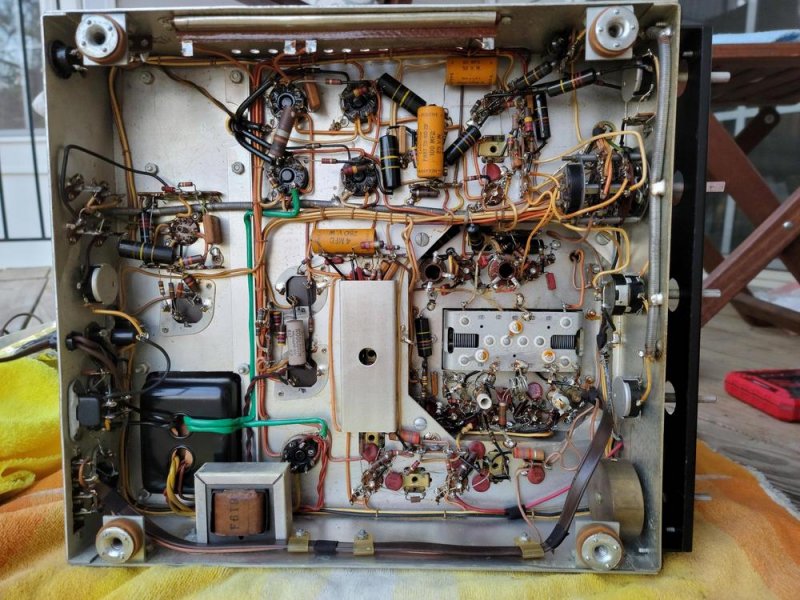
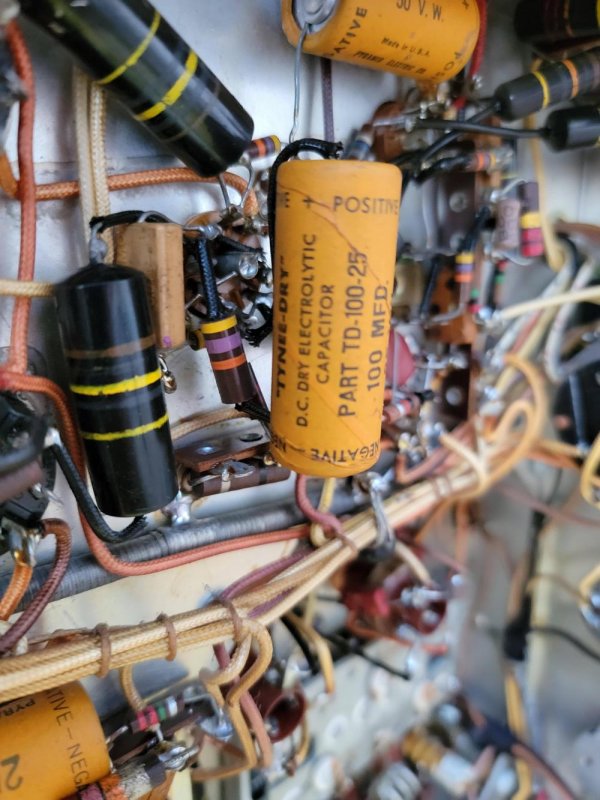
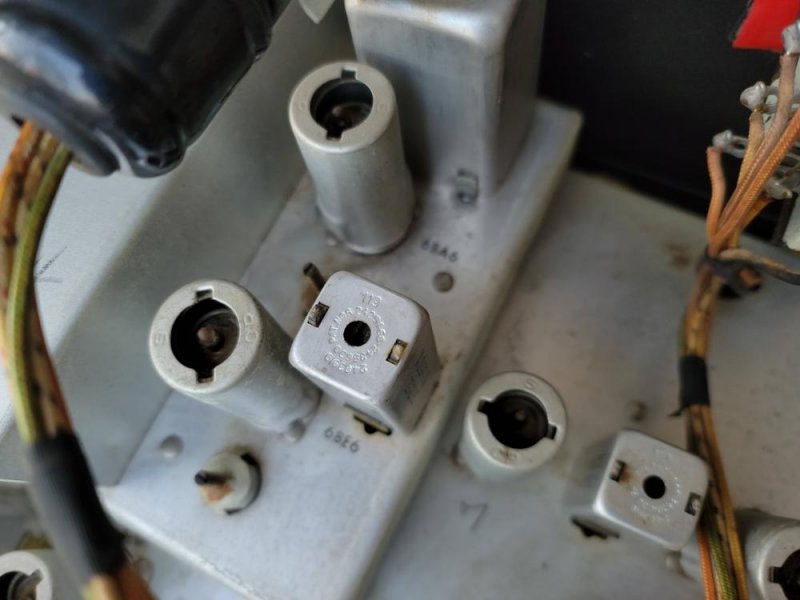
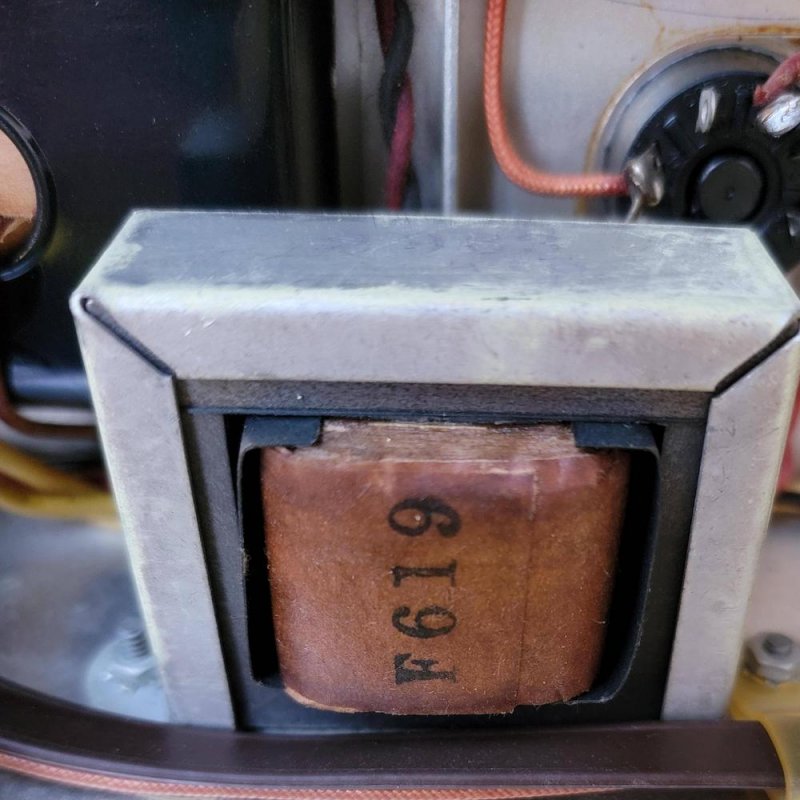
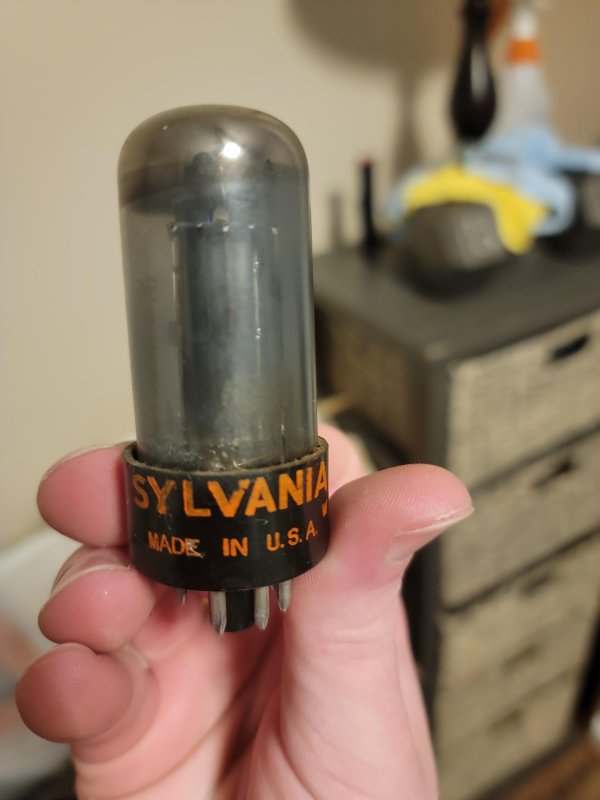
Finally got around to taking out the electronics, would appreciate any advice because I have no idea what I'm doing.

I have access to:
- programmable power supply (Fluke PM2813)
- analog/digital oscilloscopes (tektronix 2225/Rigol 1054Z)
- digital multimeter (GW Instek GDM-8251A)
- soldering/desoldering equipment

 
Back
Top Bottom