
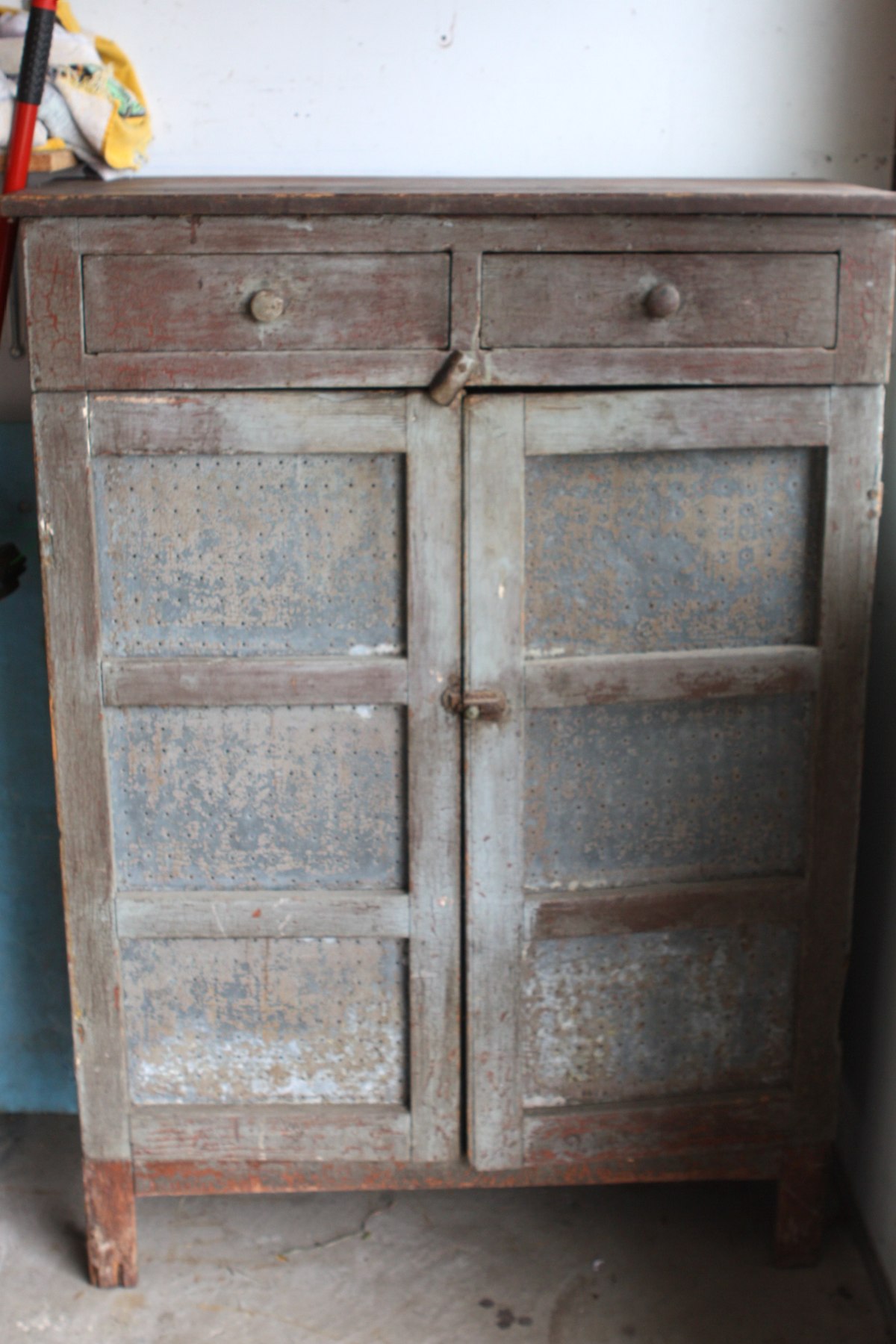
Help me date this pie safe...

Any chance the lower cupboard unit is an add-on and, the rest of the cupboard is upside down? - most (but not all) of the pictures of 'Pie Safes' that I can find have two drawers at the top and two cupboard doors at the bottom. I can find a couple in the configuration you have, so maybe the above is nonsense, but I find the position of the door catch on your one 'interesting'.

Like this:-
1200px-Pie_safe%2C_door_closed_-_01.jpg

this looks to be a correct period piece which may have been painted several times and stripped. Notice the feet. Aged after taking use and abuse over the years.
Here are a couple I have. The feet on one is really bad. It sits crooked and has a ton of character. It gets used every day. IMG_7425.JPG IMG_7426.JPG IMG_7427.JPG

These feet are not even so I use the slides and shim what is shortest.
 
Last edited:
It would be these joints. They seem to be out of place according to you but then you are the expert here. They must be wrong.

You are correct. I certainly had a brain fart there. To set the record straight, stiles are usually morticed, rails tenoned.

No doubt this is old but I doubt 1800,s.

1860's-1890's craftsmen were still using chisels to create paneled doors. The verticals mortised and the top and bottoms had tendons fitted into them. It took a lot of time to make. By the 1900's electricity made machining possible.

I still question why you are suggesting that the op's doors are not morticed and tenoned (and therefore not 1800s). If I'm misreading the above, my bad.

The joint in your doors is commonly called a through tenon. The op's tenons are morticed, but not all the way through the stile.

Btw - nice looking piece you have there.
 
Last edited:
Can't really help with the dating but if I were to guess it would before 1900 by 10 or 15 years. My wife bought a piece very much like yours. It was a marriage of 2 different pieces. You could still see the footprint of it's original top. Even with it looking a bit Frankenstein I was surprised what it brought at auction. My other guess is that these were factory made and churned out as cheap furniture and probably made in more than one location

51684884625_95160ac148_h.jpg
 
Last edited:
I certainly had a brain fart there. To set the record straight, stiles are usually morticed, rails tenoned
Yes even if I had known the technical names of the parts I probably would not have been ble to recall them. I get the brain fart thing.
The Cupboard I call Old Mother Cupboard is one of 10 pieces my wife and I bought during our hey daze (1995-99) of collecting. We bought OMC in the "rough" out of a Antique shop for 375.00. It had just come into the shop and was not even placed yet. They wanted $450 and It took some bargaining to get it from them. I bought it as part of a group of stuff. Put about $800 in their hands so they were happy. I sold one piece and a piece I replaced with OMC.
We had this in the garage for three weeks stripping the paint off the out tside. There was a coat of lead based primer which will always be there as on most all these period pieces. That and at least 6 coats of paint. Good ol Lightning Stripper was the only thing which would soften it so I could scrape it off. Then a scrubbie with water over and over to remove the last traces of primer. We did no sanding on the finish and coated it with wax. The inside and edges are still as we found it. It's a full 7 feet tall and the width of the lower part is 16 inches. All the pulls and latches I added. All repop stuff. The hinges are orig. Talk about pricing something this is a tough one. We have 10 pieces we use every day as well as a number of trunks. Not the round top type. If My wife goes before me I will have a fun time auctioning it all just to see how much it all brings in.
Since you do have your experience I have a piece I will post later would love your opinion on it.
regards
 
Can't really help with the dating but if I were to guess it would before 1900 by 10 or 15 years. My wife bought a piece very much like yours. It was a marriage of 2 different pieces. You could still see the footprint of it's original top. Even with it looking a bit Frankenstein I was surprised what it brought at auction. My other guess is that these were factory made and churned out as cheap furniture and probably made in more than one location

51684884625_95160ac148_h.jpg


Another thought to date the OP's piece would be the back of it. How are the planks attached. Is the surface finished? Most all my pieces are rough sawn.
Your cupbord is beautiful too. It will never lose it's value.
 
I still question why you are suggesting that the op's doors are not morticed and tenoned (and therefore not 1800s). If I'm misreading the above, my bad.
I didn't mean to say they are not mortised. It's just that it looks too clean like having been machine made more then hand planed and chiseled. To me that brings into the 20th century.
 
I think about 1880 and refinished in the 1960s maybe. Exterior latch is not original. Interior bottom latch probably is original. It might have a patent or patent applied for date on it that could help date the piece. You could carefully remove it to see.
 
I collect primitive Canadiana. This feels 1860-1880 to me. After that furniture became more factory made using machined dovetails and wire nails. Given the hand-cut dovetails and the square, but not forged (rosehead) nails, I feel fairly confident to say that period. HOWEVER, the latch was definitely added at a later date (1900-1920s) and the piece overall feels very 'curated' and unoriginal. Don't confuse that with disdain however, its very presentable and nice. Enjoy.
 
Back
Top Bottom